Wild Apis laboriosa combs are large, single, suspended structures rather than collections of modular frames. A colony may build one open-air comb measuring up to 3 meters long and 1.5 meters high, with an upper honey-storage section approximately 15 centimeters deep. A pollen band separates this upper storage area from the lower brood area; commercial frame hives replace this massive, irregular structure with standardized, removable comb units.
The key distinction is architectural: Apis laboriosa uses one large, vertically organized open-air comb, while commercial equipment divides the colony’s usable comb into standardized frames inside hive bodies. This modular approach sacrifices the natural single-comb format but enables inspection, controlled harvesting, extraction, packaging, and repeatable equipment supply.
How Wild Apis laboriosa Comb Is Organized
A single suspended comb
Unlike cavity-nesting honeybees that construct several parallel combs, wild Apis laboriosa colonies build a single giant comb suspended in the open air.
The comb functions as one integrated structure. Its size and weight require strong attachment to the supporting surface, while its exposed position makes the architecture substantially different from that of a protected hive cavity.
Overall dimensions
The reported maximum dimensions are approximately:
- Length: up to 3 meters
- Height: up to 1.5 meters
- Upper honey-storage depth: approximately 15 centimeters
These are maximum structural dimensions rather than universal colony measurements. Actual comb size varies with colony strength, available support, season, forage conditions, and the duration of occupation.
Vertical functional zones
The comb is organized from top to bottom rather than divided into separate commercial frames.
The upper section is a thick honey-storage zone. Beneath it is a band of stored pollen, followed by the lower brood area, where developing bees are reared.
This zoning allows the colony to maintain storage and brood functions within one continuous comb. It should not be interpreted as a standardized engineered layout: natural boundaries are biological and flexible, not fixed dimensions equivalent to frame partitions.
What the available dimensions do—and do not—show
The reference information provides overall comb dimensions, honey-section depth, and the general position of pollen and brood zones. It does not provide a verified A. laboriosa-specific worker-cell width, drone-cell size, bee-space measurement, or detailed frame-equivalent geometry.
Dimensions reported for related giant honeybees, including Apis dorsata, should therefore be treated as comparative context rather than direct specifications for A. laboriosa. Equipment manufacturers should avoid using those figures as exact design inputs without species-specific field or laboratory validation.
How Natural Architecture Differs from Commercial Hive Equipment
One continuous comb versus modular frames
Natural nests use one large, continuous comb curtain. Commercial hives divide comb construction across wooden frames fitted into standardized hive bodies.
Each frame becomes a manageable structural unit. Beekeepers can remove, inspect, replace, transport, and process individual frames without dismantling the entire colony’s nest.
Open-air exposure versus an enclosed hive body
An A. laboriosa nest is suspended in an exposed location. Commercial equipment places comb inside an enclosed or semi-enclosed hive body that provides mechanical support and protection from weather.
The hive body also creates a controlled working environment for the beekeeper. It supports predictable frame placement, inspection access, and compatibility with covers, supers, foundation, and harvesting tools.
Irregular natural construction versus guided foundation
Wild bees determine the comb’s attachment points, shape, and expansion pattern according to local conditions. In a commercial hive, wax foundation sheets or molded foundation guide the bees toward uniform comb geometry.
This does not reproduce the giant natural comb. Instead, it channels wax construction into dimensions that fit frames, preserve access lanes, and reduce unwanted brace comb.
Whole-comb harvesting versus non-destructive removal
Harvesting a wild giant comb generally involves handling a large, integrated structure. Commercial frames allow honey-filled sections to be removed while brood comb and the rest of the colony remain in place.
This separation is fundamental to managed beekeeping. It enables repeated harvests, colony inspections, brood preservation, and more consistent production workflows.
Why Standardization Matters for Commercial Operations
Compatibility with extraction equipment
Standard frames provide repeatable dimensions for honey extractors, uncapping systems, conveyors, and filling equipment.
A giant natural comb can be too large, flexible, irregular, or heavily loaded for standard extraction machinery. Commercial equipment is therefore designed around the frame—not around the maximum dimensions of a wild A. laboriosa comb.
Mechanical support and handling
A natural comb several meters long can experience substantial bending, sagging, and attachment stress when moved. Commercial frames provide a rigid perimeter and controlled support for comb during inspection and transport.
For distributors and equipment resellers, this makes frame dimensions, material strength, frame spacing, and hive-body compatibility essential product specifications.
Repeatable supply and order fulfillment
Standardized hive bodies, frames, and foundation sheets create an interoperable product system. Beekeepers can source replacement frames, additional hive bodies, foundation, extractors, and filling equipment from a consistent commercial platform.
This supports one-stop procurement, faster equipment matching, simpler inventory planning, and more efficient order fulfillment than supplying bespoke equipment for giant open-air combs.
Operational consistency
Modular equipment makes routine management more predictable. A beekeeper can inspect one frame, identify honey or brood, replace damaged components, and scale the apiary using repeatable units.
That consistency is especially important for wholesalers and B2B buyers serving customers with different colony sizes, apiary layouts, and processing volumes.
Understanding the Trade-offs
Commercial frames do not reproduce the natural nest exactly
A frame hive is a management and production system, not a literal replica of A. laboriosa architecture. It preserves useful principles—supported comb, separated storage and brood functions, and organized access—while changing the scale and geometry.
The result is more practical for managed colonies but less faithful to the wild single-comb form.
Species-specific assumptions can create design errors
Not all honeybees have the same nesting architecture. Apis laboriosa and related giant honeybees build large open-air combs, whereas Apis cerana and Apis mellifera typically construct multiple parallel combs inside cavities.
Bee-space values, preferred cavity volumes, cell dimensions, and frame configurations from one species should not automatically be applied to another. Product specifications must identify the target bee species and hive standard.
Oversized natural-comb dimensions are not commercial frame dimensions
The 3-meter length and 1.5-meter height describe a possible natural comb envelope, not a recommended frame size. Building commercial equipment at that scale would create major handling, support, transport, extraction, and safety challenges.
The commercial solution is to subdivide the colony’s comb-building area, not to manufacture a frame that matches the entire wild comb.
Mechanization requires dimensional discipline
Extractors, uncapping lines, and filling machines depend on consistent frame dimensions and loading patterns. Mixing frame standards or supplying poorly matched foundation can reduce throughput, increase comb damage, and complicate downstream packaging.
For B2B buyers, compatibility documentation is as important as the nominal product dimensions.
Making the Right Choice for Your Goal
Use the natural-comb data as a biological reference, then select commercial equipment according to the target species, hive standard, and processing workflow.
- If your primary focus is biological research: Use the approximate 3-meter length, 1.5-meter height, 15-centimeter honey-storage depth, pollen band, and lower brood zone as the reported structural reference, while treating unverified cell and spacing values separately.
- If your primary focus is commercial beekeeping: Choose standardized hive bodies, removable wooden frames, and compatible foundation rather than attempting to replicate one giant open-air comb.
- If your primary focus is honey-processing equipment: Specify the applicable frame standard before selecting extractors, uncapping systems, conveyors, or filling machines.
- If your primary focus is distribution or wholesale supply: Build a compatible product portfolio around hive bodies, frames, foundation, protective equipment, extraction machinery, and replacement components.
- If your primary focus is species-appropriate equipment: Confirm whether the equipment is intended for A. laboriosa, A. cerana, A. mellifera, or another species before applying bee-space, cell-size, or hive-volume data.
Understanding the difference between a giant natural comb and a standardized frame system allows you to source equipment that is biologically informed, mechanically compatible, and commercially practical.
Summary Table:
| Feature | Wild Apis laboriosa Comb | Commercial Frame Hive Equipment |
|---|---|---|
| Structure | Single, large open-air comb | Modular wooden frames in hive bodies |
| Maximum size | Up to 3m long, 1.5m high | Standardized frame dimensions |
| Honey storage depth | ~15cm in upper section | Varies by frame and hive body |
| Organization | Vertical zones: honey, pollen, brood | Frames separated for inspection and harvest |
| Harvesting | Whole comb handling | Non-destructive removal of individual frames |
| Extraction compatibility | Not machinery-friendly | Designed for standard extractors and processing |
| Support | Dependent on attachment | Rigid frame perimeter and hive body |
| Species specificity | Unique to A. laboriosa | Species-appropriate standards for A. cerana, A. mellifera, etc. |
Ready to equip your apiary or distribution business with high-quality, compatible beekeeping equipment? At HONESTBEE, we offer a comprehensive wholesale portfolio—from hive-making and honey-filling machinery to essential consumables and honey-themed merchandise. As your one-stop sourcing partner, we provide rapid response times, dedicated service, and ultra-fast delivery to maximize your operational efficiency and profit margins. Whether you need OEM/ODM support, certified products, or reliable supply chains, our team is here to help. Contact us today to discuss your requirements and discover how we can elevate your beekeeping operations!
Related Products
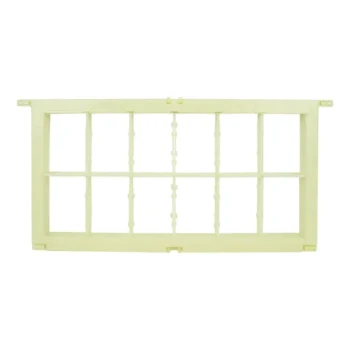
- Professional Sectional Comb Honey Frame with 250g Cassette System for Beekeeping
- Heart-Shaped Comb Honey Frame and Honeycomb Cassette
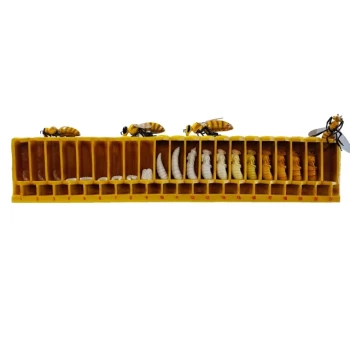
- Honey Bee Lifecycle Model: A Detailed Honeycomb Display of Bee Development
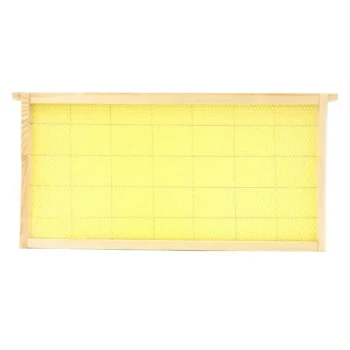
- Assembled Wooden Bee Frames with Beeswax Foundation Ready to Use by HONESTBEE
People Also Ask
- How are honeybee combs utilized for non-destructive colony monitoring? Master Population Density Tracking
- What is the technical purpose of exchanging honeycomb frames? Master Apiary Equalization for Growth
- What frame to use for honeycomb? Choose the Right System for Pure, Edible Comb
- What is a honeycomb frame? The Key to Modern, Sustainable Beekeeping
- What are the recommended temperature and duration settings for freezing honey frames? Ensure Pest-Free Comb Storage