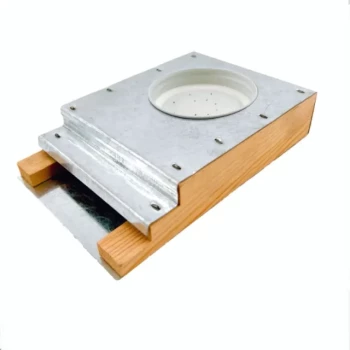
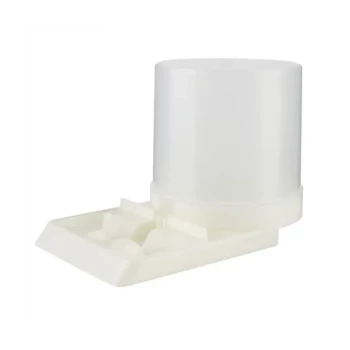
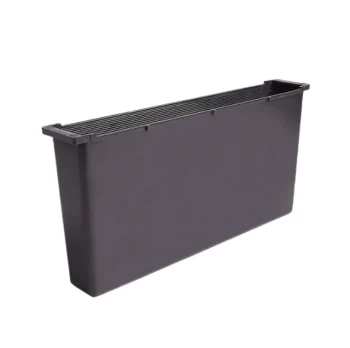
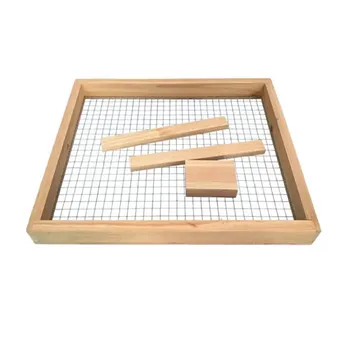
Bucket feeders are simple, enclosed syrup-delivery systems that use vacuum pressure and gravity rather than pumps or valves. An inverted plastic bucket or pail is fitted with a fine wire-gauze screen in its lid, placed screen-down over the inner-cover opening, and usually enclosed inside an empty brood chamber. Their main operational advantages are controlled access and reduced exposure to outside pests; their main limitations are modest capacity, restricted bee access, and the need to open the enclosure for refilling.
The core principle is controlled, low-disturbance feeding—not maximum volume. A bucket feeder works well when the colony’s syrup demand matches its capacity and the beekeeper can tolerate periodic hive access for inspection and replenishment.
How a Bucket Feeder Is Constructed
Inverted syrup container
The main body is a plastic bucket, pail, or similar container filled with syrup and positioned upside down above the colony.
When inverted, the container does not simply empty by gravity. A partial vacuum forms as syrup exits through the screened lid, slowing the flow and helping maintain a manageable supply.
Fine wire-gauze feeding lid
The lid contains a fine wire-gauze or screened section through which bees obtain syrup.
The screen must be fine enough to retain the syrup while allowing bees to reach it safely. Its fit and condition are critical: a loose, damaged, or poorly seated screen can cause leakage or uncontrolled syrup release.
Placement over the inner-cover opening
The feeder is positioned over the central hole in the inner cover, placing the syrup directly above the colony.
This location keeps the feed close to the bees while avoiding the need to remove brood frames during routine replenishment. The hive should remain level so that the container and screened lid sit evenly and do not encourage leakage.
Protective empty brood chamber
An empty brood chamber or box is commonly placed around the bucket.
This enclosure protects the feeder from rain, wind, and outdoor pests. It also makes the syrup less visible and accessible to bees from outside the colony, which helps reduce the likelihood of robbing compared with exposed feeding.
How the Feeding System Operates
Vacuum-controlled syrup release
The feeder releases syrup through the interaction of gravity and vacuum pressure.
As bees remove syrup through the screen, a small amount of air enters the container. This controlled exchange prevents the full contents from draining immediately, assuming the lid and container remain properly sealed.
Restricted bee access
Only a limited number of bees can feed through the screened area at one time.
This creates a relatively controlled feeding rate, but it also means that a strong colony may consume the available syrup faster than expected. The screen’s size and the bees’ access point therefore influence practical capacity as much as the container’s nominal volume.
Feed delivered above the cluster
Because the bucket sits above the inner cover, bees can usually reach the syrup without the beekeeper placing an open liquid reservoir inside the brood area.
This arrangement preserves the distinction between the feed container and the brood nest, reducing the need to occupy comb space with a frame feeder.
Operational Considerations for Beekeepers
Match capacity to colony demand
Bucket feeders generally have a modest working capacity and may require refilling once or twice per week.
The correct interval depends on colony strength, weather, feeding purpose, and syrup consumption. Monitoring actual consumption is more reliable than selecting a refill schedule based only on the bucket’s advertised capacity.
Plan for refill disturbance
Refilling normally requires opening the hive enclosure around the feeder.
That creates a temporary disturbance and may expose the colony to cool air, defensive behavior, or other disruption. The effect is usually manageable, but it should be included in the operating plan—particularly for large apiaries where repeated hive access increases labor.
Keep the feeder protected
The surrounding brood chamber should be secure, weather-resistant, and correctly seated on the hive.
Any gap that allows rain, wasps, or other insects to reach the feeder undermines the enclosed design. Protection is especially important when syrup is being supplied during nectar dearths, when robbing pressure may be higher.
Inspect for leaks and contamination
Before installation, check the container, lid, screen, and seal for cracks, warping, blocked mesh, or syrup residue.
Syrup should remain clean and should not be left longer than the colony can reasonably consume it. Warm conditions and slow consumption can lead to spoilage, so volume should be adjusted to demand rather than always filling the container completely.
Maintain hygiene between uses
Reusable feeders should be emptied, washed, and thoroughly dried before storage or redeployment.
A cleanable design is important for both individual beekeepers and commercial distributors specifying equipment for repeated seasonal use. Smooth, durable materials and replaceable or inspectable screens simplify maintenance.
Selecting Bucket Feeders for Different Operations
For small and medium apiaries
A bucket feeder can be appropriate when the beekeeper wants a straightforward hive-top system and can visit colonies regularly.
Its relatively simple construction makes it easy to understand, inspect, and replace. The trade-off is that each refill still requires access to the hive enclosure.
For large-scale apiaries
Commercial operators should evaluate more than container size.
Important purchasing criteria include screen durability, lid consistency, sealing quality, compatibility with standard hive dimensions, cleanability, stacking or storage efficiency, and replacement-part availability. Reliable supply and consistent specifications matter because small dimensional differences can create leakage or poor seating across many colonies.
For distributors and B2B resellers
A practical product range should distinguish between standard bucket feeders, different capacities, replacement lids or screens, and compatible hive-top accessories.
Clear product specifications, rapid order response, dependable fulfillment, and technical support help customers select the correct configuration rather than treating all pail feeders as interchangeable.
Understanding the Trade-offs
Advantages: controlled and enclosed feeding
The vacuum design limits uncontrolled syrup flow, while the screened access point keeps bees from entering a large open reservoir.
The external enclosure also helps protect feed and reduces exposure to outside bees and pests. These features support cleaner, more controlled syrup management.
Limitation: modest capacity
A bucket feeder is not necessarily the best choice when a colony requires very large quantities of syrup or when visits are infrequent.
Larger internal or hive-top feeders may reduce refill frequency, but they introduce other requirements, including leak prevention, safe bee access, and closer management of spoilage.
Limitation: restricted feeding rate
The small screened feeding area limits how many bees can access syrup simultaneously.
For a strong colony with high demand, this can make the feeder appear under-capacity even when syrup remains in the container. The selection decision should therefore consider both volume and access rate.
Limitation: refill-related disturbance
Because the enclosure must be opened, refilling is not completely disturbance-free.
Feeders designed for external replenishment may be preferable where minimizing labor, sting risk, and colony disruption is the highest priority. However, those systems may involve greater structural complexity or different maintenance requirements.
Common mistake: treating nominal capacity as usable capacity
A feeder’s stated volume does not guarantee that the colony will consume it before the syrup deteriorates.
Operators should fill according to colony strength, temperature, and expected consumption. Overfilling a weak colony can create unnecessary spoilage and hygiene problems.
Common mistake: ignoring level and fit
An uneven hive or poorly seated feeder can cause syrup leakage.
Leakage can wet the hive interior, attract pests, and expose bees to uncontrolled liquid. Level placement and a secure fit are basic operating requirements, not optional refinements.
Making the Right Choice for Your Goal
Bucket feeders are most effective when product design, colony demand, and servicing routines are evaluated together.
- If your primary focus is controlled, enclosed feeding: Choose a screened, vacuum-operated bucket feeder with a secure lid and a protective brood-chamber enclosure.
- If your primary focus is minimizing refill labor: Compare bucket capacity and consumption rates with larger hive-top or externally refillable systems.
- If your primary focus is colony safety and hygiene: Prioritize leak-resistant construction, cleanable materials, reliable screen access, and filling volumes matched to colony strength.
- If your primary focus is commercial distribution: Standardize compatible sizes and replacement components, and work with suppliers that can provide consistent specifications, fast response, and dependable fulfillment.
A bucket feeder is a reliable solution when its controlled delivery system is matched to the colony’s consumption rate and the beekeeper’s operating routine.
Summary Table:
| Feature | Description |
|---|---|
| Container | Inverted plastic bucket or pail, creates vacuum to slow syrup flow |
| Feeding lid | Fine wire-gauze screen, allows bees access while retaining syrup |
| Placement | Over inner-cover central hole, inside empty brood chamber for protection |
| Operation | Vacuum-controlled release; bees remove syrup, air enters to maintain flow |
| Capacity | Modest, may need refilling 1-2 times per week; match to colony demand |
| Refill disturbance | Requires opening enclosure, causing temporary disruption |
| Advantages | Controlled, enclosed feeding; reduces robbing and exposure to pests |
| Limitations | Limited capacity and access rate; refill labor; potential leakage if uneven |
| Purchasing criteria | Screen durability, sealing, compatibility, cleanability, replacement parts |
Optimize your syrup delivery with high-quality bucket feeders from HONESTBEE. We supply a comprehensive range of beekeeping equipment designed for reliable, controlled feeding. Whether you're a commercial apiary or distributor, our durable feeders, replacement parts, and fast fulfillment ensure your operation runs smoothly. Contact us today to discuss your bulk sourcing needs and enjoy competitive margins with OEM/ODM support and expert guidance. Contact us now for a tailored solution.
Related Products
- HONESTBEE Round Hive Top Bee Feeder for Syrup
- HONESTBEE Entrance Bee Feeder Efficient Hive Front Liquid Feeding Solution for Beekeeping
- In-Hive Dual Compartment Frame Bee Feeder for Targeted Colony Nutrition
- White Plastic 0.5L Beekeeping Entrance Feeder for Bees
- Professional Hive Top Bee Feeder for Beekeeping
People Also Ask
- What can the round hive top feeder be used for? A Guide to Efficient, Safe Bee Feeding
- What types of hive boxes is the round hive top feeder compatible with? Universal Fit for 8 & 10-Frame Langstroth Hives
- What is the capacity of the round hive top feeder for syrup and pollen? A Guide to Targeted Apiary Support
- What types of feed can be used with the round hive top feeder? Versatile Feeding for Optimal Apiary Health
- How do you use a top feeder for bees? Expert Guide to Installation and High-Volume Hive Feeding