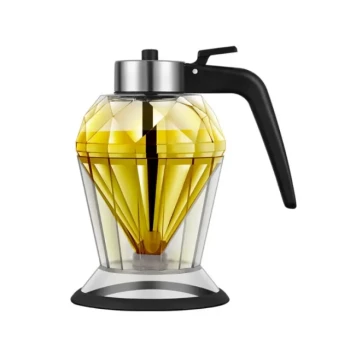
Amber glass vials are the gold standard for honey extract storage because they provide a critical barrier against light-induced degradation. These containers specifically block ultraviolet (UV) rays and short-wave visible light that trigger photochemical reactions, leading to the decomposition of delicate honey components. By ensuring chemical stability and preventing the leaching of synthetic contaminants, amber glass preserves the potency, flavor, and analytical integrity of high-value honey extracts.
Amber glass vials safeguard the chemical fingerprint of honey extracts by blocking UV radiation and maintaining a non-reactive environment. For distributors and wholesalers, this packaging choice ensures a premium, shelf-stable product that meets the rigorous quality standards required for global trade.
Protection Against Photochemical Degradation
Shielding Sensitive Bioactive Compounds
Honey extracts contain complex polyphenols, flavonoids, and volatile substances that are highly sensitive to light. Amber glass effectively filters out harmful UV radiation, preventing these bioactive molecules from breaking down during storage or transport.
Ensuring Analytical Integrity
For extracts intended for Gas Chromatography-Mass Spectrometry (GC-MS) or biological activity analysis, maintaining the original chemical state is vital. Amber glass, often paired with refrigeration at 4°C, prevents the light-induced chemical shifts that would otherwise compromise testing accuracy.
Preserving Enzyme Activity
Natural enzymes and organic acids within honey can be deactivated by exposure to specific light wavelengths. Utilizing amber containers ensures these heat-sensitive and light-sensitive substances remain active, preserving the extract's functional and medicinal properties.
Superior Material Stability and Safety
Eliminating Chemical Leaching
Unlike some plastic alternatives, glass is a non-reactive, inert material that does not contain plasticizers. This eliminates the risk of chemical migration into the honey, ensuring the product remains pure and safe for long-term consumption or industrial use.
Airtight Barrier Properties
High-quality glass vials provide an exceptional airtight seal that prevents the volatilization of aromatic compounds. This barrier also protects the extract from environmental moisture and odors, which are common causes of spoilage and flavor degradation in the honey trade.
Resistance to Temperature Extremes
Glass maintains its structural integrity across a wider range of temperatures compared to standard plastics. This durability makes it a reliable choice for international shipping and diverse climate conditions, protecting the honey from external environmental stressors.
Enhancing Market Value and Logistics
Professional Aesthetic and Premium Positioning
The use of amber glass signals a commitment to quality and deep professional industry expertise. For B2B resellers, this premium packaging justifies higher price points and aligns with the branding of high-end, full-spectrum product portfolios.
Long-Term Shelf Stability
By preventing microbial contamination and chemical breakdown, amber glass extends the commercial shelf life of honey extracts. This longevity is essential for wholesalers managing large inventories and seeking to minimize product loss.
Rapid Response and Order Fulfillment
Standardizing on high-quality amber glass allows for efficient order fulfillment and rapid delivery to global markets. This consistency in packaging reduces the need for specialized handling protocols, streamlining the supply chain for distributors.
Understanding the Trade-offs
Weight and Fragility Concerns
While glass offers superior protection, it is significantly heavier and more breakable than plastic. This increases shipping costs and requires more robust protective packaging during transit to prevent loss.
Higher Initial Procurement Costs
The manufacturing and sterilization of amber glass vials typically carry a higher price point than food-grade plastics. Distributors must balance the increased cost of the container against the high value of the honey extract and the potential for premium market positioning.
Recycling and Sustainability Logistics
Although glass is infinitely recyclable, the energy required for its transport and processing can be high. However, for the technical preservation of high-value extracts, the functional benefits of glass usually outweigh the logistical complexities.
Applying This to Your Distribution Strategy
Making the Right Choice for Your Goal
- If your primary focus is analytical precision and laboratory sales: Utilize sterilized amber glass vials to ensure the chemical stability required for GC-MS and biological assays.
- If your primary focus is premium retail or high-end B2B trading: Adopt amber glass to leverage its "clean-label" appeal and superior ability to preserve aromatic profiles and color.
- If your primary focus is supply chain efficiency and product longevity: Invest in glass packaging to maximize shelf life and reduce the risk of chemical leaching during long-term storage.
Choosing amber glass is a strategic investment in product integrity that ensures your honey extracts remain potent, stable, and commercially viable across the global supply chain.
Summary Table:
| Key Feature | Benefit for Honey Extracts | Business Impact for Wholesalers |
|---|---|---|
| UV Shielding | Prevents photochemical breakdown of bioactive compounds | Ensures long-term shelf stability and potency |
| Inert Material | Eliminates risk of chemical leaching/plasticizer migration | Guarantees analytical integrity and product safety |
| Airtight Seal | Protects volatile aromatic compounds and enzymes | Maintains premium flavor profile and market value |
| Thermal Stability | Resists structural failure during international transit | Reduces product loss in diverse climate conditions |
| Premium Aesthetic | Signals high-end quality and professional standards | Supports higher price points and brand positioning |
Scale Your Bee Business with HONESTBEE
Maximize your profit margins and ensure supply reliability with HONESTBEE, your premier partner for one-stop beekeeping sourcing. We cater specifically to commercial apiaries and distributors, offering a comprehensive full-spectrum product portfolio—from specialized honey-filling and hive-making machines to high-quality industry consumables.
Why partner with us?
- Deep Industry Expertise: Professional guidance for B2B resellers and wholesalers.
- Rapid Response & Fulfillment: Ultra-fast delivery to keep your supply chain moving.
- Premium Trading Services: Dedicated support to ensure your business meets rigorous global quality standards.
Ready to enhance your inventory with professional-grade equipment? Contact our expert team today to discuss our wholesale offerings and streamlined order fulfillment!
References
- Fatma H. Elfallah, Khadija Gashgash. Chemical Analysis of Sidr and Thyme Honey Using GC-MS and Assessment of Their Antibacterial Effects Against Some Diabetic Foot Infections in Ajdabiya, Libya. DOI: 10.54361/ajmas.258373
This article is also based on technical information from HonestBee Knowledge Base .
Related Products
People Also Ask
- How to clean a honey dripper? A Simple Guide to Preserve Your Tool's Quality
- What is the proper method for cleaning a honey dipper? Maintain Pure Flavor with These Easy Pro Tips
- What is a honey dipper? Master the Art of the Perfect Drizzle with This Essential Tool
- How do you clean and store a honey dipper? Simple Steps for Long-Lasting Performance
- What is a honey taking spoon called? Discover the Tool for a Perfect, Mess-Free Drizzle