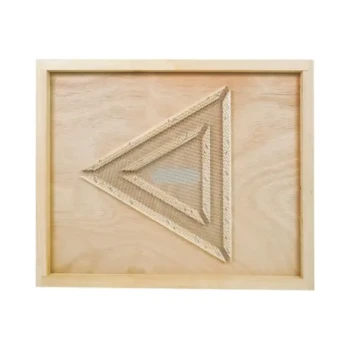
A sticky mite board with a mesh cover is a passive diagnostic tool designed to capture and quantify honeybee parasites, such as Tropilaelaps mercedesae and Varroa mites, without disrupting the colony. By placing a physical screen between the colony and the collection tray, the device ensures that falling parasites are trapped for analysis while the bees remain isolated from the adhesive surface.
Core Takeaway The device functions as a selective filter that allows parasites to fall through a mesh barrier onto a sticky trap, facilitating accurate intensity analysis while ensuring low disturbance to the hive and protecting bees from becoming entrapped in the sampling adhesive.
The Mechanics of Safe Monitoring
The Function of the Mesh Barrier
The upper mesh cover serves as a critical safety shield for the colony. It creates a physical boundary that separates the active bees from the monitoring equipment below.
The aperture (hole size) of the mesh is calibrated to be permeable to small parasites but impermeable to honeybees. This prevents the bees from coming into contact with the adhesive coating, protecting them from getting stuck or damaging their hygiene.
The Role of the Sticky Board
The lower component is a board coated with an adhesive substance, such as Vaseline or a specialized sticky plastic sheet. Its primary function is to immobilize parasites that fall from the bee cluster or brood cells.
Once a mite passes through the mesh and lands on the board, the adhesive prevents it from climbing back up or escaping. This allows researchers and beekeepers to obtain a precise count of the fallen mites to determine infestation intensity.
Strategic Advantages in Epidemiology
Low Disturbance Sampling
One of the most significant functions of this system is its ability to monitor colony health non-invasively. The design allows for the collection of samples without the need to open the hive body or manipulate the frames.
This is particularly valuable during sensitive periods, such as winter overwintering. It allows for continuous parasite surveillance while maintaining the colony's internal temperature and reducing stress on the bees.
Accurate Intensity Analysis
By preventing bees from accessing the trap, the device ensures the integrity of the sample. Bees naturally attempt to clean debris from the hive; without the mesh, they would walk over the board and remove or damage the fallen mites.
The mesh cover ensures that the sample collected represents an undisturbed accumulation of parasites. This provides reliable data on the severity of the parasitic load within the colony.
Understanding the Trade-offs
The Necessity of Separation
The effectiveness of this tool relies entirely on the integrity of the mesh cover. Using a sticky board without this barrier is not a viable option for epidemiological monitoring.
Direct exposure to the sticky board would lead to significant bee mortality as they attempt to clean the surface. Therefore, the function of the board cannot be separated from the protective function of the mesh; they must work in tandem to ensure the safety of the host while targeting the pest.
Making the Right Choice for Your Goal
When implementing a parasite monitoring strategy, consider how this device aligns with your specific objectives:
- If your primary focus is Pest Intensity Analysis: This device provides a quantifiable sample of fallen mites (such as Tropilaelaps mercedesae), allowing you to calculate the severity of the infestation based on drop rates.
- If your primary focus is Colony Preservation: This method offers the highest level of protection for the bees, allowing you to gather data without disrupting the cluster or breaking the hive seal during cold weather.
Summary: The sticky mite board with a mesh cover balances the need for rigorous epidemiological data with the absolute requirement of preserving honeybee safety and hive stability.
Summary Table:
| Feature | Function & Purpose | Benefit to Beekeeping |
|---|---|---|
| Mesh Barrier | Calibrated physical screen that allows mites to fall through while blocking bees. | Protects bees from adhesive; prevents them from removing samples. |
| Sticky Board | Adhesive surface (Vaseline or plastic) that immobilizes falling parasites. | Enables accurate counting and intensity analysis of the mite load. |
| Passive Sampling | Data collection without opening the hive or manipulating frames. | Minimizes colony stress; ideal for monitoring during winter/sensitive periods. |
| Epidemiological Use | Quantitative tracking of Varroa and Tropilaelaps mercedesae. | Provides data-driven insights for effective pest management strategies. |
Optimize Your Apiary's Health with HONESTBEE
Effective parasite management starts with the right tools. HONESTBEE provides commercial apiaries and distributors with premium beekeeping equipment—from high-precision mite monitoring boards and specialized hardware to honey-filling machines.
Whether you are scaling up your honey production or sourcing wholesale consumables, we offer the technical expertise and comprehensive product range needed to protect your colonies and maximize yield.
Ready to elevate your beekeeping operations? Contact us today to discuss our wholesale solutions and how we can support your business growth.
References
- Qi Hua Luo, Qiang Wang. Prevalence, intensity and associated factor analysis of Tropilaelaps mercedesae infesting Apis mellifera in China. DOI: 10.1007/s10493-011-9459-z
This article is also based on technical information from HonestBee Knowledge Base .
Related Products
- HONESTBEE Wooden Bee Escape Board with Triangle Mesh Design for Beekeeping
- Langstroth Screen Bottom Board for Beekeeping Wholesale
People Also Ask
- How is a bee escape board used to clear a hive body for honey harvesting? Optimize Your Chemical-Free Harvest
- What is a bee escape board and what problem does it solve? Simplify Your Honey Harvest with Passive Clearing
- How is a bee escape board used and how does it function? Master This Gentle Honey Harvesting Tool
- What are the proper steps for using a bee escape board for honey harvesting? Master the Passive Clearing Technique
- What tools and methods are used to clear honey bees from honey supers? Efficient Harvesting for Commercial Beekeepers