Standardized wax combs serve as a fundamental control mechanism in honeybee research by establishing a consistent biological spatial foundation across all experimental colonies. By ensuring every colony operates with an identical number of combs, researchers effectively neutralize internal physical variations that would otherwise distort data regarding pollen storage and foraging behavior.
By eliminating differences in internal hive space, standardized wax combs ensure that observed variations in pollen storage are driven solely by biological factors—such as foraging activity and seasonal changes—rather than physical discrepancies between hives.
Establishing Data Integrity in Foraging Studies
To accurately study honeybee behavior, researchers must isolate biological variables from physical ones. Standardized wax combs are the primary tool for achieving this separation regarding internal hive dynamics.
Eliminating Storage Deviations
If experimental colonies possess different amounts of comb, the bees' ability to store resources varies due to physical constraints rather than biological intent. Standardized combs remove this noise.
By utilizing an identical number of combs, researchers ensure that every colony has the exact same capacity potential. This eliminates "storage behavior deviations" that occur simply because one colony has more or less room than another.
Isolating Foraging Metrics
The ultimate goal of these studies is often to measure foraging activity and the impact of seasonal factors.
Without standardization, a researcher could not determine if a low pollen count was due to poor foraging efficiency or a lack of storage space. Standardized combs guarantee that measurements of the pollen storage area directly reflect the bees' collection efforts and environmental responses, unclouded by hive limitations.
The Broader Context of Hive Standardization
While wax combs control for internal storage space, they are often used in conjunction with standardized hive structures (such as the Langstroth hive) to create a fully controlled experimental environment.
Controlling Entrance and Volume Variables
Standardized hives provide uniform nesting volumes and entrance structures. This is critical for measuring egression (exiting) and ingression (entering) rates.
By keeping the physical entrance constant, researchers ensure that traffic frequency is dependent on the bee species' biological characteristics and collection efficiency, rather than how easy or difficult it is to navigate the hive entrance.
Facilitating Non-Destructive Sampling
Modern standardized hives feature a movable frame design. This allows researchers to extract specific samples of honey and pollen without destroying the colony structure.
This capability is essential for long-term monitoring of colony health and analyzing food source diversity over time, as it prevents the trauma of sampling from altering the bees' subsequent behavior.
The Risks of Uncontrolled Variables
When designing experiments involving biological systems, the failure to standardize physical equipment creates a significant "trade-off" in data reliability.
The Confounding Variable of "Available Space"
If wax combs are not standardized, "available space" becomes a confounding variable.
A colony might stop foraging not because of a biological signal, but simply because they have physically run out of room. If this variable is not controlled, measuring foraging motivation becomes impossible, rendering the data regarding seasonal influence and collection efficiency invalid.
Making the Right Choice for Your Research
To ensure your experimental design yields valid, publishable data, you must align your equipment with your specific analytical goals.
- If your primary focus is measuring foraging intensity: Prioritize identical wax comb counts to ensure storage limits do not artificially cap your data.
- If your primary focus is analyzing food source diversity: Utilize standardized movable frames to permit periodic extraction of pollen without disrupting the colony's workflow.
- If your primary focus is comparing species efficiency: Ensure hive entrance dimensions are identical to attribute traffic rates solely to biological capability.
Standardization transforms the hive from a variable environment into a precision instrument for biological measurement.
Summary Table:
| Feature | Function in Research | Impact on Data Quality |
|---|---|---|
| Standardized Comb Count | Neutralizes internal storage space variations | Eliminates storage noise; isolates biological drivers |
| Movable Frame Design | Permits non-destructive sampling of honey/pollen | Enables long-term monitoring without colony disruption |
| Uniform Hive Volume | Controls nesting capacity and entrance dimensions | Ensures traffic metrics reflect species efficiency |
| Resource Capacity | Establishes identical storage potential across colonies | Validates foraging intensity vs. environmental factors |
Elevate Your Beekeeping Operations with HONESTBEE
At HONESTBEE, we understand that precision and efficiency are the backbones of successful commercial apiaries and distribution networks. Whether you are conducting rigorous biological research or scaling a commercial honey production facility, our comprehensive wholesale solutions are designed to meet your needs.
From standardized beekeeping tools and specialized hive-making machinery to advanced honey-filling systems and cultural merchandise, we provide the full spectrum of equipment and consumables. We help our partners minimize variables and maximize yield with hardware that stands up to the demands of the industry.
Ready to scale your apiary or restock your distribution inventory?
Contact HONESTBEE Today to explore our wholesale catalog and discover how our professional-grade equipment can drive your success.
References
- Hosafy Eshbah, Moshira Shaban. THE RELATIONSHIP BETWEEN FORAGING ACTIVITY OF HONEY BEE (APIS MELLIFERA L.) AND BEE POLLEN STORAGE. DOI: 10.21608/mjard.2023.329968
This article is also based on technical information from HonestBee Knowledge Base .
Related Products
- Manual Beeswax Comb Foundation Machine Wax Foundation Mill Embossing Machine
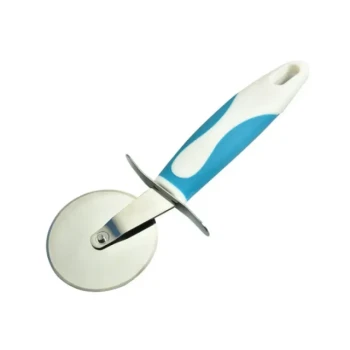
- Professional Rolling Wax Cutter with Ergonomic Handle
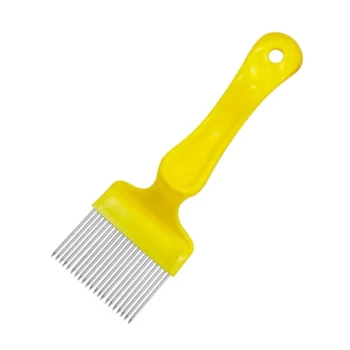
- Professional Classic Wood Handle Honey Uncapping Fork
- Professional Honey Uncapping Fork Tool with Customizable Tine Options
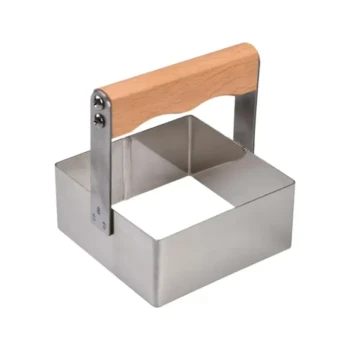
- Heavy Duty Stainless Steel Honeycomb Cutter
People Also Ask
- What are the primary technical challenges faced by beeswax foundation production machinery? Tackling Lipophilic Residues
- What are the advantages of implementing a pulley and belt drive system in beeswax foundation machinery? Master Quality.
- What role does a foundation machine play in the recycling and resource utilization of beeswax within an apiary?
- Why is the introduction of a beeswax foundation machine considered an important step in improving honey yields?
- How do beeswax foundation machines facilitate the internal recycling of beeswax? Build a Self-Sustaining Apiary