
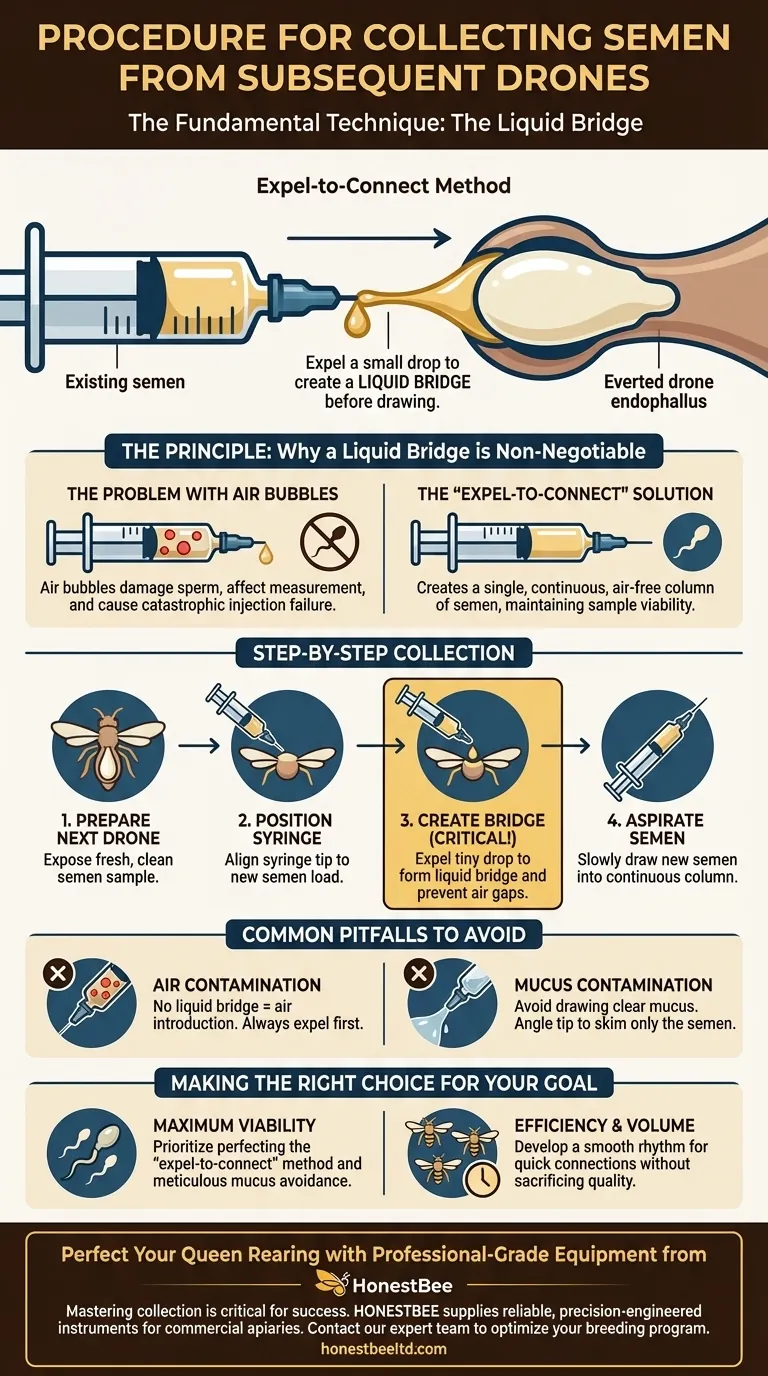
The fundamental technique for collecting semen from subsequent drones is to use the semen already in the syringe to create a liquid bridge to the new sample. You must expel a small drop of semen from the syringe tip onto the semen of the next everted drone before drawing the new sample in. This procedure is essential for preventing air bubbles from contaminating the collected volume.
The core challenge when collecting from multiple drones is not just adding volume, but protecting the viability of the entire sample. The "expel-to-connect" method is the key to creating a single, continuous, and air-free column of semen, which is critical for successful insemination.
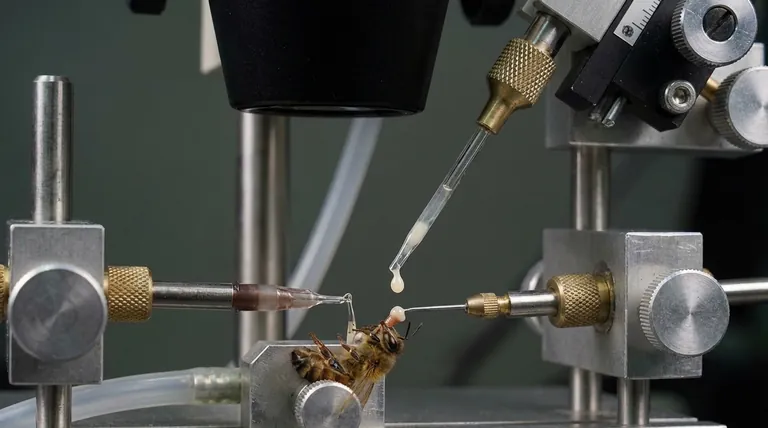
The Principle: Why a Liquid Bridge is Non-Negotiable
The primary goal when pooling semen from several drones is to prevent the introduction of air. Air bubbles are detrimental to the process for several key reasons.
The Problem with Air Bubbles
Air bubbles in the syringe can damage sperm, make it difficult to accurately measure the collected volume, and cause catastrophic failure during the injection of the queen.
The "Expel-to-Connect" Solution
By gently expelling a tiny drop of semen from the tip, you create a liquid-to-liquid contact point. This ensures that as you draw back the plunger, you are only pulling in new semen, maintaining a solid, unbroken column of fluid.
Step-by-Step Collection from Subsequent Drones
After you have successfully collected semen from your first drone, follow this precise procedure for each one that follows.
Step 1: Prepare the Next Drone
Evert the endophallus of the next mature drone to expose the clean, creamy layer of semen. Be ready to collect it promptly before it begins to dry.
Step 2: Position the Syringe
Carefully bring the tip of the insemination syringe, which already contains your first sample, directly to the surface of the new semen load.
Step 3: Create the Semen Bridge
Apply slight, steady pressure to the plunger to expel a very small droplet of semen from the syringe tip. The goal is to have this droplet touch and merge with the new semen on the endophallus. You will see the two surfaces connect.
Step 4: Aspirate the New Semen
Once the liquid bridge is established, smoothly and slowly pull back on the plunger. This will draw the new semen into the syringe, adding it to the existing volume without creating any air gaps.
Common Pitfalls to Avoid
Success depends on avoiding two critical errors: air introduction and mucus contamination.
Air Contamination
This is the most common mistake. It happens when you attempt to draw in new semen without first creating the liquid bridge. Always expel a drop to make contact first.
Mucus Contamination
The semen should be a consistent, creamy white or pale yellow. Avoid drawing in the clear, watery mucus that lies beneath the semen. Mucus can harm sperm viability and clog the delicate syringe tip. Angle your tip to skim only the semen off the top.
Making the Right Choice for Your Goal
Your technique should be guided by your ultimate objective.
- If your primary focus is maximum sperm viability: Your absolute priority is to perfect the "expel-to-connect" method to ensure zero air is introduced and to meticulously avoid any mucus contamination.
- If your primary focus is efficiency and volume: Develop a smooth, repeatable rhythm for everting drones and making the semen connection to process multiple drones quickly without sacrificing the quality of the sample.
Mastering this collection technique is crucial for creating a pure and potent sample for successful queen insemination.
Summary Table:
| Step | Key Action | Purpose |
|---|---|---|
| 1. Prepare Drone | Evert the next drone's endophallus. | Expose a fresh, clean semen sample. |
| 2. Position Syringe | Bring syringe tip to the new semen. | Align for a seamless liquid connection. |
| 3. Create Bridge | Expel a tiny drop from the syringe. | Form a liquid bridge to prevent air gaps. |
| 4. Aspirate Semen | Slowly pull back the plunger. | Draw new semen into the continuous column. |
Perfect Your Queen Rearing with Professional-Grade Equipment from HONESTBEE
Mastering semen collection is critical for successful queen insemination and maintaining strong, productive hives. The quality of your tools directly impacts your results. HONESTBEE supplies commercial apiaries and beekeeping equipment distributors with reliable, precision-engineered instruments—including high-quality insemination syringes—through our wholesale-focused operations.
Let us help you optimize your breeding program. Contact our expert team today to discuss your specific needs and discover how our equipment can enhance your efficiency and success rates.
Visual Guide
Related Products
- Full Set Beekeeping Electronic Bee Venom Collector Machine Device for Bee Venom Collecting
- Queen Bee Artificial Insemination Instrument Equipment for Instrumental Insemination
People Also Ask
- How does the glass plate integrated into a bee venom collector contribute to maintaining quality and purity?
- What is the function of specialized collection equipment in the production process of bee venom? Expert Guide
- What is the significance of using specialized bee venom collection devices in commercial beekeeping operations?
- Why are bee venom collection devices typically mounted on specialized wooden carrier boards? Maximize Yield & Purity.
- How does a dedicated bee venom collection device operate? Extract Pure Venom Safely Without Harming Your Bees

