Bee frame making machines are essential for beekeeping and honey production, offering high efficiency and precision in frame assembly. Our product range includes the Semi-Auto Bee Frame Assembly and Stapling Machine, which enhances assembly speed and durability. The Mini Desktop Bee Hive Frame Forming Making Machine automates the production of Langstroth and Dadant size frames, ideal for small-scale operations. For precision hole punching, our Frame Punching Hole Puncher Machine ensures high-speed, accurate production. Additionally, the Frame Eyelets Assembly Machine provides reliable and efficient eyelet fitting for durable hive frames.
Toggle Categories
Get Instant Support
Choose your preferred way to connect with our team
-
Get Free Quote Fill out form for detailed pricing
-
Send Email Detailed inquiry support
-
WhatsApp Quick mobile chat
Response Time
Within 8 hours on working days, 24 hours on holidays
bee frame making machine

Mini Desktop Bee Hive Frame Forming Making Machine
Item Number: BFMM-1

Semi-Auto Bee Frame Assembly and Stapling Machine for Bee Frame
Item Number: BFSM-1

Frame Punching Hole Puncher Machine for Bee Frame Producing Line
Item Number: BFHP-1

Frame Eyelets Assembly Machine Bee Frame Eyelets Fitting Machine Eyelets Machine
Item Number: BFEM-1

Beehive Handle and Frame Rest Cutting Machine: Your Specialized Hive Machine
Item Number: BHHM-1

HONESTBEE Professional Long Handled Hive Tool with Precision Cutting Blade
Item Number: HT-16
Detailed Overview of Bee Frame Making Machines
Bee frame making machines are designed to streamline the production of hive frames, essential for beekeeping and honey production. These machines automate the process of forming, assembling, and fitting frames, ensuring high efficiency and precision. Our range of bee frame making machines includes several models, each tailored to meet specific production needs.
Key Features and Principles
Our bee frame making machines operate by automatically feeding and shaping metal strips to create the frame’s sidebars. The metal strips are fed into the machine, which then uses a series of rollers and bending mechanisms to shape the metal into the desired frame size and shape. This process ensures consistent and precise frame production, essential for maintaining hive integrity.
Advantages of Our Machines
- High Efficiency: Our machines significantly reduce the time required to produce bee frames, allowing for higher output and increased productivity.
- Customizable Options: We offer customizable solutions to meet the specific needs of beekeepers and honey production facilities.
- Durable Construction: Built with high-quality materials, our machines are designed to withstand the rigors of continuous use, ensuring long-term reliability.
- Compact Size: The compact design of our machines makes them easy to store and transport, ideal for both small-scale and large-scale operations.
Applications
Our bee frame making machines are widely used in beekeeping and honey production industries. They are essential for producing hive frames that are durable and reliable, ensuring the health and productivity of bee colonies.
Why Choose Us?
We pride ourselves on providing high-quality, reliable, and customizable bee frame making machines. Our expertise in the field ensures that we offer solutions that meet the specific needs of our customers. Whether you are a small-scale beekeeper or a large honey production facility, we have the right machine for you.
Call to Action
Interested in learning more about our bee frame making machines? Contact us today to discuss your needs and discover how we can help you enhance your beekeeping operations. Leave us a message here and let our experts guide you to the best solution for your needs.
FAQ
What Are The Advantages Of Using A Bee Frame Making Machine?
The bee frame making machine allows users to quickly and easily form bee frames for bees and honeycombs. Its compact size makes it easy to store and transport.
What Are The Main Types Of Bee Frame Making Machines?
The main types of bee frame making machines include the Semi-Auto Bee Frame Assembly and Stapling Machine, Mini Desktop Bee Hive Frame Forming Making Machine, Frame Punching Hole Puncher Machine, and Frame Eyelets Assembly Machine.
What Are The Applications Of Bee Frame Making Machines?
Bee frame making machines are primarily used in beekeeping and honey production to efficiently create durable and reliable hive frames. They are ideal for beekeeping supply manufacturers and beekeepers looking to streamline frame production.
REQUEST A QUOTE
Our professional team will reply to you within one business day. Please feel free to contact us!
Related Articles
How Top Bar Hives Naturally Boost Bee Health and Simplify Beekeeping
Top bar hives promote natural bee health with comb freedom, thermal efficiency & sustainable harvesting. Ideal for low-maintenance backyard beekeeping.
Read more
How to Choose Beekeeping Tools: A Practical Guide for Every Budget and Climate
Learn how to choose the best beekeeping tools for your budget and climate, from protective gear to hive management essentials.
Read more
How Top Bar Hives Simplify Natural Beekeeping for Hobbyists
Top bar hives simplify natural beekeeping for hobbyists with cost-efficiency, healthier colonies, and low-maintenance care.
Read more
How to Expand Your Beehives in Spring Without Triggering Swarms
Learn how to expand beehives in spring using 8-frame systems to prevent swarming and boost honey production with sustainable hive management.
Read more
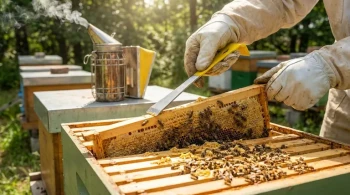
The Beekeeper’s Guide to Hive Tools: How to Choose and Use Them for Efficient Apiary Management
Learn how to choose and use hive tools for efficient beekeeping. Discover material, design, and maintenance tips for smooth apiary management.
Read more
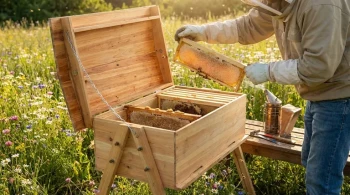
How to Optimize Honey Storage in Top Bar Hives for Healthier Colonies
Learn how to optimize honey storage in top bar hives for healthier bee colonies with strategic comb placement and seasonal adjustments.
Read more
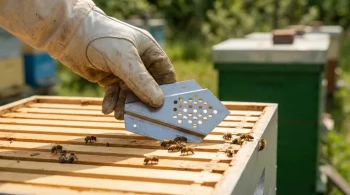
How to Clear Bees from Frames Without Compromising Honey Quality or Colony Health
Learn ethical methods to clear bees from frames without harming honey quality or colony health. Essential for commercial beekeepers.
Read more
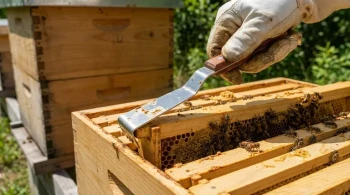
How to Use Hive Tools Without Damaging Your Apiary: A Beekeeper’s Guide
Learn how to use hive tools safely to protect your apiary. Avoid frame damage, reduce bee stress, and improve efficiency with expert tips.
Read more
Why Your Bee Brush Might Be Costing You Honey—And the Professional's Approach to a Calmer, More Productive Apiary
Discover why overusing a bee brush agitates hives and hurts your yield. Learn the professional technique for calmer inspections and more efficient harvests.
Read more
Control vs. Versatility: The Engineering Psychology of Hive Tools
Explore the trade-offs between a frame lifter and a standard hive tool, and how tool choice impacts beekeeper confidence and colony safety.
Read more
Anatomy of a Hive Tool: The Simple Physics of Calm Beekeeping
Explore how a hive tool's geometry—flat, bent, and hooked—provides mechanical advantages for efficient, gentle, and stress-free hive management.
Read more
The Unsung Interface: Why a Simple Hive Tool Defines Beekeeping
The beekeeper's hive tool isn't just a pry bar; it's a crucial interface designed to respectfully overcome the bee's powerful propolis engineering.
Read more
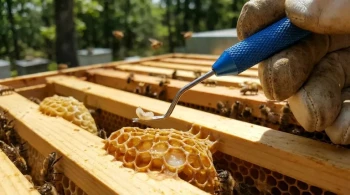
Microsurgery in the Apiary: The Unseen Power of the Queen Grafting Tool
Discover how the queen grafting tool, a microsurgical instrument, gives beekeepers ultimate control over colony genetics and productivity.
Read more
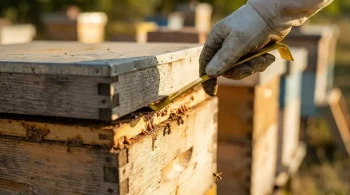
Leverage and Finesse: The Ergonomic Imperative of the Hive Tool
Discover why the 8-10 inch hive tool is the professional standard, balancing the physics of leverage with the psychological need for control.
Read more
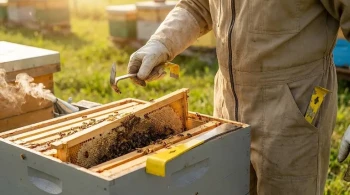
The Unseen Cost of a Single Point of Failure: A Beekeeper's Guide to Hive Tools
Discover why relying on a single hive tool creates a critical failure point in apiary management and how a multi-tool system boosts resilience.
Read more
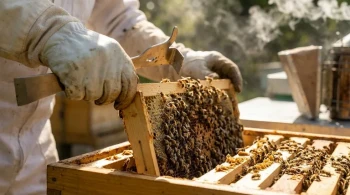
An Extension of the Hand: The Physics and Psychology of the Beekeeper's Hive Tool
Explore the hive tool's design, from the physics of prying propolis to the psychology of a calm inspection. A simple tool for a complex system.
Read more
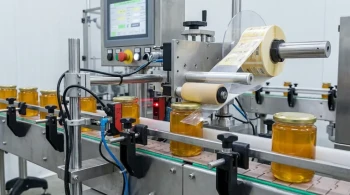
Beyond the Conveyor: The Hidden Physics of a Flawless Honey Label
Discover the intricate system behind automatic labeling—a balance of mechanics, timing, and psychology crucial for high-speed product presentation.
Read more
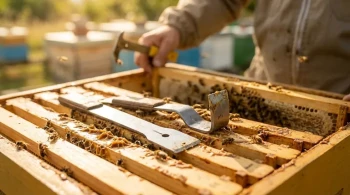
Leverage, Force, and Finesse: An Engineer's Guide to Hive Tool Selection
Choosing between a standard and J-hook hive tool isn't about preference, but understanding the physics of leverage for efficient, gentle beekeeping.
Read more
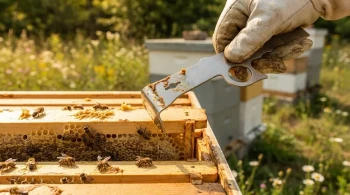
The Physics of Flow: How a Single Hive Tool Redefines the Beekeeper's Workflow
Discover how a multi-functional hive tool reduces cognitive load and streamlines workflow, turning hive management into a single, fluid motion.
Read more
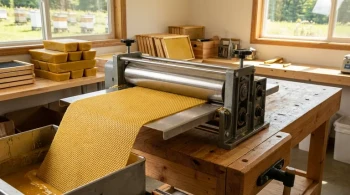
Engineering Symbiosis: The Unseen Role of the Beeswax Embossing Machine
Discover how beeswax embossing machines create a blueprint for bee productivity, saving colony energy and improving hive management for commercial apiaries.
Read more