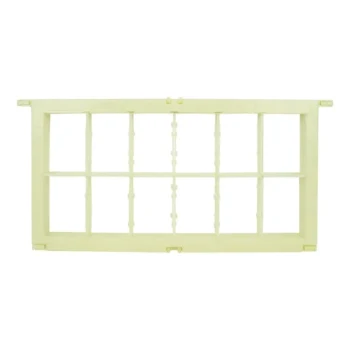
The significance of the ultraviolet (UV) radiation curing process lies in its dual ability to secure both the physical durability and biological safety of 3D-printed components. In the context of honeybee egg collection, specifically for parts like cell boxes, this post-processing step subjects the material to specific light wavelengths to finalize its chemical structure.
Core Takeaway While UV curing increases the structural strength of printed parts, its most critical function in this application is biological defense. By driving complete polymerization, the process eliminates residual chemical monomers that would otherwise be toxic to sensitive honeybee embryos.
Enhancing Physical and Chemical Properties
Achieving Complete Polymerization
The primary technical goal of UV curing is to ensure the 3D-printing material is fully reacted.
During the initial print, the material may hold its shape but often remains chemically incomplete. Post-curing uses light energy to force the remaining molecules to bond, creating a solid, unified structure.
Improving Structural Strength
Honeybee egg collection components, such as cell boxes, require mechanical durability to withstand handling.
UV curing hardens the resin, transforming it from a "green" (semi-cured) state into a robust component. This added strength prevents deformation or breakage during the collection process.
Ensuring Chemical Stability
Beyond physical hardness, the component must be chemically inert.
The curing process stabilizes the material, preventing it from leaching chemicals or degrading over time. This stability is essential for maintaining the integrity of the apparatus during repeated use.
The Critical Factor: Biological Safety
Eliminating Residual Monomers
The most significant risk associated with uncured 3D-printed resins is the presence of residual monomers.
These are the unreacted chemical building blocks of the resin. If left on the surface or within the structure of the part, they remain chemically active and hazardous.
Preventing Toxicity to Embryos
Honeybee embryos are biological samples with extreme sensitivity to their environment.
The reference material explicitly notes that residual monomers exhibit toxicity toward these embryos. UV curing neutralizes this threat by ensuring all monomers are converted into the safe, solid polymer matrix.
Critical Process Variables
Precision in Wavelength and Duration
The effectiveness of the cure is not automatic; it relies on strict process controls.
Operators must utilize specific wavelengths of light matched to the resin's requirements. Furthermore, the components must be exposed for a designated duration to ensure the reaction reaches the core of the part.
The Risk of Under-Curing
If the curing parameters are not met, the component may look finished but remain dangerous.
Incomplete polymerization leaves the part structurally weak. More critically, it leaves toxic monomers active, directly jeopardizing the viability of the collected honeybee eggs.
Ensuring Component Safety and Viability
To maximize the success of your honeybee egg collection project, prioritize the curing protocol as a safety standard rather than just a finishing step.
- If your primary focus is Component Longevity: Ensure the curing duration is sufficient to maximize structural strength and prevent physical breakage of the cell boxes.
- If your primary focus is Embryo Survival: Verify that the light wavelength and exposure time are calibrated to achieve 100% polymerization, eliminating all traces of toxic residual monomers.
Treat the UV curing phase as the decisive factor in converting a raw print into a biologically safe tool.
Summary Table:
| Key Aspect | Primary Function | Core Benefit |
|---|---|---|
| Biological Safety | Eliminates toxic monomers | Protects sensitive bee embryos from toxicity |
| Physical Strength | Hardens "green" resin | Prevents breakage and structural deformation |
| Chemical Stability | Finalizes polymerization | Ensures material inertness and long-term use |
| Process Control | Optimizes wavelength/time | Guarantees complete conversion of raw resin |
Partner with HONESTBEE for Professional-Grade Beekeeping Equipment
For commercial apiaries and distributors, precision and safety are non-negotiable. HONESTBEE offers a comprehensive wholesale portfolio designed to meet the rigorous demands of large-scale operations. From specialized hardware like hive-making and honey-filling machines to essential industry consumables and honey-themed cultural merchandise, we provide the full spectrum of tools you need.
Why choose us? We understand the technical nuances of bee health—including the vital importance of safe, fully-cured components for breeding. Contact us today to streamline your supply chain and enhance your apiary's efficiency with our expert-backed equipment.
References
- Jae Ho Lee, Si Hyeock Lee. Development of a film-assisted honeybee egg collection system (FECS). DOI: 10.1007/s13592-019-00687-8
This article is also based on technical information from HonestBee Knowledge Base .
Related Products
- Langstroth Honey Bee Box Hive Boxes for Different Depths
- Assembled Wooden Bee Frames with Plastic Foundation for Durability and Convenience by HONESTBEE
- Assembled Wooden Bee Frames with Beeswax Foundation Ready to Use by HONESTBEE
- Heart-Shaped Comb Honey Frame and Honeycomb Cassette
- Styrofoam Mini Mating Nuc Box with Frames Feeder Styrofoam Bee Hives 3 Frame Nuc Box
People Also Ask
- What role do standardized Langstroth boxes play in commercial apiary management and honey bee research? | HONESTBEE Guide
- What are the differences between the three standard depths of Langstroth boxes? Choose the Best Size for Your Apiary
- What are the primary advantages of using standardized Langstroth boxes? Scale Your Commercial Beekeeping Operation
- What features of Langstroth hive boxes contribute to expandability and honey yield? Maximize Your Apiary Production
- What are the typical uses for the different box sizes in a Langstroth hive? Master Hive Management & Efficiency