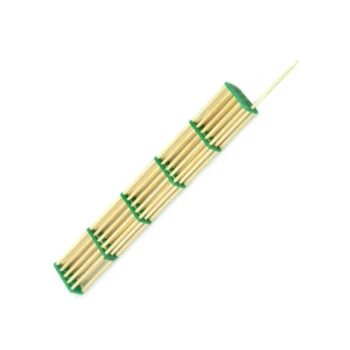
The specific function of a dual-frame isolation cage is to strictly confine a queen bee to a designated area for egg-laying for a precise 24-hour period. This temporal restriction guarantees that all larvae generated for subsequent grafting are exactly 1-day-old, creating a standardized baseline for development.
The cage serves as a control mechanism that eliminates natural variations in egg-laying times, ensuring the precise synchronization of larval age required for high-integrity research.
The Mechanics of Synchronization
Establishing a "Time Zero"
The primary mechanism of the cage is the creation of a strict 24-hour egg-laying window.
By confining the queen to specific frames for this exact duration, researchers ensure that the age of every resulting larva is uniform.
Facilitating Precision Grafting
Once the isolation period ends, the larvae obtained are at a standardized developmental stage.
This allows for the grafting of exclusively 1-day-old larvae, which is the gold standard for starting experimental cultures.
Why Precision Matters in Research
Ensuring Nutritional Consistency
In nutritional research, slight differences in age can drastically change how a larva metabolizes food.
Using a dual-frame cage ensures that all subjects are developmentally identical, making nutritional data comparable and valid.
Eliminating Experimental Bias
Without synchronization, variations in larval age can introduce "noise" into the data.
Older larvae may be less susceptible to pathogens or treatments, leading to skewed results. This tool eliminates that variable entirely.
Understanding the Trade-offs
Manipulation Stress
Implementing a dual-frame cage requires physical manipulation of the hive frames and the queen.
While necessary for precision, this intervention can temporarily stress the colony or disrupt the hive's natural workflow.
Production Constraints
Restricting the queen prevents her from laying eggs freely throughout the rest of the hive.
This is a deliberate trade-off where total egg volume is sacrificed to achieve developmental uniformity in a specific batch.
Making the Right Choice for Your Research
- If your primary focus is nutritional research: You must use this cage to ensure all larvae are exactly 1-day-old, as developmental variances will invalidate your metabolic data.
- If your primary focus is minimizing experimental error: Rely on this method to eliminate age-related bias, ensuring that any differences in results are caused by your treatment, not by the larvae's maturity.
Mastering the use of the dual-frame isolation cage is the first step toward producing unimpeachable experimental data in honeybee research.
Summary Table:
| Feature | Function & Purpose |
|---|---|
| Core Mechanism | Confines the queen to specific frames for a 24-hour period |
| Primary Goal | Guarantees all larvae are exactly 1-day-old for grafting |
| Research Benefit | Eliminates age-related bias and metabolic noise in data |
| Key Application | Essential for nutritional studies and pathogen testing |
| Trade-off | Sacrifices total egg volume for developmental uniformity |
Elevate Your Bee Research and Operations with HONESTBEE
Precision is the backbone of successful beekeeping, whether you are conducting high-integrity research or managing a commercial apiary. HONESTBEE specializes in supporting commercial apiaries and distributors with a comprehensive wholesale range of professional tools, from high-precision isolation cages to advanced honey-filling machines and hive-making equipment.
Our extensive portfolio of beekeeping hardware and essential consumables is designed to enhance your efficiency and experimental accuracy. Contact us today to discuss how our specialized machinery and wholesale solutions can optimize your production and help you achieve superior results in the field.
References
- Dilek Kabakcı, Gökhan Akdeniz. The Effect of Different Dietary Practices on Workers and Queen Bee Formations in Honeybee (Apis mellifera L.) Larvae. DOI: 10.18185/erzifbed.726216
This article is also based on technical information from HonestBee Knowledge Base .
Related Products
- Professional Bamboo Queen Isolation Cage
- In-Hive Dual Compartment Frame Bee Feeder for Targeted Colony Nutrition
People Also Ask
- Why are specialized queen bee cages used for the banking of mated queen bees? Maximize Commercial Apiary Storage Efficiency
- What is the mechanism of action for using temporary queen bee cages? Master Successful Queen Introduction
- How does the side ventilation design of a queen bee cage impact the safety of the queen during long-distance transport?
- What should you do if the queen is still in the cage and the worker bees have not accepted her? Protect Your Colony from Queen Rejection
- What technical precaution must be taken regarding the mesh or grill side of a queen bee cage? Ensure Queen Survival