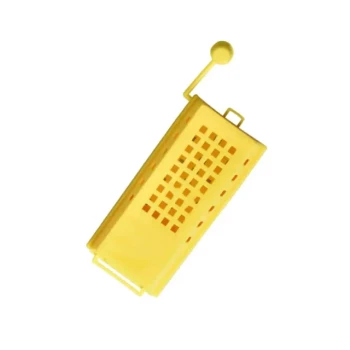
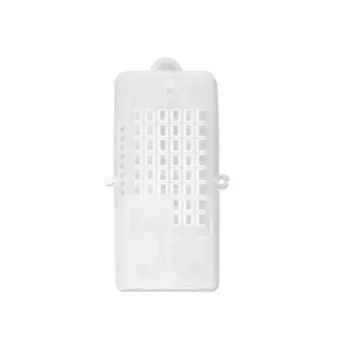
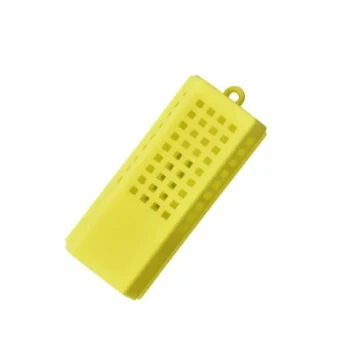
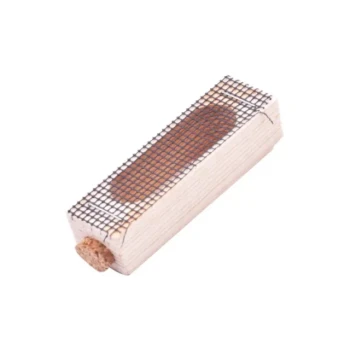
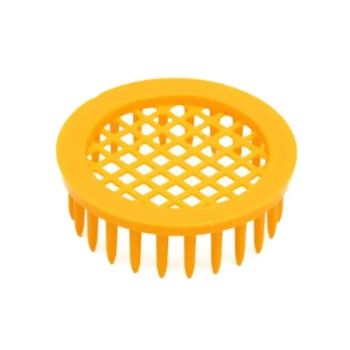
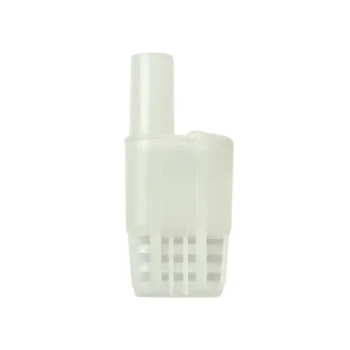
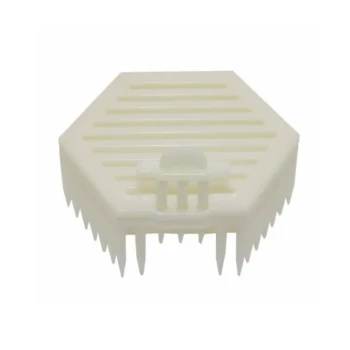
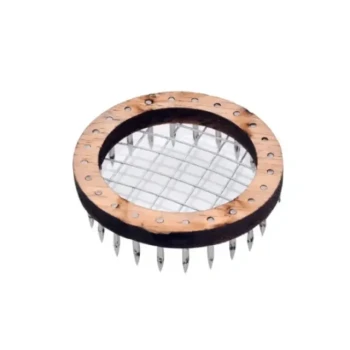
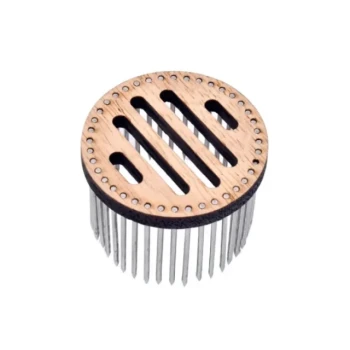
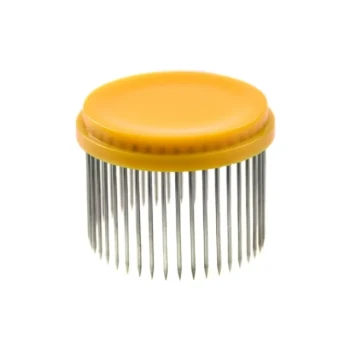
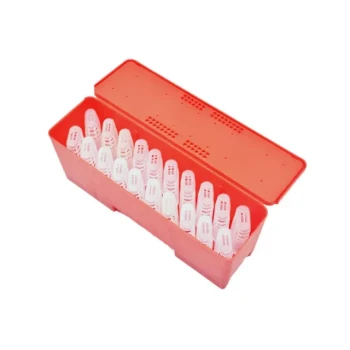
Crucial positioning during installation requires ensuring that the mesh or grill side of the queen cage remains completely unobstructed and facing away from the wax comb. You must position the cage so the screen is exposed to the open space between frames, rather than pressed tight against the wax foundation. Failure to maintain this clearance can isolate the queen from the colony, preventing vital care and communication.
Core Takeaway The queen cage mesh acts as the biological interface between the new queen and the colony. Blocking this screen cuts off pheromone distribution and prevents worker bees from feeding the queen, leading to almost certain rejection or starvation.
The Mechanics of Queen Acceptance
Facilitating Pheromone Integration
The primary function of the mesh screen is to allow the free flow of the queen's pheromones throughout the hive.
For a colony to accept a new queen, they must become habituated to her specific scent. The open mesh ensures that air circulates through the cage, carrying these chemical signals to the worker bees.
Enabling Trophallaxis (Feeding)
The queen cannot feed herself adequately while confined within the transport cage.
She relies entirely on nurse bees to feed her through the mesh screen. If the screen is blocked by wax or pressed against a surface, the workers cannot make physical contact to provide food, and the queen will starve.
Proper Installation Orientation
Maintaining the "Interaction Zone"
When wedging the cage between frames, you must verify that the screen faces the center of the gap between the frames.
The workers need a physical platform to stand on while they interact with the screen. Ensuring the mesh faces open space allows a cluster of bees to form over the cage, which is necessary for both temperature regulation and socialization.
Inspecting for Obstructions
Before closing the hive, visually confirm that no burr comb or debris is covering the grill.
Even partial obstructions can hinder the "retinue" of bees trying to care for the queen. The entire surface area of the mesh should remain accessible to the colony.
Common Pitfalls and Risks
The Risk of Aggression vs. Access
While the metal mesh serves as a shield to prevent aggressive attacks during the initial introduction, it must not become a barrier to communication.
There is a delicate balance between protection and isolation. You want the workers to smell and touch the queen without being able to ball or sting her immediately.
Mismanaging the Release Mechanism
While focusing on the mesh, do not neglect the candy release plug.
As noted in standard procedures, the cork on the candy end must be removed to allow workers to chew through the barrier. However, if the mesh is blocked, the queen may perish from starvation long before the workers can release her through the candy.
Making the Right Choice for Your Goal
To ensure the highest probability of a successful queen introduction, follow these specific guidelines based on your immediate objective:
- If your primary focus is ensuring queen survival: Verify that the mesh is facing open space so nurse bees can immediately feed the queen through the screen.
- If your primary focus is rapid colony acceptance: Ensure the cage is positioned centrally in the brood nest where pheromone dispersal is most efficient.
Proper positioning of the cage screen is the single most controllable factor in preventing queen rejection.
Summary Table:
| Key Technical Precaution | Purpose of Action | Potential Risk of Failure |
|---|---|---|
| Face Mesh Toward Gap | Enables workers to feed the queen (Trophallaxis) | Queen starvation due to lack of access |
| Avoid Wax Obstruction | Allows pheromone circulation throughout hive | Colony rejection and queen replacement |
| Center Brood Placement | Ensures optimal temperature and socialization | Poor integration and delayed queen release |
| Clear "Interaction Zone" | Provides space for the nurse bee retinue | Isolated queen and failed communication |
Maximize Your Apiary’s Success with HONESTBEE
Successful queen introduction is just the beginning. At HONESTBEE, we understand that commercial apiaries and distributors require precision-engineered equipment to maintain healthy, productive colonies.
We provide a comprehensive wholesale range of beekeeping essentials designed for industry professionals, including:
- Advanced Queen Rearing Supplies: High-quality cages and tools that ensure safe transit and successful introduction.
- Commercial Machinery: Precision hive-making and honey-filling machines to scale your operations.
- Essential Consumables: A full spectrum of hardware and specialized tools for large-scale hive management.
Whether you are expanding your commercial apiary or stocking your distribution network, partner with a supplier that values technical precision as much as you do.
Contact HONESTBEE Today for Wholesale Solutions
Related Products
- Durable Galvanized Steel Spring Queen Bee Cage
- Professional Queen Cage with Sliding Gate and Feeder Plug
- Professional Queen Bee Introduction and Transport Cage
- Professional Multi-Functional Queen Bee Cage
- Professional Bamboo Queen Isolation Cage
People Also Ask
- Why are specialized queen bee cages used for the banking of mated queen bees? Maximize Commercial Apiary Storage Efficiency
- What is the mechanism of action for using temporary queen bee cages? Master Successful Queen Introduction
- What is the step-by-step process for installing a queen bee's cage onto a frame? Ensure Hive Acceptance Safely
- What is the optimal placement for a queen bee cage? Essential Strategies for Successful Re-queening
- What are the advantages and disadvantages of introducing a queen bee by embedding the cage? Boost Your Queen Acceptance