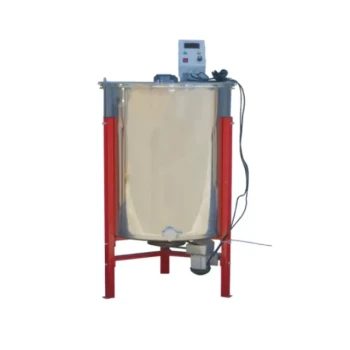
A centrifuge serves as the fundamental mechanism for separation and purification within the acetolysis method. By utilizing high-speed rotation to generate centrifugal force, the device rapidly settles pollen grains out of a liquid suspension and into a solid pellet at the bottom of the container. This allows for the efficient removal of supernatants—such as excess alcohols, acids, or dissolved honey—ensuring the pollen is isolated for analysis.
The centrifuge enables the complete separation of pollen particles from chemical reagents through rapid sedimentation. This isolation is critical for washing samples and removing background interference, ensuring the final specimen is pure enough for accurate microscopic observation.
The Mechanics of Pollen Isolation
Generating Centrifugal Force
The acetolysis method relies on suspending pollen in various liquid chemicals. The centrifuge uses high-speed rotation to create centrifugal force, which acts on the suspended particles.
Rapid Sedimentation
This force accelerates the natural settling process. It drives the denser pollen grains to the bottom of the tube much faster than gravity alone, creating a distinct separation between the solid biological matter and the liquid solution.
Formation of the Pellet
The result of this process is the concentration of pollen grains into a tight pellet. This consolidation allows technicians to pour off or pipette away the liquid (supernatant) without disturbing the valuable pollen sample.
Critical Functions in the Workflow
Washing and Dehydration
Before and after chemical treatments, samples must be washed to remove water or dehydration agents like alcohol. The centrifuge facilitates these repeated wash cycles by settling the pollen so the dirty wash liquid can be discarded.
Chemical Removal
Acetolysis involves aggressive acids to digest organic debris. The centrifuge is essential for separating the pollen from these reaction liquids once the digestion is complete, halting the chemical process safely.
Sample Enrichment
In complex substances like pot-honey, pollen is initially diluted. Centrifugation concentrates these trace elements from a large volume of liquid into a small, observable sample, effectively enriching the target components.
Common Pitfalls to Avoid
Insufficient Separation
If the rotational speed is too low or the time too short, the pollen may not fully settle. This leads to sample loss when the supernatant is decanted, as suspended pollen is poured out with the waste liquid.
Residual Interference
Failure to completely separate the supernatant between wash steps can leave behind chemical residue or dissolved debris. This results in background interference under the microscope, obscuring the features necessary for botanical identification.
Making the Right Choice for Your Goal
To ensure successful botanical identification, apply the centrifugation steps with the following specific objectives in mind:
- If your primary focus is Sample Purity: Ensure complete sedimentation to allow for thorough decanting of supernatants, removing all traces of interfering background material.
- If your primary focus is Workflow Efficiency: Utilize rapid sedimentation to speed up the multiple washing and dehydration phases required before microscopic mounting.
The centrifuge is not merely a tool for spinning; it is the gatekeeper of sample quality, transforming a chemically treated mixture into a clear, identifiable specimen.
Summary Table:
| Process Stage | Function of Centrifuge | Key Benefit |
|---|---|---|
| Pollen Isolation | Rapid sedimentation via centrifugal force | Drives pollen grains to form a concentrated pellet |
| Washing/Dehydration | Facilitates repeated wash cycles | Efficiently removes water and dehydration agents |
| Chemical Removal | Separates pollen from reaction liquids | Safely halts digestion and removes aggressive acids |
| Sample Enrichment | Concentrates trace elements from liquids | Increases target density for accurate observation |
Elevate Your Beekeeping Quality Control with HONESTBEE
Precision in pollen identification is the hallmark of premium honey production. At HONESTBEE, we specialize in empowering commercial apiaries and distributors with the professional tools needed for industrial-scale success. From specialized beekeeping machinery to essential consumables, our comprehensive wholesale offering is designed to streamline your workflow.
Whether you are looking for advanced honey-filling machines, hive-making equipment, or a complete suite of laboratory tools to ensure botanical purity, we provide the expertise and hardware to scale your operations.
Ready to optimize your production and ensure the highest product standards?
Contact HONESTBEE Today for a Professional Consultation
References
- José Elton de Melo Nascimento, Cláudia Inês da Silva. Temporal variation in production and nutritional value of pollen used in the diet of Apis mellifera L. in a seasonal semideciduous forest. DOI: 10.13102/sociobiology.v66i2.2879
This article is also based on technical information from HonestBee Knowledge Base .
Related Products
- Manual Hand Crank 4 Frame Honey Extractor Centrifuge for Beekeeping
- electric honey extractor honey centrifuge 3 frame honey extractor stainless steel honey frame extractor
- Professional 4 Frame Self Reversing Electric Honey Extractor for Beekeeping
- Fully Automatic High Speed Centrifugal Bottle Unscrambler
People Also Ask
- What are some tips for achieving efficient honey extraction with a centrifuge extractor? Maximize Your Yield & Efficiency
- What is the proper procedure for maintaining a centrifuge honey extractor? Expert Tips for Longevity and Hygiene
- What are the advantages of using a centrifuge honey extractor? Maximize Yields and Protect Your Honeycombs
- Which type of honey extractor is generally more durable? Focus on Material & Build Quality for Longevity
- What is a manual honey extractor? The Essential Guide to Cost-Effective Beekeeping for Beginners