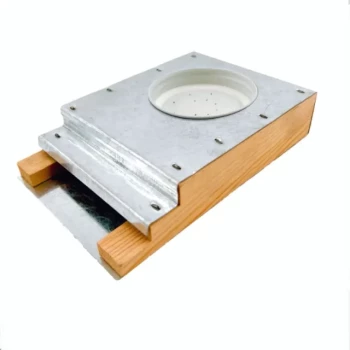
Specialized feeders are a critical survival mechanism for Apis cerana colonies, acting as a buffer against environmental instability. During periods of scarcity, these devices do more than simply provide food; they deliver syrup or supplements at a controlled flow rate to prevent colony collapse. This regulated supply curbs the species' natural tendency to abscond (flee the hive) due to starvation and keeps the colony biologically active.
Core Takeaway specialized feeders are not merely food containers; they are simulation tools. By mimicking a natural nectar flow, they trick the colony’s biology into maintaining reproduction and stability, ensuring the hive does not shrink or abscond during environmental stress.
The Strategic Role of Controlled Feeding
Mitigating the "Absconding" Instinct
Apis cerana is highly sensitive to environmental changes and has a lower threshold for abandoning the hive compared to other species.
When natural resources vanish, the immediate risk is not just starvation, but absconding. Specialized feeders provide a consistent nutritional safety net. By removing the physiological stress of hunger, you suppress the colony's instinct to migrate, preserving your apiary assets.
Simulating Natural Nectar Flow
The primary reference highlights that specialized feeders offer a controlled flow rate. This is the distinct technical advantage over open feeding.
By regulating the intake of syrup, the feeder simulates a natural nectar source. This artificial abundance signals to the colony that the environment is still productive, preventing a slowdown in hive activity.
Stimulating Queen Activity
The queen bee's egg-laying rate is directly tied to the incoming resource flow. If the flow stops, egg laying drops, and the population dwindles.
Continuous feeding through specialized devices stimulates the queen to continue laying eggs. This ensures brood development continues even during dearths, preventing a population crash that would otherwise take months to recover from.
Environmental and Operational Context
Countering Weather-Induced Scarcity
Supplementary references indicate that scarcity isn't always seasonal; it can be event-driven.
During extreme heavy rainfall or drought, nectar may be diluted or physically inaccessible. Feeders allow the colony to maintain hive temperature and vital activities when bees are physically unable to fly or forage.
Nutritional Compensation and Disease Management
Beyond simple sugar syrup, these feeders can deliver high-purity energy sources and protein supplements (pollen patties).
This is critical for maintaining high turnover rates of workers. Furthermore, these feeders serve as a delivery system for medical treatments (such as for Varroa mites), enhancing colony resilience while simultaneously feeding them.
Understanding the Trade-offs
The Necessity of "Pre-Loading" the Colony
A common pitfall is viewing feeders solely as emergency rescue devices.
The primary reference notes the goal is ensuring the colony reaches sufficient size before the next peak foraging season. If you wait until the colony has already shrunk to use feeders, the recovery time may miss the next natural honey flow entirely.
Dependency on Artificial Inputs
While necessary, reliance on feeders is an intervention, not a permanent state.
The goal is to bridge the gap between natural flows. Over-reliance without monitoring can mask underlying issues with the queen or local forage availability. The intervention must be timed to maintain stability, not to permanently replace foraging.
Making the Right Choice for Your Goal
To maximize the effectiveness of specialized feeders, align your usage with your specific colony objectives:
- If your primary focus is Colony Survival (Winter/Drought): Prioritize high-energy syrup delivery to maintain hive temperatures and prevent starvation-induced absconding.
- If your primary focus is Spring Readiness (Production): Focus on protein supplements and controlled flow stimulation to trigger early brood rearing and peak population size.
- If your primary focus is New Colony Establishment: Use feeders to provide the consistent energy required for drawing out new comb, regardless of external weather conditions.
Mastering the use of specialized feeders turns the volatility of nature into a controllable variable for your apiary.
Summary Table:
| Feature | Function for Apis cerana | Strategic Benefit |
|---|---|---|
| Controlled Flow Rate | Mimics natural nectar flow | Stimulates continuous queen egg-laying |
| Nutritional Buffer | Provides syrup/protein during dearth | Prevents starvation-induced absconding |
| Weather Resilience | Internal feeding during rain/drought | Maintains hive temperature & vital activity |
| Medication Delivery | Integrates supplements/treatments | Enhances disease resistance & hive health |
| Pre-Loading Support | Builds colony population early | Ensures readiness for peak foraging seasons |
Maximize Your Apiary Productivity with HONESTBEE
Don’t let environmental instability threaten your commercial success. At HONESTBEE, we specialize in supporting commercial apiaries and distributors with high-performance beekeeping tools and machinery designed to handle the unique needs of species like Apis cerana.
From precision specialized feeders and honey-filling machines to automated hive-making equipment and essential consumables, our comprehensive wholesale offering provides everything you need to scale your operations. Partner with us to access the specialized hardware and cultural merchandise that set industry standards.
Ready to secure your honey flow? Contact us today to discuss your wholesale needs!
References
- Xinying Qu, Xiao Chen. Investigations on Beekeeping and Breeding of Apis cerana in China. DOI: 10.3390/life15010009
This article is also based on technical information from HonestBee Knowledge Base .
Related Products
- Professional Hive Top Bee Feeder for Beekeeping
- Professional Hive Front Entrance Bee Feeder
- In-Hive Dual Compartment Frame Bee Feeder for Targeted Colony Nutrition
- Boardman Entrance Bee Feeder Durable Galvanized Steel and Wood Construction for Beekeeping
- Professional In-Hive Bee Feeder HONESTBEE Frame for Beekeeping
People Also Ask
- What is a hive top feeder? A Guide to Efficient, Low-Stress Beekeeping
- Do I need an inner cover with a hive top feeder? Optimize Your Hive Setup for Healthy Bees
- What is a hive top feeder, and how does it work? A Complete Guide to Efficient In-Hive Feeding
- What are the characteristics, advantages, and disadvantages of hive top feeders? Optimize Your High-Volume Feeding
- How does a hive top feeder work? Optimize Your Apiary's Nutrition and Security