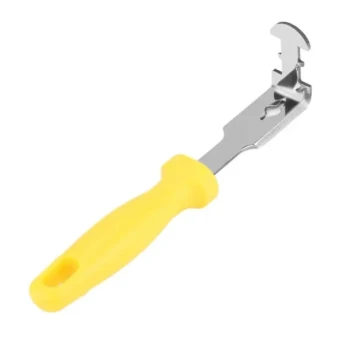
Standardized propolis harvesting requires a specialized Propolis Collector to overcome the significant contamination issues inherent in manual scraping. By utilizing the honeybee's biological instinct to fill gaps, these devices isolate propolis deposition from other hive materials. The result is a raw material that effectively minimizes the inclusion of wood chips, beeswax, and insect remains, which are unavoidable when scraping hive frames.
Core Takeaway: By mimicking natural hive crevices, specialized collectors induce bees to deposit pure resin in a controlled environment, typically reducing impurities to less than 10%. This creates a uniform, high-quality foundation that is critical for efficient refining and accurate bioactive analysis.
The Mechanics of Cleaner Harvesting
Harnessing Biological Instincts
Honeybees possess a natural drive to seal cracks and gaps within the hive to maintain internal temperature and defense.
Specialized collectors, such as grids, traps, or nets, are designed with specific dimensions to trigger this instinct.
Instead of spreading propolis randomly, the bees are induced to concentrate their secretion directly into these artificial gaps.
Isolating the Material
Because the bees are depositing resin into a dedicated tool rather than onto structural hive components, the propolis remains isolated.
This separation prevents the resin from mixing with the wax of the honeycomb or the wood of the frames.
Why Scraping Fails Standardization
The Contamination Problem
Traditional scraping involves physically removing propolis from hive bodies and frames.
This mechanical action inevitably dislodges foreign matter, introducing significant impurities.
Common contaminants include wood splinters from the frames, excess beeswax, and crushed insect remains.
Inconsistent Chemical Composition
When impurities are mixed into the raw material, the chemical profile of the propolis becomes unreliable.
Scraped samples often differ wildly in their ratio of resin to wax and debris.
This inconsistency makes it nearly impossible to establish a standardized baseline for pharmaceutical applications or scientific research.
The Impact on Downstream Processing
Enhancing Purity for Analysis
Research indicates that propolis harvested via specialized collectors typically contains less than 10% impurities.
This high level of purity provides a transparent view of the true bioactive potential of the material.
It allows for accurate assessment of propolis production across different genetic bee lineages without the noise of contaminants.
Reducing Processing Difficulty
Raw material collected through scraping requires aggressive filtration and purification to remove debris.
Using a collector produces a "cleaner" starting product, significantly reducing the labor and complexity of subsequent refining.
This is particularly vital for producing oral care products or anti-infection preparations where hygiene standards are rigorous.
Understanding the Trade-offs
Equipment vs. Labor Intensity
Implementing specialized collectors requires an initial investment in specific consumables (nets, traps, or grids) compared to the low cost of a simple scraping tool.
However, this upfront cost is often offset by a reduction in labor intensity during the harvest.
Scraping is physically demanding and slow; removing a filled collector is generally faster and yields a product that requires less remediation later.
Making the Right Choice for Your Goal
To achieve standardization, align your harvesting method with your end-product requirements:
- If your primary focus is Pharmaceutical or Lab Use: You must use specialized collectors to ensure the chemical uniformity and low impurity profile required for bioactive analysis.
- If your primary focus is Processing Efficiency: You should utilize collectors to minimize the filtration steps and labor required to remove physical debris like wood and wax.
Ultimately, shifting from scraping to specialized collection is the single most effective step toward professionalizing propolis production and ensuring a premium, standardized output.
Summary Table:
| Feature | Specialized Propolis Collector | Traditional Manual Scraping |
|---|---|---|
| Purity Level | High (Impurities < 10%) | Low (High wood/wax content) |
| Mechanism | Biological instinct (gap-filling) | Mechanical force (scraping) |
| Consistency | Uniform chemical profile | Variable and unreliable |
| Labor Efficiency | Fast removal & low processing | Physically demanding & high remediation |
| End-Use | Pharmaceutical & Bioactive Research | General/Low-grade applications |
Elevate Your Propolis Production with HONESTBEE
Transitioning to professional harvesting is the key to unlocking the true value of your apiary's output. HONESTBEE provides commercial apiaries and distributors with the high-performance propolis traps, grids, and specialized machinery needed to achieve standardized, pharmaceutical-grade results.
From advanced beekeeping tools to full-scale honey-filling equipment, we supply the comprehensive wholesale solutions required to scale your business and reduce labor costs. Contact HONESTBEE today to discover how our specialized hardware and industry consumables can streamline your operations and deliver a premium, high-purity product to your customers.
References
- Jose Juan Alcivar-Saldaña, María Margarita Canales-Martínez. Botanical Origin and Biological Properties of Honey and Propolis from Cuautitlan, State of Mexico, Mexico. DOI: 10.3390/antiox13070874
This article is also based on technical information from HonestBee Knowledge Base .
Related Products
- 8 Frame and 10 Frame Propolis Trap Collector Screen for Propolis Collection
- Heavy Duty Stainless Steel Frame Cleaner with Plastic Handle
- 30 cm Plastic Entrance Hole Bee Pollen Trap and Collector
- Plastic Bee Pollen Trap Strips Comb Catcher Collector
- Heavy-Duty Ergonomic Grip Galvanized Pollen Shovel
People Also Ask
- Why is a specific wooden frame required when installing a propolis screen? Optimize Your Propolis Harvest Efficiency
- What are the advantages of using propolis collector screens? Elevate Your Harvest to Pharmaceutical Purity
- How do propolis collection screens work? Discover material specs for commercial harvesting equipment
- How does the mesh size of a propolis collection screen influence the efficiency of propolis harvesting? Optimize Yields!
- How do commercial-grade plastic screens compare to custom fine-mesh screens? Maximize Your Propolis Yield & ROI