Precision weighing is the fundamental constraint for calculating true net honey production. Industrial-grade weighing equipment is necessary to accurately distinguish between commercial honey extracted for sale and honey retained within frames for colony sustenance. By rigorously subtracting the standardized weight of hive components from the total mass, this equipment transforms raw extraction into precise yield data, enabling the evaluation of colony productivity and the effectiveness of nutritional supplements.
Reliable yield determination transforms beekeeping from an intuitive practice into a data-driven science, allowing operators to isolate variables and objectively measure the economic return on specific management interventions.
The Mechanics of Accurate Yield Calculation
Separating Commercial Output from Resources
To determine true yield, an operator must differentiate between two distinct inventories. High-precision equipment allows you to weigh commercial honey—processed via filling or extracting machinery—separately from the stores kept for the bees.
This separation prevents the conflation of "total hive weight" with "harvestable profit." It ensures that the honey left behind for colony feed does not skew the performance metrics of the harvest.
The Critical Role of Tare Weight
The primary method for calculating net yield is subtraction. Operators must deduct the standard weight of the hive frames and boxes from the total gross weight.
This calculation is only valid if the underlying hardware is consistent. As noted in manufacturing contexts, industrial-grade machinery produces frames with highly standardized dimensions; without this uniformity, the "standard weight" variable becomes unreliable, rendering the yield calculation inaccurate.
Data-Driven Management and Optimization
Evaluating Input Effectiveness
Precision weighing acts as the scorecard for your biological investments. It provides the specific data points needed to determine if inputs, such as protein supplements, are translating into tangible honey production.
Without granular weight data, an apiarist cannot calculate the Return on Investment (ROI) of expensive feed programs. The equipment bridges the gap between biological maintenance costs and economic output.
Optimizing Management Practices
Beyond nutrition, accurate weighing allows for the statistical analysis of mechanical interventions. It enables managers to objectively test the impact of equipment choices, such as the use of Queen Excluders, on yield rates per unit.
This feedback loop helps decision-makers find the optimal balance between maximizing honey harvest rates and maintaining colony health. It moves asset allocation decisions away from guesswork and toward evidence-based strategy.
Understanding the Operational Trade-offs
Integration vs. Workflow Speed
Implementing high-precision weighing introduces an additional step in the processing line. While it generates valuable data, it requires a workflow designed to accommodate measurement without creating a bottleneck in rapid extraction operations.
The Dependency on Standardization
The accuracy of your weighing equipment is strictly limited by the consistency of your woodenware. If your operation uses mixed equipment with varying tare weights (non-standardized frames), the precision of the scale becomes irrelevant because the baseline subtraction value is flawed.
Making the Right Choice for Your Goal
To leverage weighing technology effectively, align your usage with your specific operational objectives:
- If your primary focus is Profit Maximization: Use precision weighing to strictly audit the ROI of protein supplements and feed, cutting costs that do not result in higher net yields.
- If your primary focus is Process Optimization: Utilize yield data to A/B test management hardware, such as Queen Excluders, to determine which configurations maximize throughput.
True apiary efficiency is achieved not just by working harder, but by measuring the exact results of your labor to inform your next decision.
Summary Table:
| Metric Type | Role in Yield Calculation | Operational Benefit |
|---|---|---|
| Net Weight | Subtracts standardized tare weight from gross mass | Isolates actual harvestable profit |
| Resource Separation | Distinguishes commercial honey from colony stores | Prevents skewing performance metrics |
| Input Audit | Measures yield response to protein supplements | Calculates ROI on biological investments |
| Process Testing | Evaluates impact of hardware like Queen Excluders | Enables data-driven management strategy |
Scale Your Honey Production with HONESTBEE
At HONESTBEE, we empower commercial apiaries and distributors with the precision tools required for high-efficiency operations. Our comprehensive wholesale catalog includes everything from standardized hive-making and honey-filling machinery to high-precision equipment designed to optimize your yield data.
By ensuring hardware consistency and mechanical excellence, we help you eliminate guesswork and maximize your ROI. Contact us today to discover how our full spectrum of beekeeping tools, machinery, and essential consumables can elevate your business to a data-driven science.
References
- V. M. Nedashkivskyi, Halyna Hutsol. The effectiveness of using protein mixed feed in feeding honey bees. DOI: 10.32718/ujvas3-1.06
This article is also based on technical information from HonestBee Knowledge Base .
Related Products
- Precision Durable Efficient HONESTBEE Rotary Honey Filling Machine
- Digital Honey Refractometer for Precision Measurement of Optimal Honey Quality
- Precision Honey Refractometer Instrument for Quality Assessment
- Professional Bee Frame Machine for Side Bar Shaping
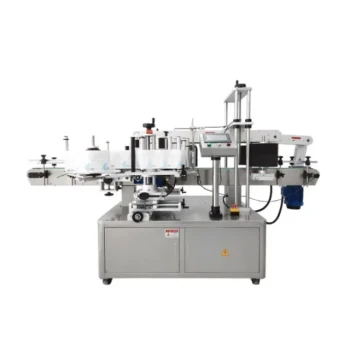
- Automatic Dual Sided In Line Labeling Machine
People Also Ask
- What is a key feature of the new generation of the honey filling machine? The Advanced Electronic Control Unit
- How do honey filling and processing machines aid native bee product conservation? Boost Value with HONESTBEE Technology
- How do high-precision honey filling machines ensure quality? Optimize Your Commercial Production with HONESTBEE
- How do honey filling machines work? Achieve Precision & Speed for Your Apiary
- What are the common types of bottling machines used for honey? Choosing the Right Solution for Your Apiary