Supplemental feeding gives newly installed packaged bees the fuel and nutrients needed to draw comb, establish brood, and build a productive colony. Sugar water supplies readily available carbohydrate energy for wax secretion and colony activity, while pollen or a suitable pollen supplement provides protein and other nutrients needed for brood rearing. This support is especially important when the package has no stored food, limited foraging experience, or is installed before a reliable nectar and pollen flow.
New package colonies cannot build effectively on frames if they must first spend their limited workforce searching for scarce food. Consistent sugar-water feeding supports comb construction, while pollen supplementation helps sustain brood production and colony growth until natural forage is dependable.
Why Packaged Bees Need Immediate Nutritional Support
They usually begin without usable food reserves
A packaged colony often arrives without the established honey and pollen stores found in a mature hive. It may also have little or no drawn comb, leaving the bees dependent on the beekeeper while they establish the colony.
This creates a temporary gap between installation and self-sufficiency. Supplemental feed fills that gap by placing essential nutrition close to the cluster.
Young workers may not forage efficiently
Many bees in a package are young workers with limited foraging experience. Even when flowers are present, the colony may not yet have enough experienced foragers to collect nectar and pollen consistently.
Weather, distance to forage, and competition from established colonies can further reduce the food entering the hive. Feeders provide a predictable source while the workforce develops.
Natural forage is not always synchronized with installation
Packages may be installed before peak nectar flow, during early spring shortages, or during periods of cold, rain, drought, or other extreme weather. In these conditions, flowering plants may not provide enough nectar or pollen to support rapid establishment.
Supplemental feeding is therefore a management tool for bridging a forage shortage, not merely an emergency response to visible starvation.
How Sugar Water Supports Comb Building
Carbohydrates power wax secretion
Worker bees require substantial energy to produce and manipulate beeswax. Sugar water provides an immediately available carbohydrate source that can support this work when nectar is unavailable or insufficient.
A commonly used starting mixture is 1:1 sugar to water, delivered through a dedicated feeder or, where appropriate, a spray bottle. The objective is to make energy available inside the hive without requiring the colony to divert excessive labor to distant forage.
Drawn comb unlocks colony development
Comb is the colony’s essential infrastructure. Once bees draw out the foundation or frames, the queen has cells in which to lay eggs, and workers have space for brood, pollen, and honey storage.
Without sufficient comb, food and workforce expansion are constrained. Feeding helps the bees invest energy in building the structure that enables all subsequent growth.
Feeding can accelerate early establishment
Consistent access to carbohydrate feed can encourage workers to draw comb more continuously, particularly when natural nectar flow has not started. This may help the colony establish usable frame space before a major nectar flow arrives.
The benefit is not simply faster construction. Earlier comb availability can give the queen more laying room and help the colony develop a larger workforce while seasonal forage remains available.
Why Pollen Supplements Matter
Pollen supplies nutrients that sugar cannot
Sugar water provides carbohydrate energy, but it does not replace pollen’s nutritional role. Pollen supplies protein and other nutrients required for worker development, brood care, and the production of brood food and royal jelly.
A pollen supplement or artificial pollen cake can help when natural pollen is absent, inadequate, or inaccessible because of weather.
Brood production increases nutritional demand
As soon as the queen begins laying, workers must feed developing larvae. The colony therefore needs more than energy for wax production; it also needs the nutrients required to rear healthy brood and produce new workers.
This creates a reinforcing cycle: pollen supports brood rearing, brood produces future workers, and a larger workforce becomes better able to forage and build comb.
Pollen supports workforce expansion
A newly installed package must develop enough labor strength to exploit the upcoming nectar flow or pollination period. Supplemental pollen can support this transition when the colony’s natural pollen collection is not yet sufficient.
However, pollen supplements should be viewed as a support measure rather than a universal replacement for diverse, high-quality natural pollen.
How Feeding and Comb Building Work Together
Nutrition creates a foundation for queen laying
The queen cannot expand the colony effectively without available comb. Sugar-supported wax production creates cells, while pollen-supported nutrition helps workers care for the resulting brood.
This is why feeding should be understood as part of a system: energy supports construction, nutrients support reproduction, and comb provides the physical space for both.
Early comb improves resource organization
New comb allows workers to separate brood, pollen, and nectar more effectively. It also gives the colony room to store incoming resources when natural forage improves.
Without enough drawn comb, a colony may be unable to use a strong nectar flow efficiently, even if flowers are abundant.
Feeding protects the establishment window
The early period after installation is especially vulnerable. A package has not yet accumulated reserves, built a stable brood cycle, or developed a full population of foragers.
Supplemental feeding helps maintain momentum during this establishment window and reduces the risk that the colony will stagnate or decline before it becomes self-sufficient.
Understanding the Trade-offs
Feeding is conditional, not automatic forever
Supplemental feeding is most valuable when natural nectar or pollen is insufficient. Once the colony has reliable forage and adequate stores, continued feeding should be evaluated rather than applied indefinitely.
The beekeeper should monitor weather, forage availability, food stores, comb construction, and brood development.
Poor feeder management can create problems
Feeders should be selected and managed to provide access without excessive leakage or exposure. Spilled syrup can encourage robbing, attract pests, and increase colony stress.
For distributors and beekeepers, feeder reliability matters as much as syrup availability. A suitable product should support clean delivery, minimize waste, and fit the hive-management system being used.
Sugar water does not replace pollen
Carbohydrate feeding alone may help with wax production but cannot provide the full nutritional support needed for brood rearing. If natural pollen is scarce, a suitable pollen supplement may be required.
Conversely, pollen supplementation cannot replace the energy supplied by nectar or sugar water. The two interventions address different nutritional needs.
Supplements require quality control
Artificial pollen products should be sourced from reliable suppliers and stored according to their specifications. Quality, freshness, formulation, packaging integrity, and delivery speed are important because nutritional inputs are being used during a colony’s most sensitive development stage.
A dependable supply partner can be valuable when multiple apiaries, seasonal installations, or rapid replenishment requirements make inconsistent sourcing impractical.
How to Apply This to Your Project
The correct program depends on installation timing, local forage, weather, colony strength, and the beekeeper’s objective.
- If your primary focus is rapid frame construction: Provide a managed source of 1:1 sugar water through an appropriate feeder while monitoring comb drawing and stored food.
- If your primary focus is brood expansion: Ensure the colony has access to natural pollen or a suitable pollen supplement, particularly during forage shortages.
- If your primary focus is early-season installation: Plan feeding around the gap between package arrival and dependable nectar and pollen availability.
- If your primary focus is commercial distribution: Maintain a coordinated portfolio of feeders, sugar-feeding supplies, and pollen supplements with reliable inventory and fast fulfillment.
- If your primary focus is minimizing colony risk: Monitor stores, brood, forage, robbing pressure, and feeder condition instead of relying on a fixed feeding schedule.
- If your primary focus is preparing for nectar flow or pollination demand: Use early nutritional support to help the colony build comb and workforce before peak seasonal requirements.
With the right balance of energy, protein, equipment, and monitoring, supplemental feeding gives packaged bees the foundation they need to turn empty frames into a functioning colony.
Summary Table:
| Nutrient Source | Key Role | Timing |
|---|---|---|
| Sugar Water (1:1) | Provides carbohydrates for wax production and colony energy | Critical during initial comb building and early establishment |
| Pollen Supplement | Provides protein and nutrients for brood rearing and workforce growth | Essential when natural pollen is scarce, especially during early brood production |
Ensure your packaged bees get the best start. At HONESTBEE, we supply commercial apiaries and distributors with a complete range of beekeeping tools, feeders, and nutritional supplements. From sugar-water feeders to high-quality pollen substitutes, we support your colony's health and productivity. Our rapid delivery and dedicated service keep your operations running smoothly. Contact us today to discuss your wholesale needs and secure reliable supply for your apiary!
Related Products
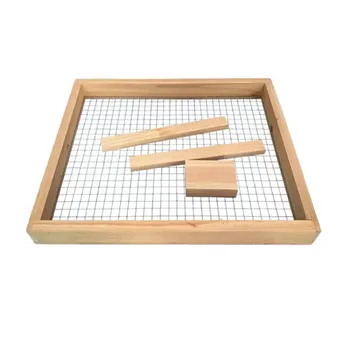
- Heavy-Duty Candy Board with Galvanized Mesh for Beekeeping
- HONESTBEE Round Hive Top Bee Feeder for Syrup
- Automated Rotary Bottle Unscrambler for Honey Production Line
- 3.5L Plastic Beehive Frame Feeder Deep Frame Water Feeder for In Hive Use
- HONESTBEE Entrance Bee Feeder Efficient Hive Front Liquid Feeding Solution for Beekeeping
People Also Ask
- Why is feeding bees considered a last resort by beekeepers? To Protect Honey Purity and Colony Health
- How much sugar does a bee consume daily? Fueling the Hive's Incredible Energy Needs
- Which physical properties of powdered sugar are used in the sugar shake method? Master Varroa Mite Assessment
- What is the mechanism by which Powdered Sugar assists in removing varroa mites? Natural Varroa Control Explained
- What is the recommended sugar-to-water ratio for spring feeding? Use a 1:1 Ratio to Stimulate Hive Growth