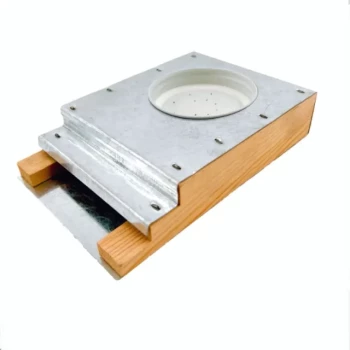
Syrup feeding is the preferred method for large-scale applications because it offers superior control over nutrient consistency and delivery speed. By utilizing liquid feeding equipment, operators can achieve perfect dissolution of supplements, ensuring a homogeneous mixture that aligns with the honeybee's natural preference for rapid liquid ingestion.
The primary advantage of syrup feeding is its ability to utilize trophallaxis—the rapid social sharing of food—to distribute nutrients throughout the entire colony. This ensures the queen and developing larvae receive the supplement immediately, fostering faster colony build-up than solid patties can achieve.
The Mechanics of Efficient Distribution
Achieving Chemical Consistency
Liquid feeding equipment allows for the perfect dissolution of supplementary extracts. Unlike solid patties, where mixing can be uneven, syrup ensures that the supplement is uniformly distributed throughout the feed volume.
Guaranteeing High Homogeneity
This high level of homogeneity means that every drop of feed contains the precise concentration of nutrients intended. It eliminates the variability often found in solid feed formulations.
Leveraging Bee Biology for Speed
Aligning with Natural Habits
Honeybees are biologically adapted to ingest liquids rapidly. This is particularly critical during the spring colony build-up when energy demands are at their peak and time is a factor.
Utilizing Trophallaxis
Once worker bees collect the syrup, they distribute it via trophallaxis, a process of regurgitation and food exchange. This biological mechanism acts as a rapid transit system for the supplement.
Reaching the Critical Caste
Because of this rapid internal distribution, the nutritional extract is quickly delivered to the most vital members of the colony. The queen and the developing larvae receive the nutrients efficiently, directly supporting population growth.
Understanding the Operational Trade-offs
Equipment Dependency
While superior in speed and mix quality, this method relies heavily on the availability of specific liquid feeding equipment. The effectiveness of the dissolution is directly tied to the quality of the machinery used to prepare the syrup.
Seasonal Timing
The primary reference highlights this method's efficacy "particularly during spring colony build-up." This suggests the method is optimized for periods requiring rapid expansion, and may require different considerations during dormant or maintenance phases.
Making the Right Choice for Your Goal
To determine if syrup feeding aligns with your current management strategy, consider your primary operational objectives:
- If your primary focus is Rapid Colony Growth: Prioritize syrup feeding to leverage trophallaxis for immediate nutrient delivery to the queen and larvae.
- If your primary focus is Dosage Precision: Choose liquid feeding to ensure high homogeneity and perfect dissolution of the supplement within the feed.
By selecting the delivery method that aligns with the biological mechanisms of the hive, you ensure your investment in supplements translates directly into colony strength.
Summary Table:
| Feature | Syrup Feeding (Liquid) | Patty Feeding (Solid) |
|---|---|---|
| Distribution Speed | Rapid (via Trophallaxis) | Slow (Gradual Consumption) |
| Nutrient Consistency | High Homogeneity | Variable Mixing Quality |
| Target Audience | Queen & Developing Larvae | Foraging Worker bees |
| Best Use Case | Spring Colony Build-up | Winter Maintenance/Dormancy |
| Equipment Needs | Specialized Mixing Machinery | Manual Placement |
Scale Your Apiary Operations with HONESTBEE
Are you a commercial apiary or distributor looking to optimize colony health and operational efficiency? HONESTBEE specializes in the full spectrum of professional beekeeping tools, from high-precision liquid feeding equipment to honey-filling machines and essential consumables.
Our solutions are designed to ensure perfect nutrient dissolution and rapid hive expansion, giving you the competitive edge in large-scale beekeeping. Let us help you streamline your production with our comprehensive wholesale offering.
Contact HONESTBEE Today for Custom Equipment Solutions
References
- Jevrosima Stevanović, L. J. L. D. van Griensven. The effect of Agaricus brasiliensis extract supplementation on honey bee colonies. DOI: 10.1590/0001-3765201820150182
This article is also based on technical information from HonestBee Knowledge Base .
Related Products
- HONESTBEE Round Hive Top Bee Feeder for Syrup
- HONESTBEE Entrance Bee Feeder Efficient Hive Front Liquid Feeding Solution for Beekeeping
- HONESTBEE Entrance Bee Feeder Professional Hive Nutrition Solution for Beekeeping
- HONESTBEE Professional Entrance Bee Feeder Hive Nutrition Solution
- HONESTBEE Professional Hive Top Bee Feeder Feeding Solution
People Also Ask
- What can the round hive top feeder be used for? A Guide to Efficient, Safe Bee Feeding
- What is the capacity of the round hive top feeder for syrup and pollen? A Guide to Targeted Apiary Support
- What types of hive boxes is the round hive top feeder compatible with? Universal Fit for 8 & 10-Frame Langstroth Hives
- What types of feed can be used with the round hive top feeder? Versatile Feeding for Optimal Apiary Health
- What are the different types of top feeders for bees? Choosing the Best Feeder for Your Apiary