The use of standardized sampling containers and precise weight controls is the cornerstone of data integrity in honey residue monitoring. By mandating chemically stable containers and a uniform sample mass (typically 0.5 to 1 kg), monitoring programs ensure that the collected honey maintains its original state and accurately represents the antibiotic exposure levels of the entire batch.
The reliability of a risk assessment system is defined by its inputs; standardization prevents handling errors and external variables from distorting laboratory results, ensuring that safety conclusions are based on reality rather than contamination.
Ensuring Sample Integrity and Representativeness
Preventing Secondary Contamination
The primary function of a standardized container is to isolate the sample from the external environment. Using chemically stable materials ensures that the container itself does not interact with the honey or introduce foreign substances.
This creates a barrier against secondary contamination, where environmental factors alter the sample after collection. It also mitigates the risk of cross-contamination between different samples, which is critical when tracking trace levels of antibiotics.
The Importance of Weight Consistency
Adhering to a specific weight range, such as 0.5 to 1 kg, is not merely a logistical preference; it is a statistical necessity.
This volume ensures the sample is large enough to be statistically representative of the entire honey batch. Without a standardized weight, variations in sample size could lead to inconsistent detection limits or false negatives in laboratory analysis.
Strengthening the Risk Assessment System
Reflecting True Exposure Levels
The ultimate goal of residue monitoring is to evaluate risk accurately. Standardized collection protocols ensure that the laboratory results are a true reflection of the colony's condition.
By eliminating variables in the collection phase, researchers can be confident that detected residues result from actual exposure, rather than artifacts of the sampling process.
Enabling Data Comparability
While the physical container protects the single sample, the standardization of that container protects the dataset.
Just as standardized survey tools allow for global comparisons of colony loss, uniform sampling containers ensure that residue data can be compared across different regions and timeframes. This uniformity establishes a reliable baseline for analyzing broader environmental factors and management practices.
Understanding the Trade-offs
Logistical Rigidity vs. Flexibility
Implementing strict standardization requires a robust supply chain. Monitoring programs must ensure a consistent supply of specific containers to all field agents, which can be challenging in remote geographic locations.
The Risk of Systemic Error
Standardization creates uniformity, but it also amplifies systemic errors. If the chosen "standard" container has a defect—such as a seal that degrades under specific temperatures—that defect will affect every single sample in the program, potentially invalidating the entire dataset.
Making the Right Choice for Your Program
To ensure your honey monitoring program delivers actionable and legally defensible data, consider the following strategic priorities:
- If your primary focus is Data Accuracy: Prioritize chemically inert containers that prevent any interaction between the plastic polymers and the honey matrix.
- If your primary focus is Global Comparability: Strictly enforce the 0.5 to 1 kg weight requirement to ensure your datasets align with international standards and peer research.
- If your primary focus is Logistics: Establish a centralized distribution system for sampling kits to prevent field agents from using non-compliant, ad-hoc containers.
Success in residue monitoring relies not just on sophisticated laboratory equipment, but on the rigorous discipline applied to the very first step of the process: the collection.
Summary Table:
| Feature | Requirement | Impact on Monitoring |
|---|---|---|
| Container Material | Chemically inert/stable | Prevents secondary & cross-contamination |
| Sample Weight | 0.5 kg to 1.0 kg | Ensures statistical representativeness of the batch |
| Consistency | Uniform protocols | Enables data comparability across regions |
| Integrity | Sealed environment | Reflects true exposure levels without external bias |
Elevate Your Beekeeping Standards with HONESTBEE
Maintaining data integrity in honey residue monitoring is essential for commercial success and consumer trust. At HONESTBEE, we specialize in supporting commercial apiaries and distributors by providing the high-quality infrastructure needed for professional honey production.
From specialized honey-filling machines that ensure precise weight control to a comprehensive range of beekeeping tools and machinery, we supply everything required to maintain a rigorous and standardized operation. Whether you are looking for wholesale beekeeping equipment or industrial hardware to streamline your honey processing, our team is here to help.
Ready to scale your operation with professional-grade equipment?
Contact HONESTBEE Today to explore our wholesale offerings and discover how we can add value to your honey business.
References
- Davit Pipoyan, Meline Beglaryan. Assessing Health Risks Associated with Antibiotic Residues in Armenian Honey. DOI: 10.52276/25792822-2023.2-198
This article is also based on technical information from HonestBee Knowledge Base .
Related Products
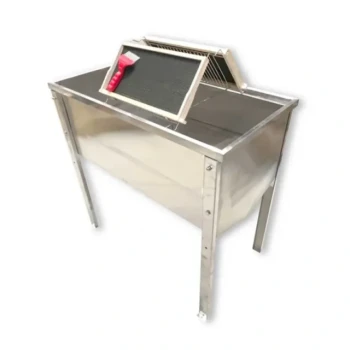
- Stainless Steel Uncapping Tank with Stand and Strainer
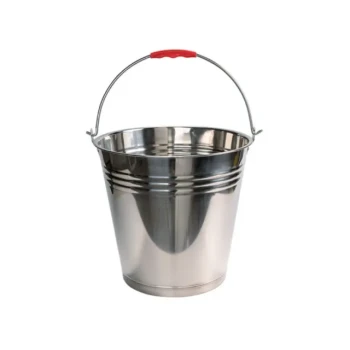
- Premium Stainless Steel Honey Tank Bucket Pail with Reinforced Handle and Polished Finish
- Styrofoam Mini Mating Nuc Box with Frames Feeder Styrofoam Bee Hives 3 Frame Nuc Box
People Also Ask
- What is an uncapping tank used for in honey harvesting? Maximize Your Honey Yield and Minimize Waste
- What are the functional advantages of using a dedicated uncapping tank during honey processing? Maximize Your Honey Yield
- What size uncapping tank do I need? Find the Perfect Fit for Your Apiary
- What are the features of the processing tanks offered? Engineered for Purity and Efficiency
- What types of stainless steel processing tanks are used for honey? Essential Equipment for Quality Honey Production