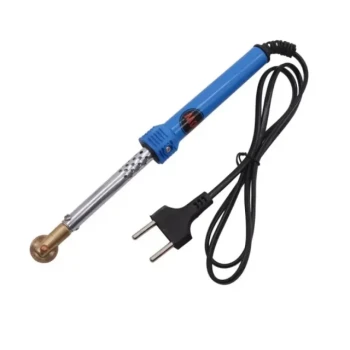
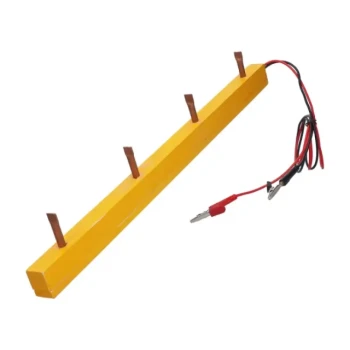
Wire embedding is necessary because wax foundation is too fragile to support a full honey load by itself. Properly embedded wire reinforces the sheet and the finished comb, helping prevent sagging, tearing, or collapse during handling and centrifugal honey extraction. The process involves tensioning the frame wire, supporting the foundation on a form board, and briefly heating the wire with low-voltage current so it melts into the wax.
The essential principle: wire must be embedded—not merely pressed against—the wax. Even support, controlled heat, and a solid backing board create a reinforced foundation without cutting through or damaging the sheet.
Why Honey-Super Foundation Needs Reinforcement
Wax foundation guides comb construction
A wax foundation sheet gives bees a starting pattern for building orderly comb inside the frame. It reduces the amount of wax the colony must produce, allowing more energy to go toward collecting pollen and nectar.
Neatly built comb is also easier to inspect, handle, store, and process mechanically.
Honey creates substantial structural stress
As the comb fills, the weight of stored honey places continuous downward and outward pressure on the wax. Unsupported foundation can sag within the frame or detach from its support.
This risk becomes more significant when frames are moved, transported, or exposed to vibration.
Extraction is the critical test
During centrifugal extraction, the comb is subjected to forces that can cause weak or poorly supported wax to break apart. Embedded wire distributes these forces through the frame and helps keep the comb intact.
For commercial beekeepers, distributors, and resellers, this reinforcement directly supports reliable harvesting and reduces product loss, rework, and customer complaints.
How Wire Embedding Works
The wire becomes an internal reinforcement
When a low-voltage electric current passes briefly through the frame wire, the wire heats slightly. With the wax sheet resting against a supporting board, the warm wire melts a narrow channel into the wax.
When the current is stopped, the wax cools around the wire and holds it inside the sheet. The result is an integrated reinforcement rather than a wire simply resting on the surface.
The form board provides essential backing
The flexible foundation sheet should be supported from underneath by a form board sized or positioned to support the relevant frame. This backing prevents the heated wire from cutting completely through the wax.
Without adequate support, the wire may pass through the sheet, leaving weak spots and failing to provide the intended reinforcement.
Proper wire tension matters
The frame wire should be installed evenly and firmly before embedding the foundation. It must be tight enough to support the wax without excessive looseness, but not so tight that it distorts the frame or cuts through the sheet.
Consistent tension helps produce uniform reinforcement across the entire foundation.
Proper Wire-Embedding Procedure
Prepare the wired frame and foundation
Inspect the frame, wire, and wax foundation before assembly. The wire should be secure, evenly tensioned, and free from conditions that could cause uneven heating or poor contact.
Position the wax foundation correctly within the frame so the wire will support the sheet across its intended span.
Support the sheet on a form board
Place the foundation against a form board beneath the wire-embedding area. The board should provide continuous, stable support across the foundation rather than leaving unsupported sections.
This step is particularly important because beeswax is flexible and can be damaged easily by concentrated pressure.
Apply low-voltage current briefly
Connect the frame wire to a suitable low-voltage embedding circuit and apply current only long enough for the wire to warm and melt slightly into the wax. The wire should enter the wax smoothly without burning, cutting through, or excessively deforming the sheet.
Stop the current as soon as the wire is embedded to the desired depth.
Allow the wax to set
After current is removed, allow the wax to cool and solidify around the wire before moving the frame. This creates the mechanical bond that holds the wire within the foundation.
Inspect the finished sheet for uniform embedding, intact edges, and areas where the wire may have passed through.
What Correct Embedding Looks Like
The wire is inside the wax
A properly embedded wire is held within the foundation rather than exposed prominently on its surface. The wax should remain continuous around the wire and should not show deep cuts or complete perforations.
The foundation remains flat
The sheet should stay aligned in the frame without major waves, buckling, or melted areas. Flat, evenly supported foundation gives bees a better guide for drawing straight comb.
Support is distributed evenly
The wire should reinforce the sheet across its span, not provide support only at isolated points. Uneven embedding can leave sections vulnerable to sagging or failure during extraction.
Understanding the Trade-offs
Too little heat creates weak reinforcement
If the wire is not heated sufficiently, it may only press against the wax or create a shallow groove. That does not provide the same internal support as a wire surrounded by solidified wax.
Too much heat damages the foundation
Excessive current or prolonged heating can melt too much wax, create holes, distort the sheet, or weaken the surrounding area. Controlled, brief heating is more important than applying maximum power.
Insufficient backing causes wire breakthrough
Embedding without a form board, or with inadequate support, can allow the wire to cut through the foundation. The sheet may then appear wired but still lack reliable structural reinforcement.
More reinforcement is not always necessary
For standard honey-super foundation, properly embedded frame wire generally provides the needed support. Heavier reinforcement methods, such as cross-wiring or support bars, may be considered for applications requiring additional strength, including brood comb, but they add assembly complexity and material requirements.
Poorly prepared frames compromise the result
Bent frames, loose wires, or inconsistent assembly can undermine even a good embedding process. Quality control should therefore cover the complete frame assembly, not only the electrical embedding step.
Why This Matters for Supply and Fulfillment
Product quality affects downstream performance
Wax foundation, wired frames, embedding equipment, form boards, and related accessories work as a system. Supplying only the foundation without the tools or components needed for correct reinforcement can leave customers unable to achieve the expected performance.
Consistency is valuable to professional buyers
Wholesalers, resellers, and commercial beekeepers benefit from consistent frame compatibility, dependable foundation quality, and clear handling guidance. Consistency simplifies purchasing, reduces assembly errors, and supports faster order fulfillment.
Technical service is part of the product value
Responsive technical support helps customers select the right combination of foundation, wire, frames, and embedding tools. This is especially important when serving multiple frame sizes or customers with different extraction practices.
How to Apply This to Your Project
Wire embedding should be treated as a controlled assembly operation, not simply a way to attach wax to a frame.
- If your primary focus is reliable honey extraction: Use evenly tensioned wire, a continuous form-board backing, and brief low-voltage heating so the wire is fully embedded without damaging the foundation.
- If your primary focus is efficient commercial assembly: Standardize the frame, wire, foundation, and embedding-tool combination, and inspect finished sheets for breakthrough, overheating, and uneven support.
- If your primary focus is wholesale or resale service: Offer compatible foundation, frames, form boards, wiring components, and embedding equipment as a coordinated product range.
- If your primary focus is maximum comb strength: Consider whether additional reinforcement such as cross-wiring or support bars is justified for the specific application rather than adding complexity to every honey-super frame.
Proper wire embedding turns fragile wax foundation into a dependable, extraction-ready comb base.
Summary Table:
| Aspect | Description |
|---|---|
| Purpose | Reinforces wax foundation to support honey weight and extraction forces |
| Method | Embedding wire via low-voltage current melting into the wax |
| Key Steps | Tension wire, support sheet on form board, apply heat briefly, let set |
| Benefits | Prevents sagging, tearing, collapse during handling and extraction |
| Common Errors | Too little heat, too much heat, lack of backing, poor wire tension |
At HONESTBEE, we supply a comprehensive range of beekeeping equipment, including wax foundation, wired frames, form boards, and embedding tools—everything you need for reliable comb construction. Our wholesale solutions for commercial apiaries and distributors ensure consistent quality and rapid fulfillment. Contact us now to discuss your requirements and experience our dedicated support and fast delivery. Get in touch today!
Related Products
- Professional Frame Preparation: The HONESTBEE Electric Wire Embedder
- Manual Beeswax Comb Foundation Machine Wax Foundation Mill Embossing Machine
- Fully Automatic Beeswax Embossing Machine Foundation Mill
- Electric Flatting and Embossing Machine with Tray for Beekeeping
- Beeswax Machine Press Embosser Wax Foundation Mold Printer Bee Hive Equipment Making Sheet
People Also Ask
- What is the primary function of an electric embedder? Secure Your Beeswax Foundation with Heat Fusion
- What methods are used to embed wire into the foundation? A Guide to Stronger, More Durable Beehives
- What is the purpose of bee frame wire? Secure Wax Foundation and Reinforce Honeycomb
- What is the primary function of wired-beeswax foundation? Secure Stronger Combs & Faster Colony Growth
- What is the specified wire gauge for the bee frame wire? Mastering 26-Gauge Wire for Durable Honeycomb Support