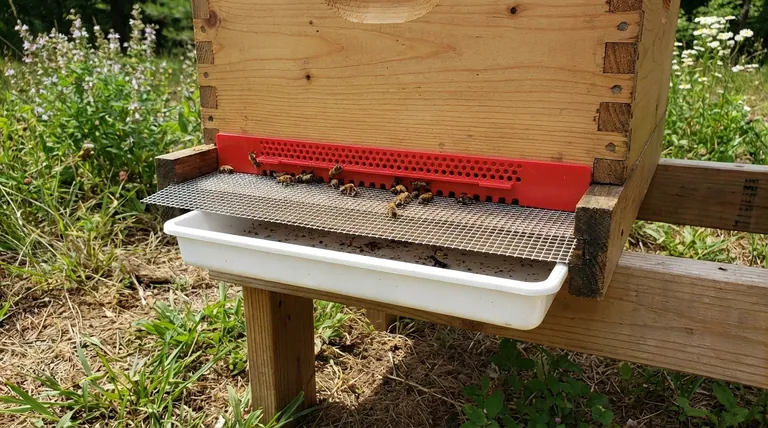
The Blind Spot Beneath the Colony
A beekeeper can spend a season fighting symptoms. You treat for mites, battle mold, and worry about the colony's vigor. But the fight is often lost before it begins, decided by an unseen factor: the very floor the colony stands on.
For decades, the solid bottom board was standard. It's simple, familiar. But it creates a closed system with a critical flaw. It traps the two things that silently undermine a colony from below: moisture and fallen pests.
We tend to focus on the complex biology inside the hive, often overlooking the simple physics beneath it. This is a psychological blind spot. Changing the floor isn't just swapping a piece of wood; it's fundamentally redesigning the hive's environment.
A Hive That Breathes
Bees are engines of humidity. Through respiration and nectar curing, a strong colony can produce over a liter of water vapor per day. In a hive with a solid floor, this moisture has nowhere to go but up.
It condenses on the cold inner surfaces, dripping back down onto the bees. This creates a perpetually damp, stressful environment—the perfect breeding ground for chalkbrood, mold, and other pathogens.
A screened bottom board acts as the hive's respiratory system. It allows this heavy, damp air to sink and exit, creating constant, gentle airflow. It doesn't just ventilate; it allows the hive to breathe. This single change transforms the internal climate from a damp cave into a dry, healthy home.
Designing for Passive Defense
The Varroa destructor mite is the modern beekeeper's primary antagonist. We often approach it with an arsenal of treatments, viewing mite control as an active, recurring battle.
But what if the hive itself could do some of the work?
Mites periodically fall from their honeybee hosts. On a solid floor, they can simply climb back onto a new bee and continue their destructive cycle. A screened floor changes the equation. When a mite falls, it falls out.
This is a powerful form of passive defense. It creates an environment where the mite's own biology works against it. It won't eliminate Varroa, but it constantly reduces the population without chemicals or intervention, lightening the load on the colony and the beekeeper.
Furthermore, a removable tray placed underneath the screen transforms it from a simple vent into a data-collection tool. By monitoring the mite drop over 24 hours, you get a clear, quantifiable measure of infestation levels—a critical feedback loop for any integrated pest management system.
The Pragmatics of Implementation
Shifting to a screened bottom board is an operational upgrade. While the concept is simple, the execution—especially at scale—benefits from a professional mindset.
Installation Workflow at a Glance
The process is straightforward and involves replacing the old floor with the new screened board.
| Step | Key Action | Critical Detail |
|---|---|---|
| 1 | Disassemble | Carefully lift the hive bodies off the existing solid bottom board. |
| 2 | Prepare Mesh | Use #8 hardware cloth (approx. 2.5mm openings). |
| 3 | Secure Mesh | Fasten the mesh tautly to the new bottom board frame to prevent sagging. |
| 4 | Reassemble | Place the new board on the stand, replace hive bodies, and insert the debris tray. |
Material Intelligence: Choosing for Longevity
For a commercial apiary or equipment distributor, hardware choice is an economic decision. The goal is to minimize long-term costs associated with labor and replacement.
- Galvanized Steel: The common, cost-effective choice. Its zinc coating provides good rust resistance, but it can degrade over time from scraping and environmental exposure.
- Stainless Steel: The professional standard. It is impervious to rust and corrosion, withstands aggressive cleaning, and has a service life that matches the hive itself. The upfront investment is higher, but the total cost of ownership is significantly lower.
For operations where equipment durability and reduced maintenance are paramount, high-quality stainless steel mesh is the only logical choice. HONESTBEE exclusively supplies professional-grade beekeeping equipment, including robust screened bottom boards built for the rigors of commercial use.
Managing the System's Trade-offs
A screened bottom board is not a panacea; it's an adaptable tool. Its greatest strength—ventilation—becomes a potential liability in a harsh winter. The open mesh can increase heat loss for the winter cluster.
This isn't a design flaw; it's a feature that requires management.
The slide-in debris tray is the control mechanism. Inserting it during the coldest months effectively converts the screened floor back into a solid one. This retains heat and protects the cluster from drafts. The system is designed to be adjusted, allowing the beekeeper to optimize the hive environment for the season.
By understanding this, the beekeeper evolves from a simple tender of bees into a systems operator, making intentional adjustments to maintain a resilient apiary. This shift in perspective is the true upgrade. For operations focused on long-term health and efficiency, investing in professional-grade equipment is the first step. Contact Our Experts
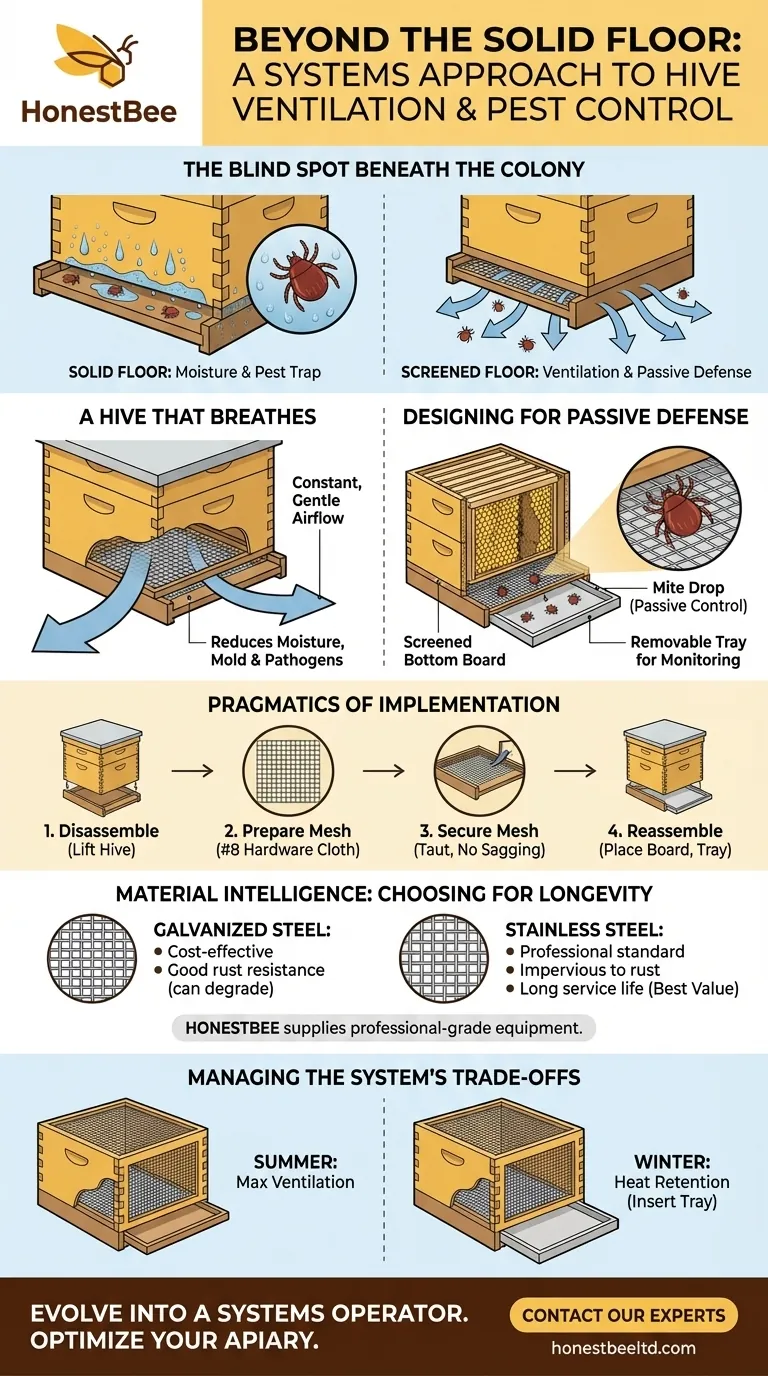
Visual Guide
Related Products
- Australian Pine Wood Langstroth Screen Bottom Board for Wholesale
- Langstroth Screen Bottom Board for Beekeeping Wholesale
- Solid Bottom Board Australian Pine Wood Langstroth Bottom Board for Wholesale
- Langstroth Solid Bottom Board for Beekeeping
Related Articles
- Why Your Hive Pest Control Is an Uphill Battle—And the Foundational Fix You're Overlooking
- How Screened Bottom Boards Enhance Varroa Mite Control in Modern Beekeeping
- Beyond Pest Control: Why Your Bottom Board Choice Is Directly Impacting Your Apiary's Profitability
- Your Hive's Foundation: The Hidden Key to Summer Productivity and Pest Control
- Hive Engineering: The Bottom Board as a Critical Climate and Pest Control System


