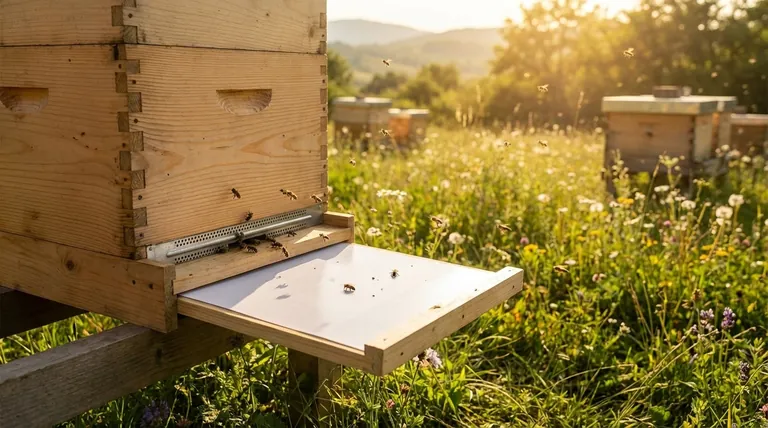
You've invested in quality queens and secured prime locations, yet your apiary's performance is frustratingly inconsistent. Some colonies seem agitated, with bees "bearding" on the front of the hive on hot days. Others dwindle from unseen pressures, despite your best efforts at pest control. You're caught in a reactive cycle of treating for Small Hive Beetles (SHB) and mites, but colony strength and honey yields never seem to stabilize. This isn't just a beekeeping challenge; it's a business problem that eats directly into your bottom line.
The High Cost of Treating the Wrong Problem
For many commercial apiarists, this cycle feels familiar. You notice beetles, so you deploy SHB traps. You see a high mite count, so you schedule a chemical treatment. These seem like logical steps, but they are tactical responses to individual symptoms, not a strategy for solving the root cause.
This constant "firefighting" has significant business consequences:
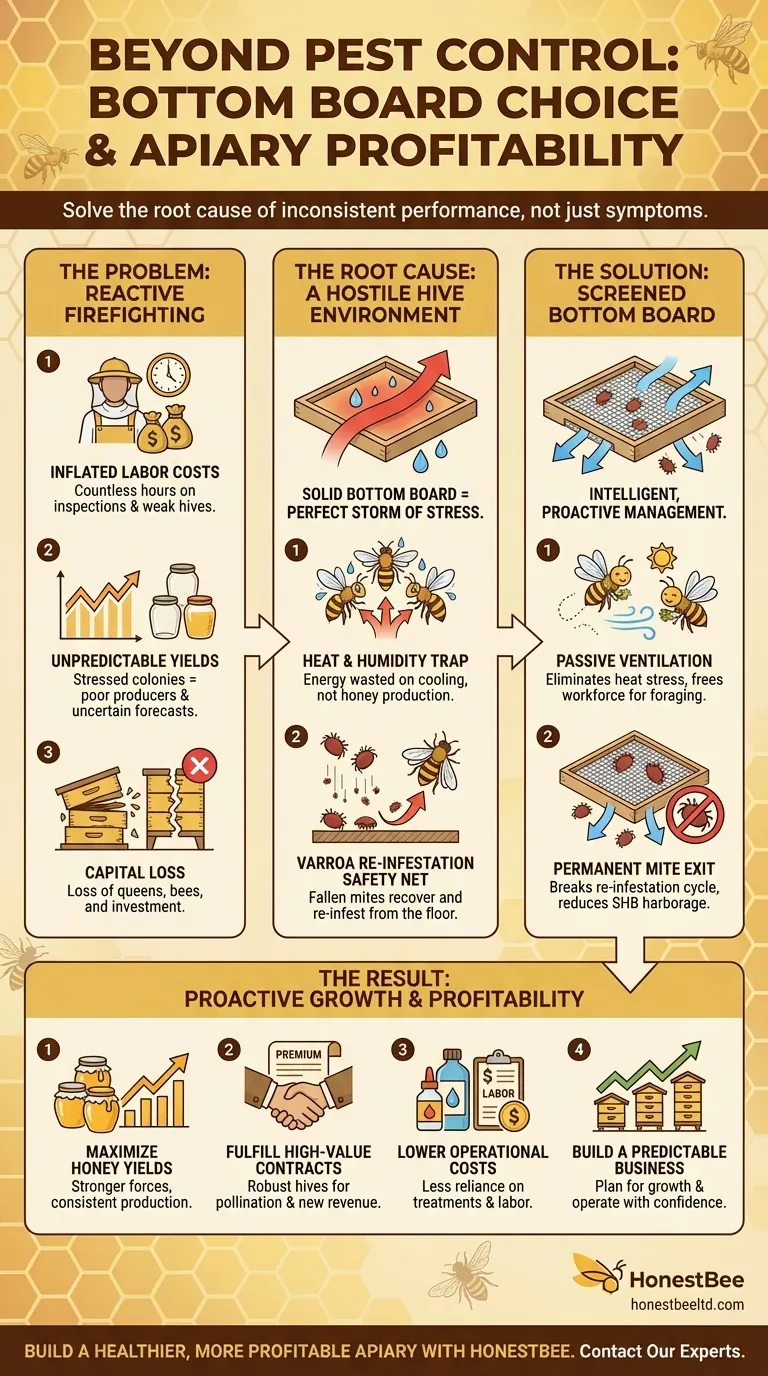
- Inflated Labor Costs: Your team spends countless hours on inspections, treatments, and managing weak hives instead of focusing on productive, value-adding activities.
- Unpredictable Yields: Unhealthy, stressed colonies are poor producers. This makes it impossible to accurately forecast honey yields or commit to large contracts with confidence.
- Capital Loss: Every colony that collapses isn't just a loss of bees; it's a loss of the investment in queens, equipment, and labor, forcing you to spend more on splits and replacements just to maintain numbers.
You're working harder, but the hives aren't. The reason is that you're fighting visible enemies while ignoring the hostile environment that allows them to thrive.
The Real Enemy: An Unseen War Inside the Hive
The persistent issues in your apiary aren't just about the pests you can see. They are symptoms of a deeper, more fundamental problem: a poor internal hive environment. A standard solid bottom board, despite its long history, inadvertently creates a perfect storm of stressors that undermine colony health and productivity.
The Silent Productivity Killer: Heat & Humidity
Imagine trying to work in a sealed, unventilated room on a hot summer day. You'd be exhausted, sluggish, and unproductive. This is what your bees face in a hive with poor air circulation.
A solid bottom board traps heat and moisture. To combat this, a significant portion of the workforce must stop foraging and instead dedicate their energy to fanning the hive entrance to regulate temperature and humidity. Every bee fanning is a bee not making honey. This constant thermal stress weakens the entire colony, making them more susceptible to disease and less productive.
The Varroa Mite Safety Net You Didn't Know You Had
Varroa destructor mites are the single greatest threat to modern beekeeping. During natural grooming, bees dislodge mites from their bodies. With a solid bottom board, these fallen mites land on the floor, recover, and simply wait for a new host to walk by. The hive floor becomes a safe harbor and re-infestation point for your colony's worst enemy.
Common treatments address the mites on the bees, but they do nothing to break this cycle of re-infestation from the hive floor. You are, in effect, providing a safety net for the very pest you're trying to eliminate.
Redesigning the Foundation: A Tool Built for a Healthy Hive
To break this cycle of stress and re-infestation, you don't need a more aggressive trap or a stronger chemical. You need to change the environment itself. You need a tool that:
- Provides constant, passive ventilation to eliminate heat stress.
- Creates a permanent exit for Varroa mites that fall off their hosts.
This is precisely what a screened bottom board is designed to do. It’s not just a piece of equipment; it’s the embodiment of a more intelligent, proactive management strategy.
By replacing the solid floor with a durable screen, you fundamentally alter the hive's physics in your favor. The open screen provides effortless airflow, dramatically reducing the energy your bees waste on cooling. This frees up the workforce to do what they do best: forage and produce honey. Simultaneously, any Varroa mite that is groomed off a bee falls straight through the screen and out of the hive, permanently breaking the re-infestation cycle.
And what about Small Hive Beetles? The increased light and ventilation make the hive floor an unattractive place for them to hide and breed, acting as a powerful deterrent. The SHB reduction is a welcome side effect of creating a fundamentally healthier, more resilient colony.
From Reactive Firefighting to Proactive Growth
Once you solve the core environmental problem, the entire dynamic of your operation changes. You shift from a defensive posture to one focused on growth and productivity. With colonies that are no longer wasting energy fighting their own home, you unlock new potential:
- Maximize Honey Yields: Stronger, less-stressed colonies have larger foraging forces, leading directly to higher and more consistent honey production per hive.
- Fulfill High-Value Contracts: Robust, healthy hives are exactly what's needed for premium pollination contracts, opening new revenue streams.
- Lower Operational Costs: Passive, continuous mite control reduces your reliance on expensive chemical treatments and the labor required to apply them.
- Build a Predictable Business: When your colonies are consistently healthy, your business becomes more stable and predictable. You can plan for growth, secure larger contracts, and operate with confidence.
Investing in the right foundation isn't an expense; it's a strategic move to build a more resilient, profitable, and scalable apiary.
Stop letting your equipment work against you. At HONESTBEE, we equip commercial apiaries with the durable, wholesale supplies they need to build healthier hives and a stronger business. Let's discuss how upgrading your operation's foundation can solve the persistent challenges holding you back. Contact Our Experts to talk about your specific needs and build a more productive future.
Visual Guide
Related Products
- Australian Pine Wood Langstroth Screen Bottom Board for Wholesale
- Langstroth Screen Bottom Board for Beekeeping Wholesale
- Solid Bottom Board Australian Pine Wood Langstroth Bottom Board for Wholesale
- Langstroth Solid Bottom Board for Beekeeping
Related Articles
- Why Your Hive Pest Control Is an Uphill Battle—And the Foundational Fix You're Overlooking
- How Screened Bottom Boards Enhance Varroa Mite Control in Modern Beekeeping
- Beyond the Solid Floor: A Systems Approach to Hive Ventilation and Pest Control
- Your Hive's Foundation: The Hidden Key to Summer Productivity and Pest Control
- Hive Engineering: The Bottom Board as a Critical Climate and Pest Control System


