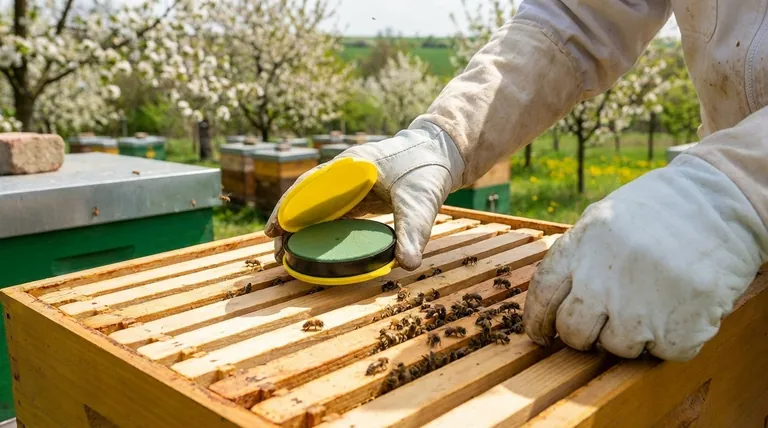
Key Benefit: Learn to synchronize pollen supplementation with natural brood cycles to boost honey yields while avoiding colony collapse—backed by apicultural science and field-tested strategies.
The Science of Pollen Supplementation
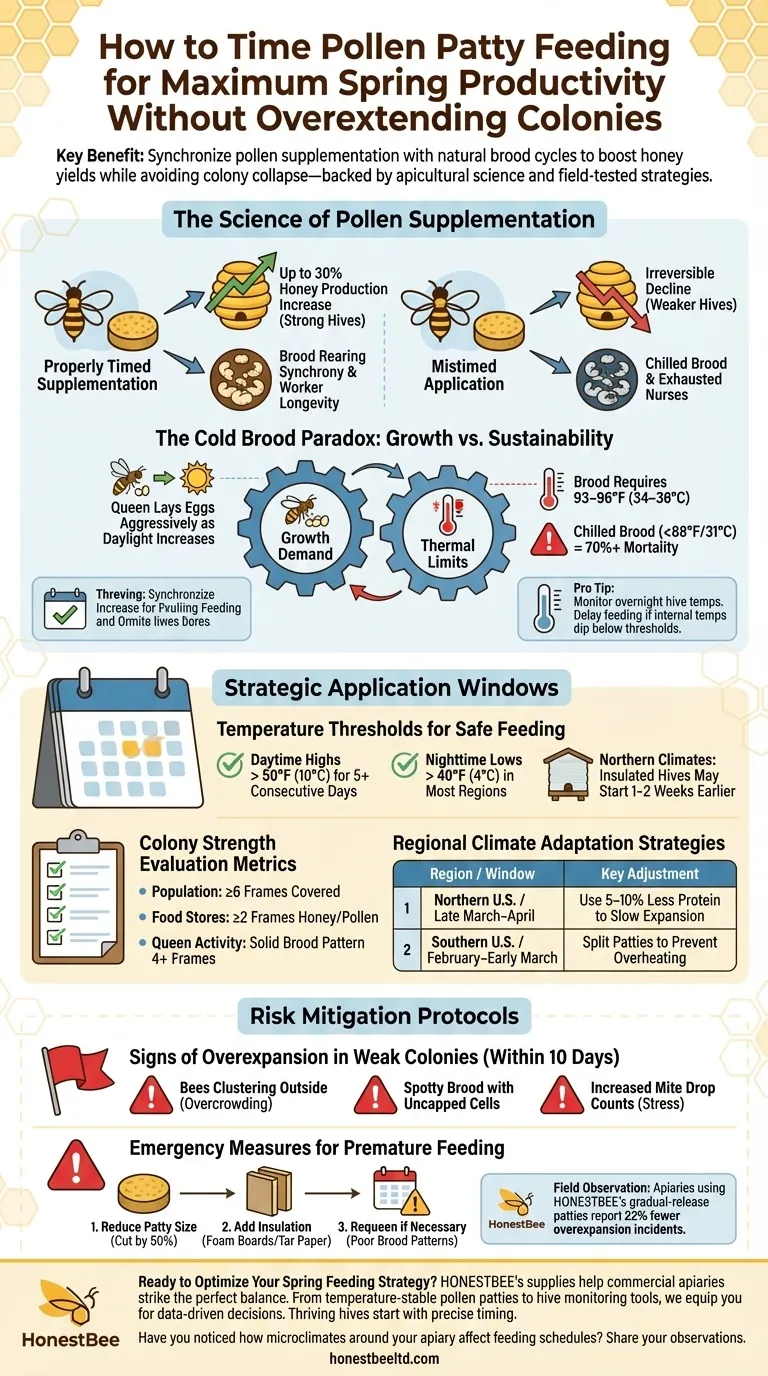
Pollen patties are a double-edged sword in spring beekeeping. Feed too early, and you risk chilling brood or exhausting worker bees; feed too late, and miss the critical window for colony buildup. Research shows that properly timed supplementation can increase honey production by up to 30% in strong hives, while mistimed applications may trigger irreversible decline in weaker ones.
Why Timing Dictates Colony Success
- Brood Rearing Synchrony: Bees naturally scale brood production with pollen availability. Artificial feeding must mimic this rhythm.
- Worker Longevity: Premature feeding forces nurse bees into foraging roles prematurely, shortening their lifespan.
The Cold Brood Paradox: Growth vs. Sustainability
Early spring colonies face a dilemma:
- Growth Demand: Queens lay eggs aggressively as daylight increases.
- Thermal Limits: Brood requires consistent 93–96°F (34–36°C). Chilled brood (<88°F/31°C) has a 70%+ mortality rate.
Pro Tip: Monitor overnight hive temperatures with infrared thermometers before feeding. If internal temps consistently dip below critical thresholds, delay patty introduction.
Strategic Application Windows
Temperature Thresholds for Safe Feeding
Initiate pollen patties only when:
✔ Daytime highs exceed 50°F (10°C) for 5+ consecutive days
✔ Nighttime lows stay above 40°F (4°C) in most regions
Exception: Insulated hives in northern climates may start 1–2 weeks earlier.
Colony Strength Evaluation Metrics
Use this checklist to assess readiness:
- Population: ≥6 frames covered with bees
- Food Stores: At least 2 frames of honey/pollen reserves
- Queen Activity: Solid brood pattern across 4+ frames
Regional Climate Adaptation Strategies
| Region | First Feeding Window | Key Adjustment |
|---|---|---|
| Northern U.S. | Late March–April | Use patties with 5–10% less protein to slow brood expansion |
| Southern U.S. | February–Early March | Split patties into smaller portions to prevent overheating |
Risk Mitigation Protocols
Signs of Overexpansion in Weak Colonies
Watch for these red flags within 10 days of feeding:
⚠️ Bees clustering outside the hive (indicates overcrowding)
⚠️ Spotty brood patterns with uncapped cells
⚠️ Increased mite drop counts (stress weakens immune response)
Emergency Measures for Premature Feeding
If you’ve fed too early:
- Reduce Patty Size: Cut portions by 50% immediately.
- Add Insulation: Wrap hives with foam boards or tar paper.
- Requeen if Necessary: Poor brood patterns may indicate a failing queen.
Field Observation: Apiaries using HONESTBEE’s gradual-release pollen patties report 22% fewer overexpansion incidents due to their moisture-controlled formulation.
Ready to Optimize Your Spring Feeding Strategy?
HONESTBEE’s beekeeping supplies help commercial apiaries strike the perfect balance between colony growth and sustainability. From temperature-stable pollen patties to hive monitoring tools, we equip you to make data-driven decisions—because thriving hives start with precise timing.
Have you noticed how microclimates around your apiary affect feeding schedules? Share your observations to help fellow beekeepers adapt.
Visual Guide
Related Products
- Heavy-Duty Ergonomic Stainless Steel Pollen Shovel
- Heavy-Duty Ergonomic Grip Galvanized Pollen Shovel
- Stainless Steel Pollen Shovel with Wooden Handle
- Removable Plastic Pollen Trap With Ventilated Tray for Bees Pollen Collector
- Plastic Bee Pollen Trap Strips Comb Catcher Collector
Related Articles
- How to Optimize Bee Colony Health: Science-Backed Feeding Strategies for Sustainable Buildup
- How Beekeepers Can Boost Pollen Substitute Acceptance for Healthier Colonies
- Architecting the Swarm: A Systems Approach to Pollen Feeding
- The Queen's Prison: How a Pollen Trap Can Create a Single Point of Failure in Your Apiary
- How to Install Pollen Traps Without Stressing Your Hive: A Beekeeper’s Guide





