Starting your first beehive? The choice between a nucleus colony (nuc) and a packaged bee colony can make or break your first-year success. This guide cuts through the confusion by comparing colony resilience, cost implications, and climate adaptability—helping you invest wisely based on your experience level and regional conditions.
Foundations of Hive Success
Colony Maturity Spectrum – From Frames to Foragers
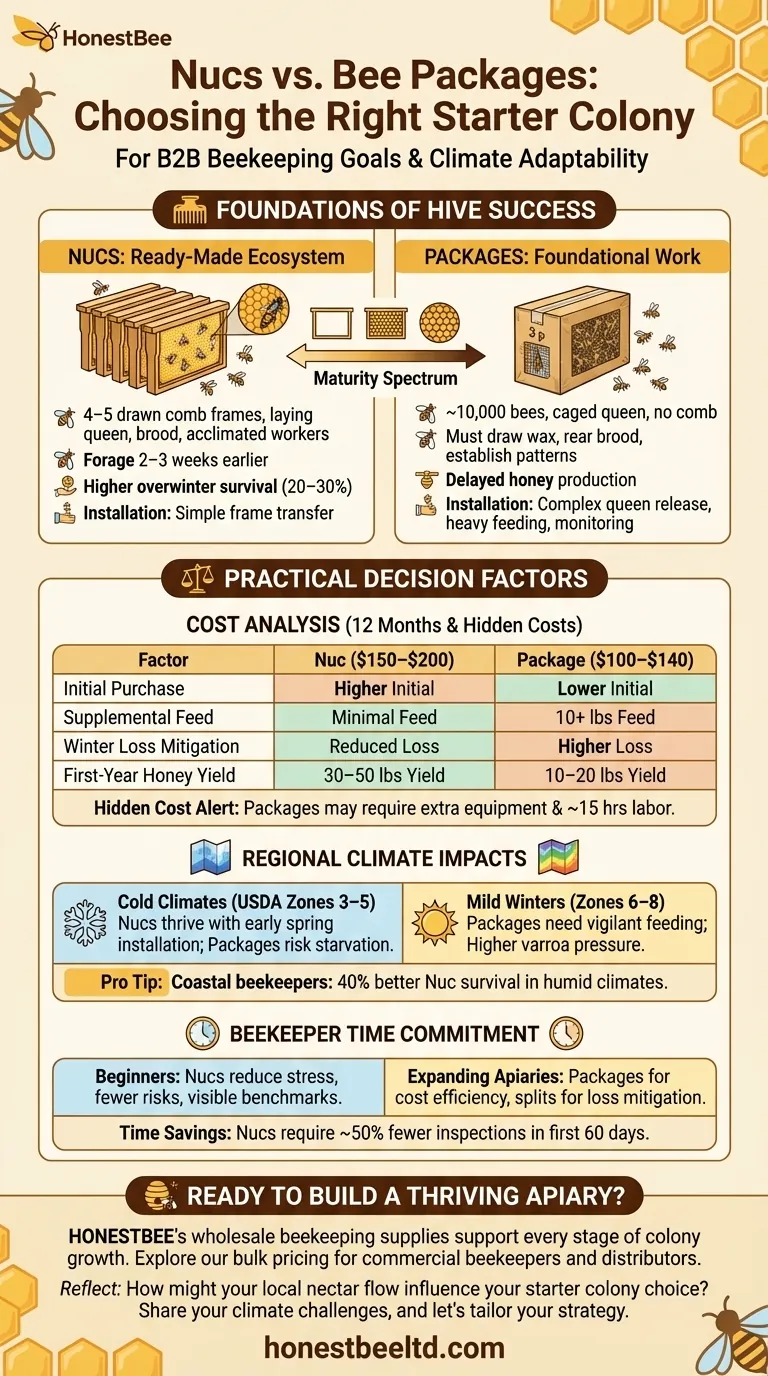
Nucs offer a ready-made ecosystem: A nucleus hive arrives with 4–5 drawn comb frames, a laying queen, brood at various stages, and worker bees already acclimated to their queen. Research shows this head start allows bees to forage 2–3 weeks earlier than packaged bees, critical for building winter stores in temperate climates.
Packages demand foundational work: A 3-pound package contains ~10,000 bees and a caged queen but no comb. Bees must draw wax, rear brood, and establish foraging patterns—delaying honey production. While rewarding for experienced beekeepers, this process risks higher first-year colony collapse in areas with short nectar flows.
Installation Complexity vs. Long-Term Viability
- Nuc installation: Simply transfer frames to a hive body. The existing brood cycle ensures continuous population growth, reducing the need for supplemental feeding (except in drought conditions).
- Package introduction: Requires queen release timing, sugar syrup feeding for comb building, and closer monitoring for queen acceptance—tasks that challenge beginners.
Survival edge: Nucs overwinter at rates ~20–30% higher than packages in temperate zones, as referenced by beekeeping suppliers. Their established brood nest accelerates colony strength before winter.
Practical Decision Factors
Cost Analysis Over 12 Months (Including Hidden Costs)
| Factor | Nuc ($150–$200) | Package ($100–$140) |
|---|---|---|
| Initial Purchase | Higher | Lower |
| Supplemental Feed | Minimal | 10+ lbs sugar |
| Winter Loss Mitigation | Reduced | Higher |
| First-Year Honey Yield | 30–50 lbs | 10–20 lbs |
Hidden cost alert: Packages may require additional equipment (e.g., frame feeders) and more frequent hive inspections, adding ~15 hours of labor in the first season.
Regional Climate Impacts on Starter Survival Rates
- Cold climates (USDA Zones 3–5): Nucs thrive with early spring installation, leveraging residual warmth from clustered bees. Packages risk starvation if late frosts delay foraging.
- Mild winters (Zones 6–8): Packages can succeed with vigilant feeding but face higher varroa mite pressure due to slower brood buildup.
Pro Tip: Coastal beekeepers report 40% better nuc survival in humid climates, as drawn comb resists mold better than new wax.
Beekeeper Time Commitment Scenarios
- Beginners: Nucs reduce stress by eliminating queen introduction risks and providing visible benchmarks (e.g., capped brood = healthy queen).
- Expanding apiaries: Experienced beekeepers often prefer packages for cost efficiency, using splits to mitigate losses.
Time savings: Nucs require ~50% fewer inspections in the first 60 days, freeing beginners to focus on pest management and hive placement.
Ready to Build a Thriving Apiary?
Whether you’re a novice prioritizing resilience or a seasoned beekeeper scaling operations, HONESTBEE’s wholesale beekeeping supplies—from durable hive bodies to precision feeders—support every stage of colony growth. Explore our bulk pricing for commercial beekeepers and distributors to equip your hives with industry-tested tools that simplify success.
Reflect: How might your local nectar flow influence your starter colony choice? Share your climate challenges, and let’s tailor your beekeeping strategy.
Visual Guide
Related Products
Related Articles
- How Smaller Nuc Box Frames Improve Brood Health Through Thermal Regulation
- The Thermodynamics of a New Colony: Why a Smaller Nuc Box Is a Stronger Start
- Architecting Royalty: The Nuc Box as a Queen's Crucible
- How to Successfully Requeen Hives Using the 5-Frame Nuc Method: A Beekeeper’s Guide
- Designing for Instinct: Why the Nuc Box is the Perfect Swarm Trap
