The Precarious Economics of a New Colony
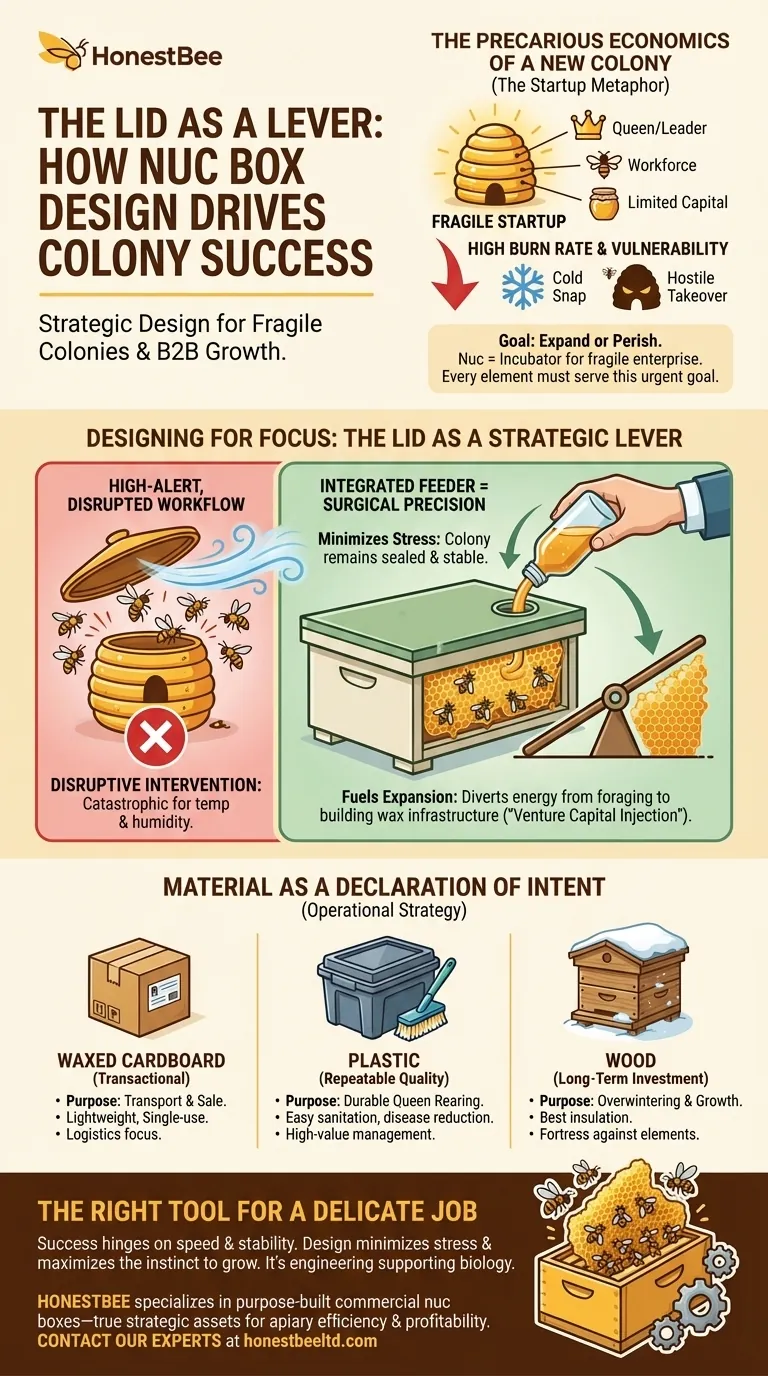
Picture a small startup. It has a brilliant leader (the queen), a small, dedicated workforce (the bees), and a clear mission: expand or perish. This startup has limited capital (honey stores), a high burn rate, and is incredibly vulnerable to external shocks like a sudden market downturn (a cold snap) or a hostile takeover (robbing by a larger hive).
This is the reality inside a 5-frame nucleus (nuc) box.
A nuc is not simply a small beehive; it's an incubator for a fragile enterprise. Its purpose is temporary, designed to nurture a young colony until it's strong enough to graduate to a full-sized hive. Every element of its design should serve this single, urgent goal.
And one of the most critical design elements is often hiding in plain sight: a hole in the lid.
Designing for Focus, Not Convenience
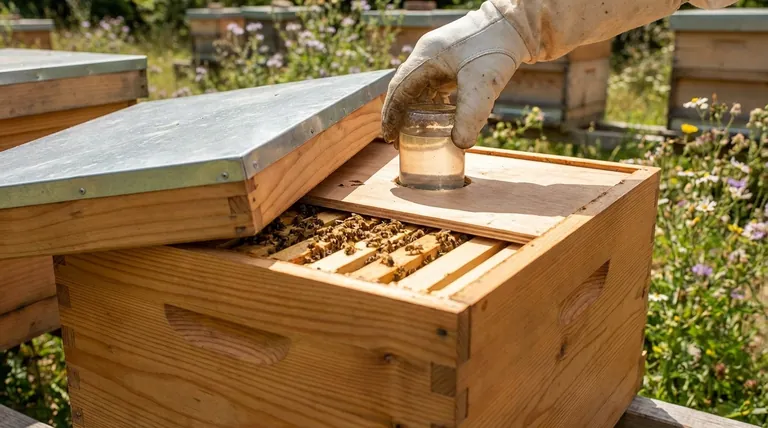
Many 5-frame nuc boxes feature an integrated hive top feeder—a small depression or port built directly into the lid. This is not a minor feature for convenience. It's a profound understanding of bee and beekeeper psychology.
It is a strategic lever.
Minimizing the Cost of Intervention
For a full-sized hive, opening the lid is a major event. For a nuc, it's a catastrophe. The small population struggles to maintain the precise temperature and humidity required for raising brood. Ripping the top off floods the system with cold air, forces the bees into a high-alert defensive posture, and resets their workflow. It's the equivalent of a fire drill during a critical product launch.
An integrated top feeder allows a beekeeper to deliver essential fuel (sugar water) with surgical precision. You remove the outer cover, place the feeder, and leave. The colony's internal world remains sealed and stable. This design choice acknowledges a fundamental truth: the less you disturb a system under stress, the faster it will grow.
Fueling the Engine of Expansion
A new colony faces a monumental construction task: drawing out fresh wax comb. This is the infrastructure—the factories and nurseries—required for expansion. Producing wax is incredibly energy-intensive for bees.
Consistent access to supplemental feed allows the colony to divert its energy from foraging to building. It’s like an injection of venture capital, enabling the "startup" to build its infrastructure at an exponential rate, rather than bootstrapping its way through a nectar-scarce spring.
The Nuc Box as a Declaration of Intent
The material of a nuc box is not just about cost; it's a statement about your operational goal. The choice reflects your strategy for managing these fragile colonies.
-
For Transport and Sale: Waxed cardboard is the lightweight, single-use solution. It’s designed for logistics, getting a viable colony from your apiary to a customer's hands efficiently. Its purpose is transactional.
-
For Durable Queen Rearing: Plastic offers a balance of durability and sanitation. It can be easily cleaned between uses, reducing disease transfer—a critical factor when raising high-value queens or managing multiple small colonies. Its purpose is repeatable quality.
-
For Overwintering and Long-Term Growth: Wood provides the best insulation. It's a fortress against the elements, designed to give a small colony the greatest possible chance of surviving a long winter or building up over a slow season. Its purpose is long-term investment.
For a commercial apiary, these aren't just boxes; they are specialized tools in an assembly line of colony production. Choosing the right tool for each stage is a matter of operational efficiency and, ultimately, profitability.
The Right Tool for a Delicate Job
The success of a nucleus colony hinges on speed and stability. It's a race to build population and resources before the colony's initial momentum fades. The design of the nuc box is your primary tool for influencing the outcome of that race.
The integrated feeder, the material choice, the very form factor—they all work together to create an environment that minimizes stress and maximizes the colony's own powerful instinct to grow. It’s a beautiful piece of engineering, designed to support a biological one.
For operations where efficiency and colony health directly translate to the bottom line, selecting the right equipment is paramount. HONESTBEE specializes in providing commercial apiaries and distributors with durable, purpose-built nuc boxes and beekeeping supplies that function as true strategic assets.
Visual Guide
Related Products
- Styrofoam Mini Mating Nuc Box with Frames Feeder Styrofoam Bee Hives 3 Frame Nuc Box
- 5 Frame Wooden Nuc Box for Beekeeping
- Automatic Heat Preservation 6 Frame Pro Nuc Box for Honey Bee Queen Mating
- 5 Frame Langstroth Poly Nuc Corrugated Plastic Nuc Boxes
- 4 Frame Plastic Nuc Boxes for Beekeeping Bee Nuc Box
Related Articles
- The Thermodynamics of a New Colony: Why a Smaller Nuc Box Is a Stronger Start
- Architecting Royalty: The Nuc Box as a Queen's Crucible
- How Smaller Nuc Box Frames Improve Brood Health Through Thermal Regulation
- The Nuc Box Is Not a Home, It's a Tool: A Strategic Guide to Apiary Fleet Management
- Designing for Instinct: Why the Nuc Box is the Perfect Swarm Trap


