The Hive is an Anxious Architect
A beehive is more than a home; it's a fortress. It is a superorganism obsessed with its own structural integrity, atmospheric stability, and sterility.
This obsession is the key to harvesting one of its most valuable creations: propolis.
To collect propolis at scale, we don't just find it and scrape it. We must first understand the hive's anxieties and then build a system that leverages them. The beekeeper becomes less a farmer and more a systems engineer, introducing a controlled "problem" for the bees to solve.
The Psychology of Bee Glue
Propolis: The Immune System Made Manifest
Propolis is the hive's externalized immune system. A complex, resinous compound gathered from botanical sources, it is the tool bees use to manage their physical world.
They use it to seal cracks against drafts, waterproof their home against rain, and embalm intruders too large to remove. Its powerful antimicrobial and antifungal properties act as a chemical barrier, protecting the colony from pathogens.
A Programmed Response to Imperfection
A bee colony operates on instinctual programming. This programming dictates that any vulnerability must be fixed.
The triggers are specific:
- Unwanted drafts of air.
- Intrusions of light.
- Gaps smaller than a bee can pass through (less than 5/16th of an inch).
- Rough surfaces that could harbor microbes.
When bees encounter these imperfections, their instinct to produce and apply propolis is not just a suggestion; it's a compulsion.
The Propolis Trap: A Tool of Systematic Persuasion
Designing a 'Problem' for Bees to Solve
The modern propolis trap is not merely a collection tray. It is an engineered sheet of problems.
Typically a flexible plastic mat, it is perforated with countless narrow slits. Each slit is too small for a bee to pass through but is the perfect size to trigger its deep-seated instinct to seal a gap. We are not asking the bees to do something unnatural; we are presenting them with a perfect canvas for their natural work.
The Art of Intentional Flaws
To maximize the harvest, the beekeeper intentionally degrades the hive's perfection. The trap is placed on top of the hive, replacing the inner cover. Then, the outer lid is propped up ever so slightly.
This small act introduces the two primary triggers: light and drafts. The bees, detecting this new vulnerability from above, are compelled to work tirelessly, filling every last slit in the trap with their precious propolis.
A Workflow of Physics and Precision
From Flexible to Brittle
Once the trap is filled, the raw propolis is sticky, pliable, and difficult to separate from the plastic. The solution is not mechanical force, but physics.
The entire trap is placed in a freezer. As the temperature drops, the propolis undergoes a phase transition, becoming intensely hard and brittle. The sticky, resinous glue becomes like glass.
Harvesting with Brittle Fracture
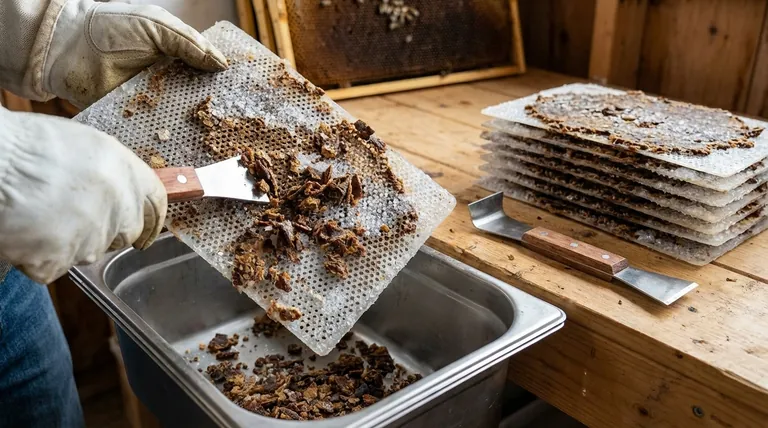
Once frozen solid, a simple flex, twist, or a sharp rap of the trap against a hard surface is all it takes. The brittle propolis shatters away from the flexible plastic, falling cleanly into a collection bin. This elegant process uses thermodynamics to achieve a clean, efficient mechanical separation.
The Ethics of Engineered Intervention
First, Do No Harm
This intervention is a tax on the colony's resources. A strong, booming hive with surplus honey and a large workforce can easily afford this tax. A weaker hive cannot.
Applying a propolis trap to a struggling colony is poor beekeeping. It diverts critical resources away from brood-rearing and food storage, potentially weakening it further. The first rule is to only work with hives that are thriving.
The Minimalist Approach
For hobbyists, a dedicated trap is often unnecessary. During routine inspections, small amounts of propolis can be scraped from frames and hive boxes. This is a less invasive method, respectful of a beekeeper whose goal is observation over production.
Know When to Stand Down
Timing is everything. All propolis harvesting must stop in the fall. The colony desperately needs this material to insulate itself and seal cracks against the coming winter moisture and cold. Removing their winter defenses late in the season is a critical mistake that can endanger the entire colony.
Choosing Your Method
| Collection Method | Best For | Core Principle |
|---|---|---|
| Propolis Trap | Commercial, large-scale harvest | Create controlled flaws to trigger a massive sealing response. |
| Scraping (No-Trap) | Small-scale, personal use, natural beekeeping | Collect the natural surplus during routine hive maintenance. |
This systematic approach, which blends biology with engineering, is the foundation of modern propolis harvesting. For commercial apiaries focused on scaling this process efficiently, the quality of your equipment is paramount. HONESTBEE provides the wholesale-focused, durable propolis traps and supplies designed for precisely this kind of rigorous, thoughtful work. Contact Our Experts
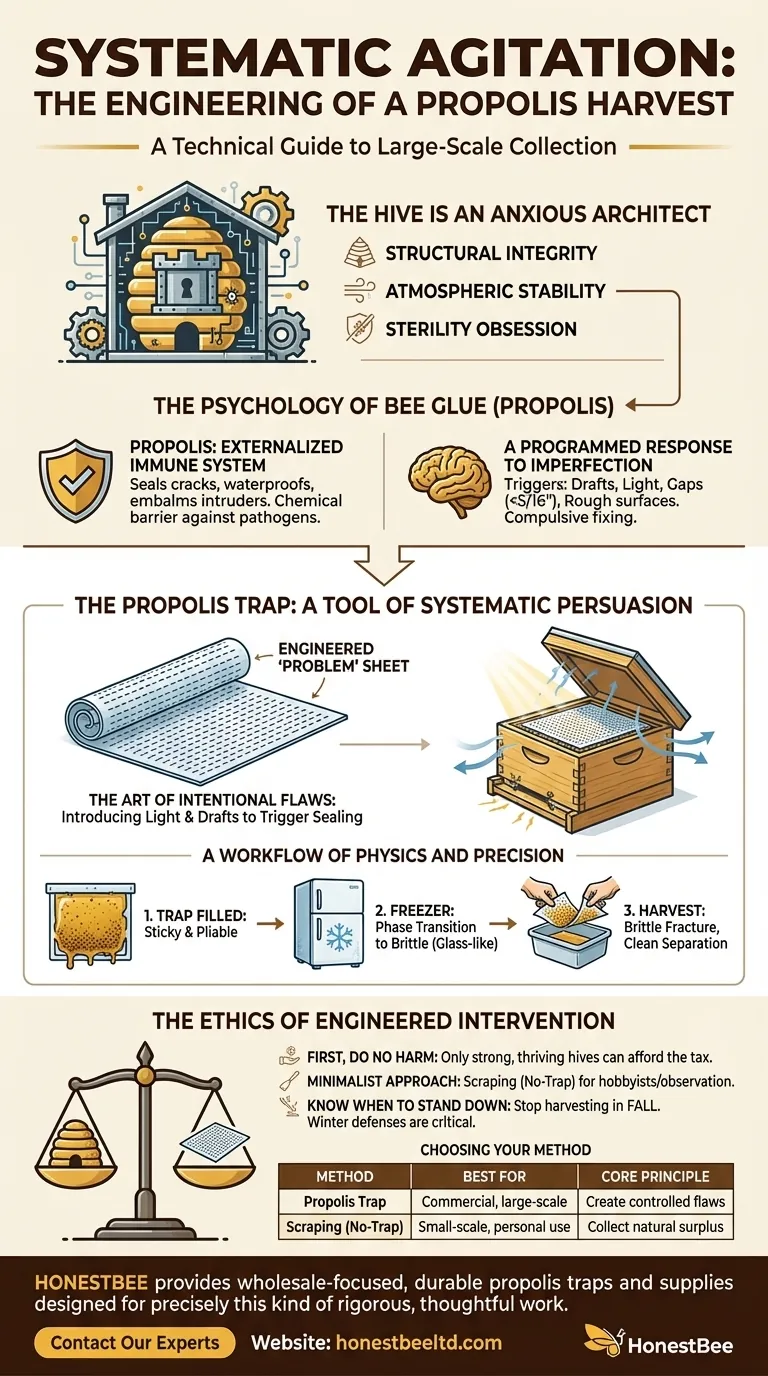
Visual Guide
Related Products
- 8 Frame and 10 Frame Propolis Trap Collector Screen for Propolis Collection
- Removable Plastic Pollen Trap With Ventilated Tray for Bees Pollen Collector
- Professional Bucket Style Wasp and Moth Pheromone Trap
- Plastic Bee Pollen Trap Strips Comb Catcher Collector
- Plastic Beetle Blaster Trap Beekeeping Tools and Supplies
Related Articles
- From Raw Resin to Potent Extract: The Engineering Behind Propolis Forms
- The Secret Weapon of Hive Survival: How Bees Transform Resin into Propolis
- How Propolis Reinvents Hive Entrances: Nature’s Blueprint for Survival
- How to Safely Harvest Propolis Without Stressing Your Hive
- How Propolis Protects Honey Bee Colonies: Antimicrobial Science & Beekeeping Applications