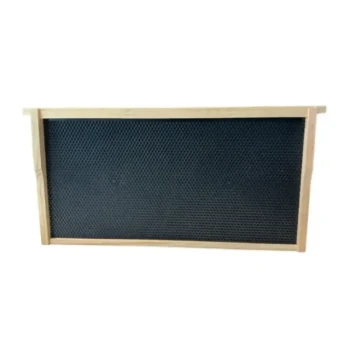
To increase brood capacity for prolific queens, apiaries can expand the available comb area by stacking two full-depth brood chambers, adding a shallow super as a brood-and-a-half setup, or converting the chamber to accept deeper frames. These configurations provide more worker-cell space, reducing congestion and giving the queen room to maintain a larger laying pattern. When converting between frame sizes, secure adaptors are essential to prevent irregular comb in dimensional gaps.
The best approach depends on the apiary’s existing equipment, frame standard, and transition plans. Double brood chambers offer the most straightforward capacity increase, while brood-and-a-half systems and frame converters can provide more gradual or equipment-specific solutions.
Choose the Right Brood-Capacity Configuration
Double full-depth brood chambers
A double brood chamber is created by stacking two full-depth brood boxes. This provides a large, continuous area for brood production and is often the most direct solution for colonies with highly prolific queens.
The configuration can also simplify equipment management when the apiary already operates with a consistent full-depth frame standard. However, the additional box increases the volume that must be inspected, moved, and maintained.
Brood-and-a-half systems
A brood-and-a-half setup combines a standard brood box with a shallow super used as additional brood space. It increases available comb area without requiring a second full-depth brood chamber.
This can be useful where the apiary already holds shallow equipment or wants a less substantial increase in brood capacity. The main operational consideration is that the colony will contain different frame depths, so inspections and frame handling require greater attention.
Converter frames for deeper brood frames
A converter frame, such as a Hamilton converter, adapts an existing chamber so it can accept deeper frames, including 14-by-12-inch frames. This allows the apiary to increase the size of individual brood frames rather than simply adding another box.
This approach can improve brood capacity while preserving a familiar chamber arrangement. It is particularly relevant for apiaries moving from smaller standard frames toward larger brood configurations.
Manage Transitions Between Frame Standards
Use secure frame adaptors
When smaller frames, such as British Standard frames, are placed in a larger brood box, the dimensional gap must be controlled. Frame adaptors fitted with secure end metal strips can fill the vacant space and keep the frames correctly positioned.
This prevents bees from filling the gap with irregular or wild comb, which can disrupt inspections and make routine frame removal difficult.
Maintain standard hive operation
A properly fitted adaptor allows the apiary to continue using normal hive equipment and inspection procedures during the transition. This is important for commercial operations because it avoids creating a separate, highly specialized management system for converted colonies.
Adaptors should be secure and dimensionally appropriate for the chamber and frames being used. Poorly fitted components can create movement, uneven spacing, or unwanted comb construction.
Phase out adapted frames gradually
The transition does not need to happen all at once. As colonies draw new full-sized foundation frames, the apiary can gradually replace the adapted smaller frames.
The supplementary reference indicates that adapted frames may be phased out over one or two seasons, allowing the operation to transition without replacing every frame immediately.
Match Capacity Increases to Colony Management
Prevent congestion before it limits laying
A prolific queen requires sufficient empty worker-cell space to sustain a large laying pattern. If available brood comb becomes limiting, the colony may become congested even when the queen remains capable of producing more brood.
Expanding the brood area addresses the physical constraint directly by adding usable comb rather than relying only on queen replacement or colony splitting.
Standardize equipment across the apiary
For distributors, wholesalers, and larger beekeeping operations, standardization matters as much as capacity. Selecting one primary frame and chamber configuration simplifies purchasing, stockholding, staff training, and customer support.
Where mixed equipment is unavoidable, clearly separating full-depth, shallow, converted, and adaptor-supported components reduces fulfillment and field-use errors.
Plan supply around the conversion method
Each configuration requires a different equipment package. A double brood system needs additional full-depth boxes and frames; a brood-and-a-half system needs compatible shallow equipment; and a converter approach requires the correct converters, deeper frames, and suitable foundation.
A reliable supplier should therefore be able to provide the complete configuration rather than isolated components. This supports faster order fulfillment and reduces the risk of apiaries receiving incompatible parts.
Understanding the Trade-offs
More brood space increases handling demands
Adding a second full-depth box creates substantial capacity, but it also increases hive weight and inspection workload. This may affect labor requirements, transport, and the equipment needed for routine colony management.
Apiaries should confirm that their lifting, storage, and inspection practices can accommodate the larger configuration.
Mixed frame depths require closer attention
Brood-and-a-half systems combine different frame sizes. While this can be a practical way to expand capacity, it introduces additional complexity when locating brood, rotating frames, and maintaining consistent equipment records.
The configuration is most effective when the apiary has clear inspection procedures and disciplined frame management.
Conversion gaps can create wild comb
Using smaller frames in a larger brood box without a proper adaptor leaves space that bees may fill unpredictably. The resulting wild comb can hinder inspections, damage brood organization, and complicate future conversion work.
Secure frame adaptors are therefore not an optional refinement; they are a key part of a controlled transition between equipment standards.
Larger configurations are not automatically better
More comb area should match the colony’s actual strength and seasonal development. Oversizing a hive without a management plan can create unnecessary handling and equipment costs.
The objective is not simply to install the largest possible chamber, but to provide enough usable brood space while preserving manageable inspections and consistent apiary operations.
Making the Right Choice for Your Goal
Select the configuration that balances brood capacity, existing inventory, labor, and the apiary’s long-term equipment standard.
- If your primary focus is maximum brood capacity: Use a double full-depth brood chamber to provide the largest straightforward expansion of worker-cell space.
- If your primary focus is gradual expansion using existing shallow equipment: Adopt a brood-and-a-half system, while preparing for the added complexity of mixed frame depths.
- If your primary focus is moving to deeper frames without replacing the entire setup: Use a suitable converter, such as a Hamilton converter, to accept deeper frames in the existing chamber arrangement.
- If your primary focus is transitioning from smaller frames to larger brood boxes: Fit secure frame adaptors, prevent vacant spaces, and phase out adapted frames as full-sized foundation is drawn.
- If your primary focus is reliable commercial procurement: Source compatible boxes, frames, converters, adaptors, and foundation as one coordinated equipment package from a supplier with responsive service and efficient fulfillment.
With the correct configuration and controlled transition plan, apiaries can give prolific queens the brood space they need without sacrificing inspection efficiency or equipment consistency.
Summary Table:
| Configuration | Description | Best For | Considerations |
|---|---|---|---|
| Double Full-Depth | Stacking two full-depth brood boxes for maximum worker-cell space | Colonies with highly prolific queens | Heavier to handle, more inspections |
| Brood-and-a-Half | Combining a standard box with a shallow super for added brood area | Gradual expansion with existing shallow gear | Mixed frame depths require careful management |
| Converter Frames | Adapting chamber to accept deeper frames (e.g., 14x12) | Transitioning to larger frames | Requires compatible converters and frames |
| Frame Adaptors | Using adaptors to fit smaller frames in larger boxes, preventing wild comb | Moving from smaller to larger frames | Secure fit essential to avoid comb issues |
Equip your apiary for maximum productivity with HONESTBEE's comprehensive range of brood chambers, frames, and converters. As a one-stop supplier for commercial beekeepers and distributors, we offer rapid dispatch, OEM/ODM support, and expert guidance. Whether you need double brood setups, shallow supers, or Hamilton converters, we ensure you receive compatible, high-quality components that streamline operations. Contact us now to discuss your requirements and benefit from fast fulfillment and dedicated service—get in touch today!
Related Products
People Also Ask
- What are the technical advantages of using bee frames with plastic foundation? Boost Hive Efficiency and Durability
- When should frames with new foundation be given to colonies? Master Timing for a Thriving Hive
- What types of bee frames can be cleaned and returned to service? A Guide to Safe Apiary Refurbishment
- Do you have to wire bee frames? Essential Guide to Frame Strength & Honey Harvesting
- How do you re-wax bee frames? A Simple Guide to Faster Comb Building