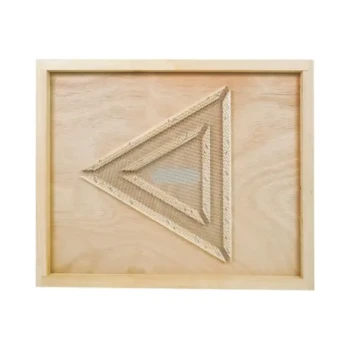
Hive bottom board inserts turn fallen mites into actionable data. By collecting Varroa mites and debris beneath the colony, they allow beekeepers to establish a pre-treatment natural mite-fall baseline, measure mite drop during treatment, identify peak mortality periods, and assess whether control is immediate or sustained. Used with a screened bottom board, the insert provides this information without dismantling the hive or significantly disturbing the bees.
The central value of a bottom board insert is not simply counting mites—it is comparing mite fall over defined intervals. That comparison helps beekeepers judge infestation pressure, understand treatment dynamics, and make better-timed integrated pest management decisions.
How Bottom Board Inserts Support Varroa Monitoring
Establishing a natural mite-fall baseline
Before applying a treatment, a removable insert can be placed under the hive for a defined monitoring period, commonly around 24 hours or another consistently selected interval.
The number of naturally fallen mites provides a baseline against which treatment-related mite drop can be compared. Without this reference point, a high post-treatment count may be difficult to interpret.
Collecting mites without opening the hive
The insert sits below the screened bottom board, where mites and hive debris fall through the mesh and accumulate on the collection surface.
This approach is comparatively noninvasive. Beekeepers can inspect the insert without removing frames, disrupting the cluster, or materially interrupting normal colony activity.
Separating natural fall from treatment-related fall
Counts taken before, during, and after treatment help distinguish the colony’s ongoing natural mite mortality from the additional drop caused by pest control.
For better interpretation, the monitoring interval, hive identification, treatment timing, and mite count should be recorded consistently.
What the Mite-Fall Pattern Reveals
An immediate treatment response
A sharp increase in mite fall soon after treatment may indicate a rapid knockdown or dislodging effect.
This pattern can show that the treatment is acting quickly, but it does not automatically prove that every affected mite has been killed. Some mites may be temporarily dislodged and may require further observation.
Sustained mortality throughout the treatment cycle
A more even or prolonged mite fall suggests that the treatment is affecting mites over an extended period.
This matters because Varroa mites may be present at different stages of exposure, including mites emerging from capped brood. Monitoring across the full treatment window helps determine whether the control strategy is maintaining pressure rather than producing only a short-lived effect.
Peak mite-fall periods
Regularly checking the insert can reveal when mite drop is highest.
Peak periods help beekeepers understand the treatment’s timing and may indicate when additional inspection or follow-up measurement is warranted.
Post-treatment residual activity
A continued elevated drop after the main treatment period may signal remaining infestation, delayed mortality, or mites becoming exposed later in the colony cycle.
A follow-up count is therefore important. Treatment decisions should not rely only on the first dramatic increase in mite fall.
Using the Data for IPM Decisions
Estimating colony pressure
Natural mite-drop data can provide a practical indication of parasitic pressure before treatment.
Some management systems use daily mite-fall multipliers to estimate the broader colony population. These coefficients are only approximations and vary with season, colony condition, monitoring method, and local management practice.
Choosing treatment timing
A rising baseline count can help commercial apiaries prioritize colonies or apiaries for intervention.
The insert therefore supports targeted treatment scheduling, reducing the need to treat solely on the basis of assumptions or visual inspection.
Comparing treatment performance
When the same monitoring method is used consistently across colonies, beekeepers can compare treatment response more reliably.
Useful comparisons include the magnitude of mite drop, the timing of the peak, the duration of elevated fall, and the residual count after treatment.
Supporting integrated pest management
Bottom board data should be combined with other indicators, such as alcohol washes, sugar-roll tests, brood inspection, colony strength, and seasonal conditions.
The insert is a valuable monitoring instrument, but it is not a complete substitute for direct mite-sampling methods.
How to Obtain Reliable Counts
Use a screened bottom board
A screen allows mites and debris to fall away from the bees while reducing the opportunity for fallen mites to reattach.
The screen also keeps worker bees from contacting the insert directly, which helps preserve the sample and limits disturbance to the colony.
Keep the monitoring period consistent
A 24-hour count can be useful for routine monitoring, but longer or shorter intervals may be appropriate depending on the management objective.
The key requirement is consistency: record the duration precisely and convert counts into a comparable daily rate when necessary.
Clean the insert between observations
Remove old debris before beginning a new monitoring interval.
A clean surface prevents mites from being counted twice and makes classification easier, particularly when wax particles, pollen, dead bees, and other debris are present.
Classify mites where practical
If the insert design and inspection conditions allow, record live and dead mites separately.
This distinction can improve interpretation, although it requires careful inspection because mites may be motionless, damaged, or partially concealed by debris.
Understanding the Trade-offs
Mite drop is an indirect measurement
A fallen-mite count measures what reaches the insert, not the entire mite population inside the colony.
Mites may remain on adult bees, stay within capped brood, be removed by cleaning behavior, or fail to reach the collection surface.
High drop does not always equal high treatment efficacy
A large count may represent rapid dislodging, delayed mortality, or a combination of both.
Effectiveness should be confirmed with follow-up monitoring and, where appropriate, an independent infestation assessment rather than inferred from one high count.
Thresholds are not universal
Fixed thresholds—such as a specific daily mite count requiring treatment—can be useful as local operating rules, but they should not be treated as universal biological limits.
Interpretation depends on colony size, season, brood status, climate, monitoring duration, and the accuracy of the insert and counting method.
Inserts require operational discipline
The system is simple, but unreliable results can arise from poor placement, uneven hive floors, rain contamination, ant interference, overcrowded debris, or inconsistent observation intervals.
For distributors and commercial apiaries, durable inserts with clear counting surfaces, secure fit, easy cleaning, and rapid replacement availability can materially improve monitoring consistency.
Selecting a Suitable Monitoring System
For routine commercial apiary use
Choose a screened bottom board with a removable insert that supports fast installation, cleaning, inspection, and recordkeeping across many colonies.
Standardized dimensions and compatible hive formats simplify procurement and reduce handling time.
For treatment-response analysis
Select inserts with a surface that makes mites easy to see and classify.
A contrasting or patterned collection surface, along with adequate rigidity and weather resistance, can improve field usability.
For long-term hive management
Consider bottom board systems that also support ventilation, sanitation, and debris inspection.
The monitoring component should complement—not compromise—the colony’s normal airflow and protection from pests and environmental contamination.
For wholesale and distribution programs
A broad product portfolio is valuable when it includes complete, compatible systems: screened bottom boards, corrugated or sticky inserts, replacement parts, and related monitoring accessories.
Reliable stock, responsive technical support, and efficient fulfillment are especially important when apiaries need synchronized equipment for seasonal treatment programs.
Making the Right Choice for Your Goal
Use the insert as a measurement system, not merely as a tray for collecting debris.
- If your primary focus is establishing infestation levels: Record natural mite fall over a consistent interval before treatment and use the result as a colony-specific baseline.
- If your primary focus is evaluating treatment response: Compare pre-treatment, peak-treatment, and post-treatment counts to determine whether mite mortality is rapid, sustained, or incomplete.
- If your primary focus is commercial apiary efficiency: Standardize insert size, monitoring intervals, counting procedures, and records across colonies and source compatible replacement components from a dependable supplier.
- If your primary focus is accurate IPM decisions: Combine bottom board data with direct mite-sampling methods and colony observations rather than relying on a single drop-count threshold.
When consistently deployed and carefully interpreted, hive bottom board inserts give beekeepers a practical, low-disturbance way to see how Varroa populations respond over time and act before parasite pressure undermines colony health.
Summary Table:
| Purpose | How It Helps | Key Action |
|---|---|---|
| Baseline Monitoring | Establishes pre-treatment mite fall | Record 24-hour counts consistently |
| Treatment Response | Shows immediate or sustained mortality | Compare pre-, peak-, post-treatment counts |
| Peak Detection | Identifies highest mite-drop periods | Inspect insert regularly during treatment |
| IPM Decisions | Estimates colony pressure | Use counts with direct sampling methods |
| Commercial Efficiency | Standardizes monitoring across hives | Source compatible durable inserts |
Upgrade your Varroa monitoring with HONESTBEE’s reliable screened bottom boards and inserts. As a leading B2B supplier for commercial apiaries and distributors, we provide durable, easy-to-clean equipment that ensures consistent data collection. Our comprehensive product range, rapid delivery, and dedicated support help you optimize treatment timing and keep colonies healthy. Secure your supply chain today — contact us for wholesale pricing and OEM/ODM options.
Related Products
- Langstroth Solid Bottom Board for Beekeeping
- Solid Bottom Board Australian Pine Wood Langstroth Bottom Board for Wholesale
- Australian Pine Wood Langstroth Screen Bottom Board for Wholesale
- Langstroth Screen Bottom Board for Beekeeping Wholesale
- HONESTBEE Wooden Bee Escape Board with Triangle Mesh Design for Beekeeping
People Also Ask
- What are the functions of solid bottom boards for a beehive? Essential Thermal Protection and Winter Survival Tips
- What is the purpose of a solid bottom board for bee hives? Enhance Hive Health and Winter Survival
- How does climate influence the choice between a solid and screened bottom board? Optimize Your Hive for Local Weather
- What is the primary function of a bottom board in a modern modified beehive system? Essential Foundation Guide
- What are the characteristics of a solid bottom board for a beehive? Boost Colony Health and Thermal Insulation