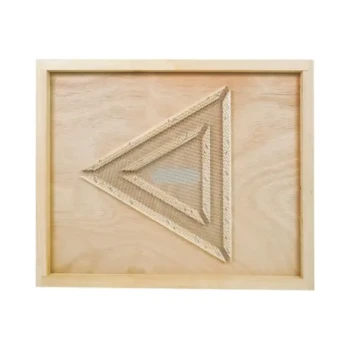
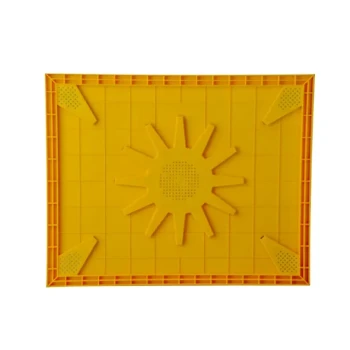
The bottom board serves as the structural foundation and the operational floor of a modern modified beehive. It acts as a sturdy wooden base that supports the immense weight of the hive layers above it, isolates the colony from ground-level moisture and pests, and creates the primary entrance and landing zone for the bees.
Core Takeaway The bottom board is not merely a stand; it is the interface between the colony and the environment. Its design dictates the colony's security against pests, its protection from ground moisture, and the efficiency of the bees' entry and exit.
The Structural Role of the Bottom Board
Supporting the Hive Stack
The primary physical duty of the bottom board is to act as the load-bearing foundation.
As honey supers and brood boxes are added, the hive becomes incredibly heavy. The bottom board provides the sturdy wooden base necessary to support this cumulative weight without warping or collapsing.
Isolating the Colony
For a colony to thrive, it must be separated from the dampness of the earth.
The bottom board creates a critical barrier that isolates the hive structure from the ground. This separation prevents ground moisture from wicking into the wooden components, which could lead to rot and compromise the hive's thermal integrity.
The Functional Interface
The "Front Door" and Landing Strip
Beyond support, the bottom board functions as the primary access point for the colony.
It typically extends slightly beyond the hive boxes to create a landing platform. This area serves as the takeoff and landing strip for foraging bees, facilitating high-volume traffic during nectar flows.
Colony Defense and Management
The design of the entrance facilitates easier colony defense.
By funneling traffic through a specific opening at the base, the colony can more effectively guard against intruders. This structure also aids the beekeeper in managing the colony, allowing for the observation of incoming pollen and traffic patterns.
Critical Considerations and Trade-offs
Managing Moisture Accumulation
While the bottom board blocks ground moisture, it can trap rain if not positioned correctly.
Because the front is open, wind-blown rain can enter the hive. To prevent water from pooling on the hive floor—which invites mold and disease—the entire colony must be tilted slightly forward to allow gravity to drain water out of the entrance.
Entrance Sizing Flexibility
Many modern bottom boards offer reversible functionality to adapt to seasonal needs.
These boards often feature rims of different heights (commonly 7/8-inch and 3/8-inch). This allows the beekeeper to provide a large opening for ventilation and traffic in the summer, or a smaller opening to restrict pests (like mice) and conserve heat in the winter.
Making the Right Choice for Your Goal
The bottom board is a static component, but its setup requires active decision-making.
- If your primary focus is Pest Prevention: Ensure you utilize the smaller entrance side (or an entrance reducer) during colder months to prevent mice and robbing insects from entering the large gap.
- If your primary focus is Hive Health: Double-check that your hive stand and bottom board setup has a forward tilt to ensure instant drainage of any intruding rainwater.
- If your primary focus is Colony Growth: Ensure the landing board area remains clear of vegetation to maximize the efficiency of foraging bees returning with resources.
A stable, dry, and defensible foundation is the first step toward a productive season.
Summary Table:
| Feature | Primary Function | Operational Benefit |
|---|---|---|
| Structural Base | Supports hive weight | Prevents warping and stack collapse |
| Ground Barrier | Moisture isolation | Protects wood from rot and maintains thermal integrity |
| Landing Platform | Foraging access | Improves traffic efficiency during peak nectar flows |
| Defense Gap | Entrance control | Allows bees to guard against pests and intruders |
| Reversible Rims | Seasonal adaptation | Optimizes ventilation in summer and heat retention in winter |
Elevate Your Beekeeping Operation with HONESTBEE
At HONESTBEE, we understand that a successful apiary starts from the ground up. Whether you are a commercial apiary scaling production or a distributor seeking high-quality components, we provide the industrial-grade beekeeping tools and equipment you need to succeed.
Our extensive portfolio includes everything from precision-engineered bottom boards and specialized hive-making machinery to honey-filling systems and premium industry consumables. We are dedicated to supporting your growth with wholesale solutions that prioritize durability and hive health.
Ready to optimize your supply chain? Contact us today to discuss how our comprehensive hardware and merchandise can benefit your business.
References
- Sunday Idowu Ogunjimi, Chinwe Egbunonu. Assessing the Knowledge Level of Beekeepers on Improved Beekeeping Management Practices in Peri-Urban Areas of Southwestern Nigeria. DOI: 10.1080/10496505.2015.1124781
This article is also based on technical information from HonestBee Knowledge Base .
Related Products
- Langstroth Solid Bottom Board for Beekeeping
- Solid Bottom Board Australian Pine Wood Langstroth Bottom Board for Wholesale
- Langstroth Screen Bottom Board for Beekeeping Wholesale
- HONESTBEE Top Bar & Bottom Bar Forming Machine | Bee Frame Machine
- HONESTBEE Wooden Bee Escape Board with Triangle Mesh Design for Beekeeping
People Also Ask
- What are the functions of solid bottom boards for a beehive? Essential Thermal Protection and Winter Survival Tips
- What is the purpose of a solid bottom board for bee hives? Enhance Hive Health and Winter Survival
- How does climate influence the choice between a solid and screened bottom board? Optimize Your Hive for Local Weather
- What are the characteristics of a solid bottom board for a beehive? Boost Colony Health and Thermal Insulation
- What are the benefits of using solid bottom boards? Superior Insulation & Pest Defense for Your Hives