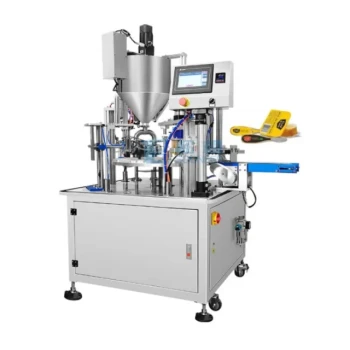
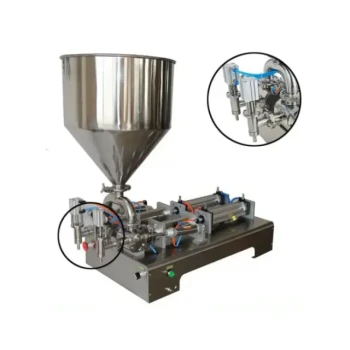
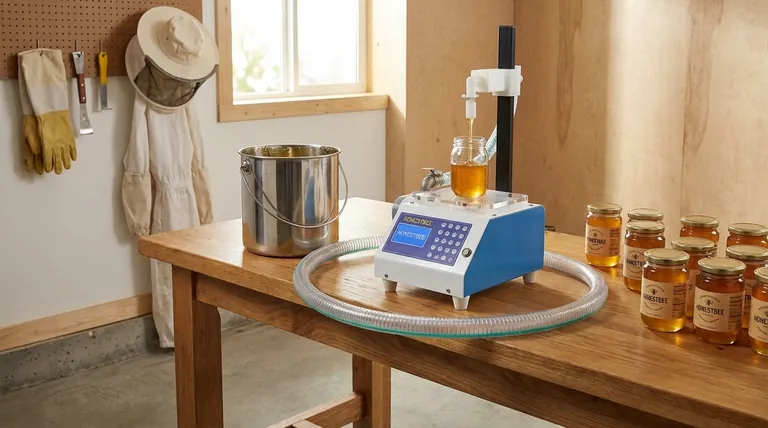
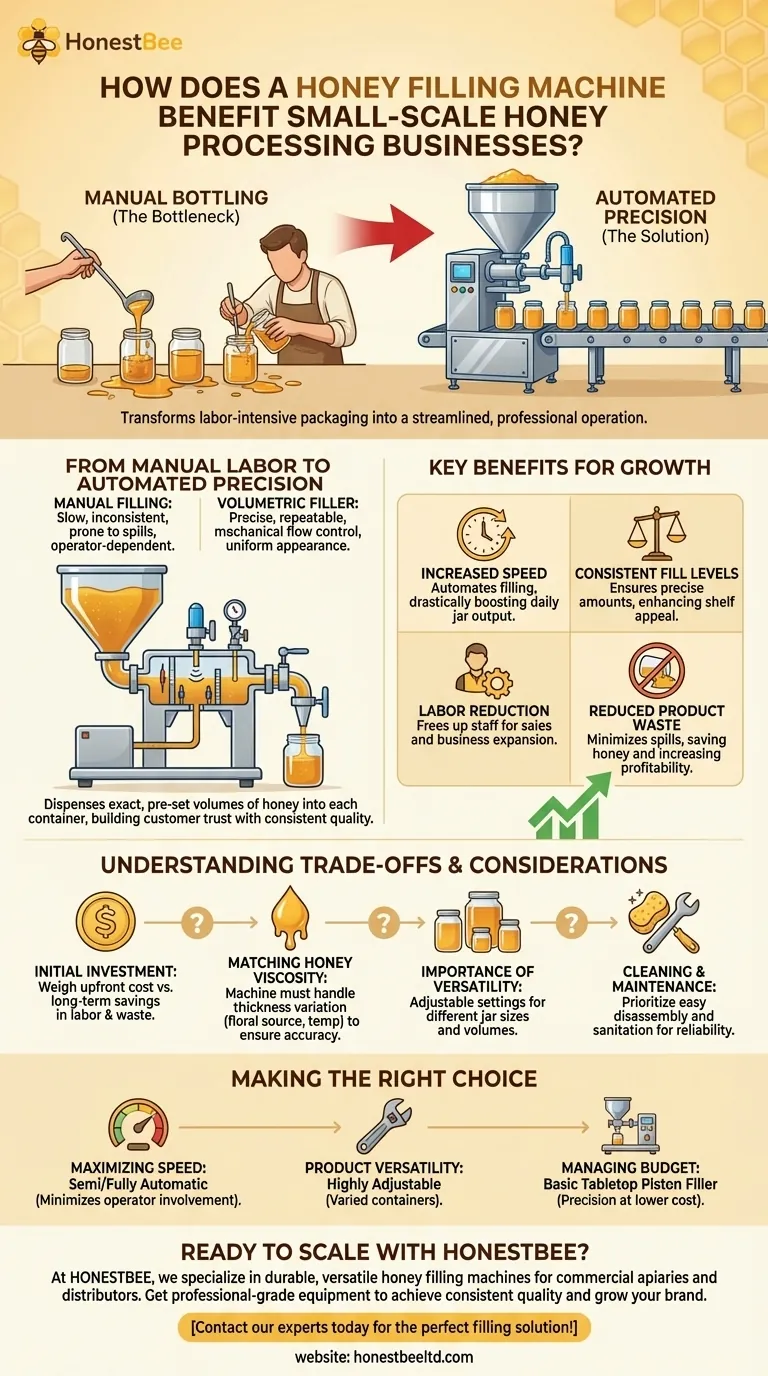
For the small-scale honey producer, a honey filling machine is a pivotal investment that transforms the packaging process from a labor-intensive bottleneck into a streamlined, professional operation. By automating the dispensing of honey into jars, these machines drastically increase production speed, ensure every jar has a consistent, accurate fill level, and significantly reduce the manual labor required.
The core issue for a growing honey business is not just making more honey, but packaging it efficiently and professionally. A filling machine addresses this directly, shifting your focus from the tedious task of bottling to the strategic goals of brand growth and market expansion.
From Manual Labor to Automated Precision
For many small producers, the final step of getting honey into the jar is the most time-consuming and inconsistent part of the entire process. This is the primary operational challenge that a filling machine is designed to solve.
The Bottleneck of Manual Filling
Manually filling jars is slow and prone to error. Spills create waste, inconsistent fill levels look unprofessional on a retail shelf, and the process requires a significant amount of an operator's time and attention.
As your business grows, manual filling quickly becomes the limiting factor that prevents you from meeting increased demand.
How a Volumetric Filler Works
A honey filling machine provides a precise, repeatable solution. Honey is held in a hopper and flows to a filling nozzle when the machine is activated.
Internal sensors and valves control the flow, dispensing an exact, pre-set volume of honey into each container. This mechanical precision eliminates the guesswork and variability of manual pouring.
The Impact on Product Consistency
When every jar contains the exact same amount of honey, it builds customer trust and reinforces brand quality. Consistent fill lines create a uniform, professional appearance on the shelf, which is critical for competing with larger brands.
This consistency also ensures you are not giving away product through over-filling or short-changing customers with under-filled jars.
Understanding the Trade-offs and Key Considerations
While the benefits are clear, investing in a filling machine requires careful thought. It's not just about buying a piece of equipment; it's about integrating a tool that fits your specific product and operational scale.
The Initial Investment
The most significant hurdle is the upfront cost. For a small business, this can be a substantial capital expenditure. You must weigh this cost against the long-term savings in labor, reduced product waste, and increased production capacity.
Matching the Machine to Your Honey
Honey's viscosity (its thickness and resistance to flow) varies greatly depending on its floral source, temperature, and moisture content. A machine must be able to handle the specific viscosity of your honey to ensure accuracy and prevent strain on the motor.
The Importance of Versatility
Small-scale producers often offer a variety of products, from small taster jars to large family-size containers. A valuable machine will have adjustable settings to easily accommodate different jar sizes and volumes. This adaptability ensures the machine can grow with your product line.
Cleaning and Maintenance
A machine that is difficult to disassemble and clean can create new bottlenecks. Look for designs that prioritize sanitation, with easy access to all parts that come into contact with the honey. Regular maintenance is also crucial for long-term reliability.
Making the Right Choice for Your Business
Choosing the right machine depends entirely on your specific operational goals and product offerings.
- If your primary focus is maximizing speed and efficiency: Prioritize a semi-automatic or fully automatic machine that minimizes operator involvement.
- If your primary focus is product versatility: Choose a machine with highly adjustable settings for both volume and container size.
- If your primary focus is managing a tight budget: Consider a more basic, tabletop piston filler that provides precision without the high cost of advanced automation.
Ultimately, the right honey filling machine transforms packaging from a daily chore into a strategic asset that enables your business to scale.
Summary Table:
| Benefit | Description |
|---|---|
| Increased Speed | Automates the filling process, drastically boosting daily jar output. |
| Consistent Fill Levels | Ensures every jar has the same precise amount, enhancing shelf appeal. |
| Labor Reduction | Frees up staff from manual pouring to focus on sales and business growth. |
| Reduced Product Waste | Minimizes spills and over-filling, saving honey and increasing profitability. |
Ready to scale your honey production with the right equipment?
At HONESTBEE, we specialize in supplying durable, versatile honey filling machines and other essential beekeeping supplies to commercial apiaries and distributors. Our wholesale-focused operations mean you get professional-grade equipment that fits your budget and operational needs, helping you achieve consistent quality and grow your brand.
Contact our experts today to find the perfect filling solution for your business!
Visual Guide
Related Products
- Precision Durable Efficient HONESTBEE Rotary Honey Filling Machine
- Semi Automatic Small Honey Bottle Filling Machine Honey Filler
- Economy Small Honey Filling Machine Honey Bottle Filler Packaging Machine
- Fully Automatic Honey Filling Packaging Machine for Processing Line
- Commercial Rotary Honey Filling Machine for Production
People Also Ask
- How do honey filling machines work? Achieve Precision & Speed for Your Apiary
- What quality control role does professional honey filling equipment perform? Ensure Consistency and Product Stability
- How do high-precision honey filling machines ensure quality? Optimize Your Commercial Production with HONESTBEE
- How do honey filling and processing machines aid native bee product conservation? Boost Value with HONESTBEE Technology
- What are the common types of bottling machines used for honey? Choosing the Right Solution for Your Apiary