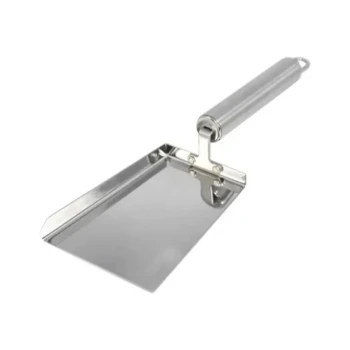
The integrity of a controlled feeding experiment relies entirely on isolating the variables entering the hive. A pollen grid installed at the beehive entrance serves as a mechanical barrier that effectively strips natural pollen pellets from the legs of returning foragers. This ensures that the colony consumes only the specific experimental diet provided by the researcher, rather than uncontrolled resources gathered from the wild.
By acting as a mechanical interceptor, the pollen grid eliminates external dietary variables. This allows researchers to attribute changes in colony health or behavior exclusively to the experimental feed, preventing data dilution.
The Mechanism of Variable Isolation
Mechanical Interception
The pollen grid functions as a physical filter at the hive's point of entry. As forager bees attempt to pass through the specific gauge of the grid, the device scrapes pollen pellets accumulated on their hind legs.
Preventing Dietary Dilution
In a natural setting, bees forage from a wide variety of flora, introducing unpredictable nutritional inputs. By physically blocking this external pollen, the grid prevents the dilution of the experimental diet.
This ensures that the "input" remains constant and known. Without this mechanical intervention, it would be impossible to determine if experimental results were caused by the test diet or by random environmental resources.
Standardizing the Colony Environment
For research results to be accurate, the biological system must be as closed as possible. The grid transforms an open biological system into a controlled testing environment, ensuring that the variables affecting the bees are explicitly chosen by the researcher.
Understanding the Operational Trade-offs
Total Nutritional Dependency
By successfully blocking natural pollen, the grid makes the hive entirely dependent on the provided experimental diet.
This removes the colony's ability to self-regulate its nutrition through natural foraging. If the experimental diet is insufficient or the feeding schedule is interrupted, the colony has no "backup" food source, which can jeopardize the health of the subjects.
Physical Traffic Restriction
As a mechanical interceptor, the grid inherently acts as an obstacle. While it filters pollen, it also restricts the flow of traffic at the entrance.
This requires careful monitoring to ensure that the grid does not become clogged or create excessive stress for returning foragers trying to enter the hive.
Ensuring Data Integrity in Field Studies
To maintain rigorous scientific standards, you must ensure the grid is functioning as a complete barrier to external inputs.
- If your primary focus is precise nutritional analysis: Verify that the grid is fitted securely to prevent bees from bypassing the mechanism and introducing "noise" to your data.
- If your primary focus is long-term colony health: Monitor the hive closely to ensure the experimental diet fully replaces the nutritional volume usually provided by wild pollen.
The pollen grid is the defining tool that transforms a chaotic natural environment into a controlled laboratory setting.
Summary Table:
| Feature | Function in Experiments | Impact on Data Accuracy |
|---|---|---|
| Mechanical Interception | Strips natural pollen pellets from returning foragers | Eliminates external nutritional variables |
| Dietary Isolation | Prevents dilution of the test diet with wild flora | Attributes results exclusively to the experimental feed |
| System Control | Converts open hives into closed biological systems | Standardizes the testing environment for replication |
| Nutritional Dependency | Forces reliance on provided experimental supplements | Ensures precise control over total nutrient intake |
Elevate Your Research & Commercial Apiary Operations with HONESTBEE
Precision in beekeeping requires the right tools. At HONESTBEE, we empower commercial apiaries and global distributors with a comprehensive range of professional-grade equipment. From specialized pollen traps and grids for research integrity to high-capacity honey-filling machines and durable hive-making machinery, our portfolio is designed to optimize your productivity.
Whether you are looking to source essential industry consumables or invest in heavy-duty beekeeping hardware, our wholesale solutions offer the reliability your business demands.
Ready to scale your operation? Contact us today to explore our full spectrum of beekeeping tools and machinery!
References
- Franziska Böhme, Klaus Wallner. From field to food—will pesticide-contaminated pollen diet lead to a contamination of royal jelly?. DOI: 10.1007/s13592-017-0533-3
This article is also based on technical information from HonestBee Knowledge Base .
Related Products
- Removable Plastic Pollen Trap With Ventilated Tray for Bees Pollen Collector
- 30 cm Plastic Entrance Hole Bee Pollen Trap and Collector
- Stainless Steel Pollen Shovel with Wooden Handle
- Plastic Bee Pollen Trap Strips Comb Catcher Collector
- Heavy-Duty Ergonomic Grip Galvanized Pollen Shovel
People Also Ask
- What are the design principles and advantages of pollen traps in the collection of bee pollen? Boost Your Apiary Yield
- What is the function of professional pollen traps in evaluating honey plants? Quantifying Pollination and Crop Potential
- What functions do pollen traps serve for bee bread production? Optimize Your Raw Material Collection
- What maintenance and pest prevention measures should be taken for pollen traps? Protect Your Hive and Harvest Quality
- How does the use of pollen traps in honeybee hives enhance crop fertilization? Boost Your Yield Through Induced Activity