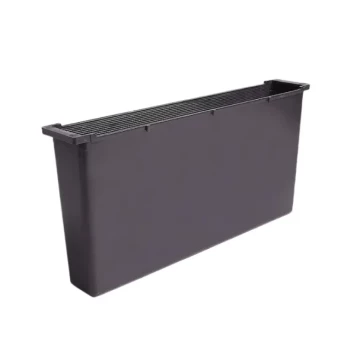
Artificial supplementary feeding for solitary bees and bumblebees is essential during post-flowering nutrient voids, in resource-poor environments with high honey bee competition, and during early spring or extreme climatic events. This targeted intervention prevents the active migration of pollinators to unsuitable urban habitats and ensures population stability during high-stress periods when natural nectar and pollen are scarce.
Core Takeaway: Supplemental feeding serves as a critical biological safety net, preserving pollinator populations when natural flowering cycles conclude or when ecological competition exceeds the environment's carrying capacity.
Managing Post-Flowering Nutrient Voids
The Impact of Natural Cycle Gaps
After the conclusion of primary natural flowering cycles, many landscapes face a "hunger gap" where active bees remain but forage disappears. Providing high-nutrient supplements during these windows prevents population crashes and ensures that solitary bees can complete their nesting cycles.
Mitigating the Effects of Monocultures
In areas dominated by large-scale monocultures, such as soybean production, flowering is intense but brief. Artificial supplementary feed bridges the gap between these short bursts of abundance, preventing nutritional deficiencies that would otherwise lead to colony decline.
Prevention of Pollinator Migration
When resources vanish, pollinators naturally migrate toward urban environments or other unsuitable habitats in search of food. Strategic feeding keeps these key pollinator populations within the intended ecological or agricultural zone, maintaining local biodiversity.
Ecological Competition and Density Pressures
High-Density Honey Bee Environments
Solitary bees and bumblebees often struggle to compete in biological communities with extremely high honey bee densities. In these scenarios, supplemental resources are necessary to offset the intense forage competition and ensure these specialized pollinators have adequate energy.
Balancing Resource-Limited Communities
In environments where there are more than two hives per acre, natural forage often becomes insufficient for all species. Direct nutritional support provides the protein and calories required to sustain non-honey bee species that might otherwise be outcompeted.
Supporting Early Spring Development
Early spring is a high-stress period where bumblebee queens emerge and require immediate energy for colony buildup. Supplementary protein and sugar ensure they have the energy required for initial brood rearing before the primary nectar flow begins.
Understanding Technical Trade-offs and Risks
Nutritional Balance and Quality
While feeding is necessary, using low-quality or incorrect feed can be counterproductive. Supplements must match the specific nutritional requirements of the target species, including essential amino acids and lipids, to maintain glandular health and vitality.
The Risk of Dependency and Timing
Feeding should be a temporary measure to solve specific environmental deficits rather than a permanent substitute for natural forage. Over-reliance on artificial sources can occasionally discourage natural foraging behaviors if the timing and placement are not managed professionally.
Regulatory and Organic Constraints
In specialized sectors like organic land management, feed sources are strictly restricted to organic sugar or honey to prevent chemical residues. Distributors and resellers must provide a diverse portfolio of feed types to meet these varying regulatory and environmental standards.
Optimizing Your Sourcing for Pollinator Health
Successfully managing pollinator populations requires access to a comprehensive product portfolio and deep technical expertise. As your strategic partner, we prioritize rapid fulfillment and professional guidance to ensure you have the right solutions for every environmental challenge.
- If your primary focus is rapid response to climate events: Utilize our ultra-fast delivery services to deploy high-energy supplements immediately when extreme weather threatens local pollinator survival.
- If your primary focus is supporting diverse ecosystems: Leverage our full-spectrum portfolio to provide specialized protein and lipid-rich feeds that cater specifically to the needs of solitary bees and bumblebees.
- If your primary focus is high-volume agricultural supply: Benefit from our deep industry expertise and efficient order fulfillment to manage large-scale nutritional requirements during monoculture dormancy periods.
By aligning strategic supplementary feeding with precise ecological needs, you ensure the long-term resilience and productivity of essential pollinator populations.
Summary Table:
| Feeding Condition | Primary Driver | Key Benefit for Pollinators |
|---|---|---|
| Post-Flowering Voids | Natural forage disappearance | Prevents population crashes and migration |
| Monoculture Landscapes | Brief, intense blooming cycles | Bridges nutritional gaps during dormancy |
| High-Density Competition | Excessive honey bee presence | Offsets resource depletion for solitary species |
| Early Spring Emergence | Queen energy requirements | Supports initial brood rearing and colony buildup |
| Extreme Climatic Events | Unpredictable weather stress | Provides an immediate biological safety net |
Scale Your B2B Beekeeping Business with HONESTBEE
Ensure your customers have access to the highest quality pollinator support tools and machinery. HONESTBEE specializes in one-stop sourcing for distributors, wholesalers, and commercial apiaries, offering a comprehensive full-spectrum product portfolio—from specialized hardware like honey-filling machines to essential industry consumables.
Why Partner with Us?
- Professional Expertise: Deep industry knowledge to support your technical requirements.
- Rapid Fulfillment: Ultra-fast delivery and efficient order processing to meet market demands.
- Tailored Solutions: Robust OEM/ODM support and premium trading services designed for high-volume resellers.
Ready to enhance your inventory with professional-grade beekeeping equipment? Contact us today at HONESTBEE to receive a custom quote and discover how our supply reliability can drive your profit margins.
References
- I. N. Mishin. Honeybees, bumblebees in the processes of competition and migration of pollinators in biocenoses. DOI: 10.1051/e3sconf/202453710019
This article is also based on technical information from HonestBee Knowledge Base .
Related Products
- HONESTBEE Round Hive Top Bee Feeder for Syrup
- HONESTBEE Entrance Bee Feeder Professional Hive Nutrition Solution for Beekeeping
- HONESTBEE Professional Entrance Bee Feeder Hive Nutrition Solution
- In-Hive Dual Compartment Frame Bee Feeder for Targeted Colony Nutrition
- Queen Bee Artificial Insemination Instrument Equipment for Instrumental Insemination
People Also Ask
- What can the round hive top feeder be used for? A Guide to Efficient, Safe Bee Feeding
- What types of hive boxes is the round hive top feeder compatible with? Universal Fit for 8 & 10-Frame Langstroth Hives
- What is the capacity of the round hive top feeder for syrup and pollen? A Guide to Targeted Apiary Support
- What types of feed can be used with the round hive top feeder? Versatile Feeding for Optimal Apiary Health
- How do you use a top feeder for bees? Expert Guide to Installation and High-Volume Hive Feeding