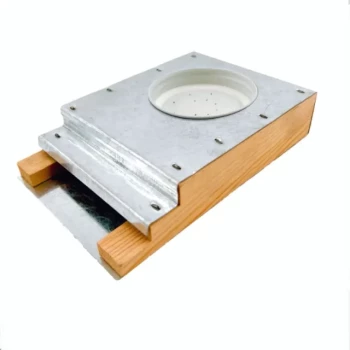
Top feeders are the preferred choice for beekeepers seeking a balance of high volume, minimal disturbance, and security. These feeders sit directly on top of the hive body, allowing you to refill syrup rapidly without opening the brood nest, while their internal design significantly reduces the risk of robbing and weather-related spoilage.
Top feeders excel in scenarios requiring rapid weight gain, such as fall feeding. By offering a large capacity reservoir directly above the cluster, they allow bees to take down syrup quickly while eliminating the vacuum-seal failures common in gravity-based feeders.
Optimizing Hive Management
Non-Invasive Refilling
The most immediate benefit of a top feeder is the preservation of hive temperature and calm. Because the feeder sits under the outer cover but above the inner cover or frames, you do not need to smoke or disturb the bees to add feed.
You simply remove the hive lid, pour syrup into the wide, open reservoir, and close it back up. This is far less disruptive than swapping frame feeders or disturbing the cluster to access internal components.
Efficiency for Remote Apiaries
For beekeepers managing out-yards or distant locations, top feeders are a logistical asset. Their design is generally wide and open, making the physical act of filling them faster and less prone to spills than narrow frame feeders.
Many models hold up to three gallons of syrup. This high capacity means fewer trips to the apiary are required to get the colony up to winter weight.
Easy Maintenance
When the feeding season ends, top feeders simplify the cleanup process. Their open geometry makes them easy to rinse out and stack for storage. Unlike enclosed containers that can trap mold, a top feeder is generally accessible for thorough scrubbing.
Protecting the Colony and the Feed
Preventing Robbing
External feeders can trigger a feeding frenzy among neighboring colonies or wasps. Top feeders house the syrup entirely inside the hive stack.
This internal position ensures that only the colony you intend to feed has access to the resources, significantly lowering the risk of robbing behavior.
Stability Against Temperature Changes
Gravity feeders (like inverted jars or buckets) rely on a vacuum seal to hold back the liquid. As temperatures fluctuate between day and night, the air inside these containers expands and contracts, often breaking the vacuum and causing syrup to drip onto the brood.
Top feeders do not rely on a vacuum. They are immune to temperature-induced leaks, ensuring your bees are not drenched in cold syrup during fluctuating weather.
Protection from the Elements
Syrup exposed to sunlight can degrade or ferment more quickly. Because the top feeder is covered by the telescoping lid, the feed remains in total darkness. This protects the quality of the syrup and prevents premature spoilage.
Understanding the Trade-offs
The "Bee-Tight" Requirement
While top feeders are generally safer, they require a specific inspection before use. You must ensure the construction is absolutely "bee-tight" to prevent bees from bypassing the safety mechanisms.
Risk of Drowning
If there is a gap in the hardware cloth or a warping of the plastic, bees may access the main reservoir from below and drown. It is critical to inspect new feeders and fill any gaps with silicone. Additionally, ensure your inner cover sits flush on top of the feeder to deny access from above.
Making the Right Choice for Your Goal
- If your primary focus is rapid winter preparation: A top feeder is ideal because its large capacity allows the colony to take down gallons of syrup quickly in the fall.
- If your primary focus is minimizing hive aggression: The ability to refill without exposing the brood nest makes this the best option for keeping defensive colonies calm.
By securing the food source internally and simplifying the refill process, a top feeder allows you to manage colony nutrition with maximum efficiency and minimum stress.
Summary Table:
| Feature | Benefit | Why It Matters |
|---|---|---|
| High Capacity | Holds up to 3 gallons | Fewer trips to remote apiaries and faster fall weight gain. |
| Non-Invasive | Refill without opening brood nest | Maintains hive temperature and minimizes bee aggression. |
| Vacuum-Free | No drips or leaks | Prevents bees from being drenched in syrup during temperature shifts. |
| Internal Design | Concealed syrup source | Eliminates robbing triggers from neighboring colonies and wasps. |
| Easy Maintenance | Open geometry | Simple to clean, stack, and store without mold buildup. |
Scale Your Apiary Operations with HONESTBEE
Are you looking to streamline your commercial beekeeping or expand your distribution catalog? HONESTBEE specializes in serving commercial apiaries and wholesale distributors with premium-grade beekeeping solutions. From high-capacity top feeders that ensure rapid colony growth to advanced hive-making and honey-filling machinery, we provide the tools you need to succeed at scale.
Our value to you:
- Comprehensive Wholesale Catalog: One-stop sourcing for tools, machinery, and essential consumables.
- Commercial-Grade Durability: Equipment designed to withstand the rigors of large-scale honey production.
- Global Distribution Support: Reliable supply chains for industry-leading hardware and honey-themed merchandise.
Ready to enhance your efficiency and output? Contact our expert team today to discuss wholesale pricing and customized equipment solutions tailored to your business needs.
Related Products
- HONESTBEE Round Hive Top Bee Feeder for Syrup
- HONESTBEE Professional Hive Top Bee Feeder Feeding Solution
- Professional Hive Top Bee Feeder for Beekeeping
- HONESTBEE Square Top Hive Bee Feeder Top Bee Feeder
- Rapid Bee Feeder White Plastic 2L Round Top Feeder for 8 or 10-Frame Bee Hives
People Also Ask
- What can the round hive top feeder be used for? A Guide to Efficient, Safe Bee Feeding
- What is the capacity of the round hive top feeder for syrup and pollen? A Guide to Targeted Apiary Support
- What types of hive boxes is the round hive top feeder compatible with? Universal Fit for 8 & 10-Frame Langstroth Hives
- What types of feed can be used with the round hive top feeder? Versatile Feeding for Optimal Apiary Health
- What are the different types of top feeders for bees? Choosing the Best Feeder for Your Apiary