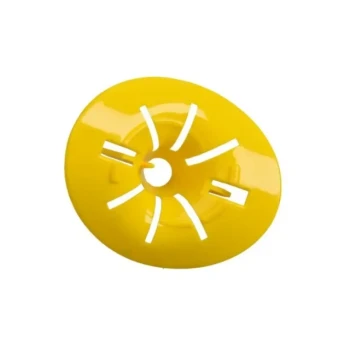
The primary advantage of using specialized propolis traps is the ability to harvest raw material with significantly higher purity through a standardized collection process. Unlike manual scraping, which mechanically dislodges contaminants along with the resin, traps leverage the honeybee's natural instinct to seal specific gap dimensions, resulting in a cleaner, more consistent product.
Core Insight: Specialized traps transform propolis harvesting from a crude extraction method into a precision process. By inducing bees to fill simulated crevices, these tools naturally filter out common contaminants like wood chips and beeswax, producing a "representative sample" that is critical for accurate scientific analysis and high-value medicinal applications.
Elevating Material Purity
The most immediate benefit of using traps is the drastic reduction in foreign matter found in the raw harvest.
Minimizing Physical Contaminants
Manual scraping is an abrasive process. It frequently introduces impurities such as wood chips from the frames, paint flakes from the hive box, and accidental bee remains.
Specialized traps, such as grids or gratings, provide clean, pre-defined gaps. Bees deposit pure resin directly into these spaces, effectively eliminating the inclusion of hive debris and structural materials.
Preventing Wax Adulteration
A major issue with scraping is the unintentional mixing of propolis with beeswax. Because bees often use wax and propolis in close proximity, scraping creates a composite material that requires heavy refining.
Traps utilize specific gap dimensions that trigger the bees' instinct to seal with propolis rather than build comb with wax. This biological "hack" ensures the harvested material retains a high resin concentration closer to its natural state.
Enhancing Scientific and Analytical Accuracy
For researchers and quality control specialists, the method of collection dictates the reliability of the data.
Ensuring Representative Sampling
According to the primary technical reference, the standardized process offered by traps is essential for accurate geographical origin assessments.
When analyzing samples for minerals and heavy metal elements, purity is paramount. Traps provide a "representative raw sample" that reflects the true environmental input, unskewed by the chemical noise introduced by hive scrapings or tool contamination.
Assessing Genetic Potential
Traps allow for a standardized measurement of propolis production across different colonies.
By providing identical collection surfaces to different hives, researchers can accurately assess the "true propolis production potential" of specific genetic bee lineages. This is difficult to achieve with scraping, which is highly variable and dependent on the harvester's technique.
Operational and Economic Efficiency
Beyond quality, switching to traps offers distinct advantages regarding labor and downstream processing costs.
Reducing Labor Intensity
Harvesting by scraping is physically demanding and time-consuming, requiring the beekeeper to manipulate individual frames and hive bodies.
Traps reduce this labor intensity. They are often designed as mats, grids, or gratings that can be easily inserted and removed, streamlining the collection workflow compared to the meticulous scraping of irregular surfaces.
Lowering Refining Costs
Raw material collected via manual scraping has low initial purity, necessitating complex and costly purification processes to remove wood, wax, and debris.
Because traps yield a cleaner raw material, the difficulty of subsequent processing is significantly reduced. This increases the industrial value of the harvest and lowers the cost of producing refined extracts, tinctures, or medicinal applications.
Understanding the Trade-offs
While traps offer superior quality, it is important to acknowledge the operational context compared to scraping.
Volume vs. Purity
Manual scraping, particularly with specialized scraping tools, is often associated with the acquisition of "large quantities" of raw material quickly.
Traps rely on the bees' passive filling behavior over time. While the quality is superior, the immediate volume harvested in a single session may differ from an aggressive scraping strategy, depending on the season and bee activity.
Biological Dependence
Traps are effective only because they simulate natural crevices. Success depends entirely on the bees' biological drive to seal these specific gaps. If the gap dimensions are not precise, or if the bees are not in a "propolis gathering" season, the traps may remain unfilled.
Making the Right Choice for Your Goal
The decision between traps and scraping depends on the intended end-use of the propolis.
- If your primary focus is Laboratory Research or Origin Tracing: You must use specialized traps to ensure the chemical profile is not altered by contaminants like wood or paint.
- If your primary focus is High-Value Medicinal Products: You should use traps to reduce refining costs and ensure a consistent, safe raw material for tinctures and capsules.
- If your primary focus is Low-Cost Industrial Volume: Manual scraping tools may provide a faster way to obtain bulk raw material, provided you have the infrastructure to heavily filter and purify the product later.
Ultimately, specialized traps are the superior choice when the integrity and purity of the chemical profile are more valuable than raw bulk volume.
Summary Table:
| Feature | Specialized Propolis Traps | Manual Scraping |
|---|---|---|
| Purity Level | High (Minimal contaminants) | Low (Includes wood, wax, paint) |
| Wax Content | Minimal (Propolis-specific gaps) | High (Mixed with comb wax) |
| Labor Intensity | Low (Easy insertion/removal) | High (Manual scraping of frames) |
| Refining Cost | Low (Cleaner raw material) | High (Requires heavy purification) |
| Best For | Medicinal use & Scientific research | Bulk industrial volume |
Maximize Your Propolis Quality with HONESTBEE
Elevate your apiary's output with professional-grade collection tools. HONESTBEE provides commercial apiaries and distributors with high-precision propolis traps, hive-making machinery, and specialized honey-filling equipment designed for efficiency.
Whether you are scaling a commercial operation or supplying the industry, our comprehensive wholesale portfolio ensures you deliver the purest hive products to your customers. Contact us today to discover how our specialized beekeeping hardware and industry consumables can transform your production potential.
References
- Basel Al-Saida, Amal A. Al-Abbadi. Determination and Classification of Jordanian Propolis Samples According to Their Elemental Profile. DOI: 10.47014/17.3.4
This article is also based on technical information from HonestBee Knowledge Base .
Related Products
- 8 Frame and 10 Frame Propolis Trap Collector Screen for Propolis Collection
- Removable Plastic Pollen Trap With Ventilated Tray for Bees Pollen Collector
- Professional Bucket Style Wasp and Moth Pheromone Trap
- Plastic Bee Pollen Trap Strips Comb Catcher Collector
- Plastic Beetle Blaster Trap Beekeeping Tools and Supplies
People Also Ask
- Why is a specific wooden frame required when installing a propolis screen? Optimize Your Propolis Harvest Efficiency
- What are the advantages of using propolis collector screens? Elevate Your Harvest to Pharmaceutical Purity
- How do propolis collection screens work? Discover material specs for commercial harvesting equipment
- How does the mesh size of a propolis collection screen influence the efficiency of propolis harvesting? Optimize Yields!
- How do commercial-grade plastic screens compare to custom fine-mesh screens? Maximize Your Propolis Yield & ROI