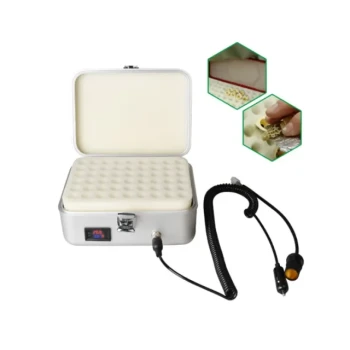
High-precision constant temperature incubators are designed to rigorously replicate the natural microclimate of a beehive, primarily by maintaining a stable thermal environment at 33°C (with some variations up to 34°C). This precise thermal regulation is the critical factor that allows for the synchronous emergence of adult honeybees, ensuring that developmental timelines remain consistent across all samples.
The primary value of these incubators is the elimination of environmental noise. By rigorously excluding external temperature and humidity fluctuations, they ensure that any observed physiological or behavioral changes in the bees are attributed solely to experimental variables, such as nutrition or pathogens, rather than environmental stress.
Simulating the Hive Microclimate
To support the delicate process of adult emergence, incubators must recreate the specific conditions found in nature.
Thermal Stability at 33°C
The primary reference establishes that the core requirement for normal development is a constant temperature of 33°C.
This specific set point simulates the warmth generated by a colony specifically for brood rearing. Deviating from this precise temperature can disrupt physiological functions, alter development speeds, and impact the overall health of the emerging adult.
The Role of Humidity
While temperature is the primary factor, supplementary data indicates that humidity control is often integrated to complete the simulation.
Industrial-grade units typically maintain relative humidity between 50% and 70%. This prevents the developing bees from desiccation (drying out) or suffering from mold-related issues associated with excessive moisture.
Precise PID Control
To achieve this stability, high-end units utilize PID (Proportional-Integral-Derivative) control systems.
These systems prevent the "overshoot" common in standard heaters, ensuring the environment remains flat and stable rather than oscillating around the target temperature.
The Scientific Necessity of Stability
Beyond basic survival, these specific conditions are required to validate scientific data regarding honeybee health.
Ensuring Synchronous Emergence
A critical outcome of maintaining a constant 33°C is the synchronization of emergence.
When temperature varies, metabolic rates change, causing some bees to emerge earlier or later than others. A constant temperature ensures the entire sample group reaches adulthood simultaneously, providing a uniform baseline for study.
Excluding Environmental Interference
In biological evaluations, external weather fluctuations act as confounding variables.
If a lab experiences a cold snap or a heat wave, it could skew mortality statistics or immune response data. High-precision incubators act as a shield, isolating the bees from these external shifts.
Isolating Experimental Variables
By stabilizing the climate, researchers can be certain of cause and effect.
If a bee's lifespan is shortened or its immune system compromised, the stable environment proves these effects are due to nutritional stress or pathogen infection, not because the incubator got too cold overnight.
Understanding the Trade-offs
While high-precision incubators are essential for standardized testing, relying on them requires an understanding of their limitations.
Static vs. Dynamic Simulation
A constant temperature of 33°C is an idealization of the hive environment.
In nature, a hive may experience slight micro-fluctuations. While a static constant temperature is perfect for standardization and repeatability, it may not perfectly reflect the dynamic stress of a wild environment.
Sensitivity to Disruption
Because these systems rely on precise equilibrium, they can be sensitive to operational errors.
Frequent opening of the incubator door causes rapid loss of heat and humidity, which the PID controller must work to recover. In rigorous studies, minimizing physical access to the samples is necessary to maintain the integrity of the "constant" environment.
Making the Right Choice for Your Research
When configuring your incubation equipment for honeybee emergence, your specific goals should dictate your setup.
- If your primary focus is Standardized Bio-assays: Prioritize thermal stability at 33°C above all else to ensure that mortality statistics are statistically valid and not skewed by weather.
- If your primary focus is Behavioral Development: Ensure your system includes humidity control (50-70%) alongside temperature regulation to prevent physiological stress that could alter post-emergence behavior.
Precision in the incubator allows for certainty in the data; it transforms a biological process into a measurable, repeatable science.
Summary Table:
| Condition | Target Specification | Impact on Honeybee Development |
|---|---|---|
| Temperature | 33°C (Constant) | Ensures synchronous emergence and stable metabolic rates. |
| Humidity | 50% - 70% RH | Prevents desiccation and moisture-related mold issues. |
| Control System | PID Logic | Eliminates temperature overshoot and environmental noise. |
| Atmosphere | Isolated/Stable | Removes confounding variables for accurate research data. |
Elevate Your Beekeeping Operation with HONESTBEE
Precision is the backbone of successful beekeeping, whether in the lab or the field. HONESTBEE provides commercial apiaries and distributors with the high-performance tools and machinery needed to thrive. From high-precision incubators for brood rearing to advanced honey-filling machines and hive-making hardware, our comprehensive wholesale catalog covers every aspect of the industry.
Our value to you:
- Reliability: Equipment designed to replicate natural conditions with industrial-grade accuracy.
- Efficiency: Streamline your production with specialized machinery tailored for commercial scale.
- Full-Spectrum Supply: From essential consumables to honey-themed cultural merchandise.
Ready to scale your commercial apiary or expand your distribution portfolio? Contact our experts today to discover how HONESTBEE can optimize your success.
References
- Yarira Ortiz‐Alvarado, Tuğrul Giray. Antibiotics in hives and their effects on honey bee physiology and behavioral development. DOI: 10.1242/bio.053884
This article is also based on technical information from HonestBee Knowledge Base .
Related Products
People Also Ask
- What happens if a colony loses its queen during the nectar flow? A Guide to Salvaging Your Honey Harvest
- How can you tell if the worker bees have accepted the queen? Decode Bee Behavior for a Thriving Hive
- How can the queenless state of a newly created nuc be resolved? Expert Solutions for Colony Growth
- What are the primary reasons for replacing a queen bee? Boost Your Commercial Honeybee Colony's Success
- What queen bee behaviors should be observed after introduction? Ensure Hive Success with Our Expert Monitoring Guide