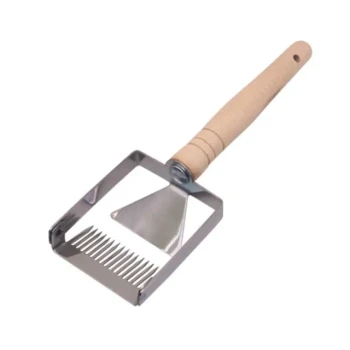
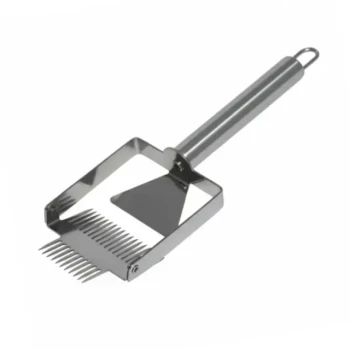
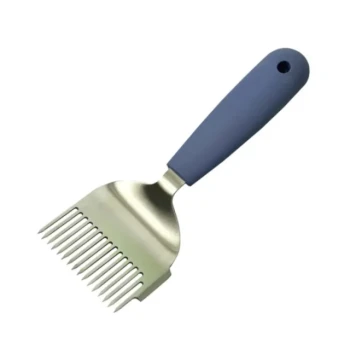
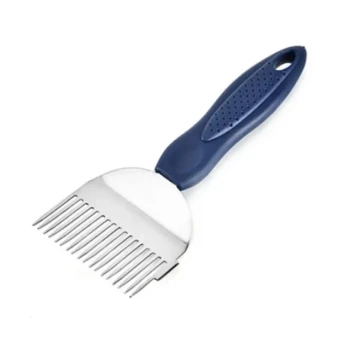
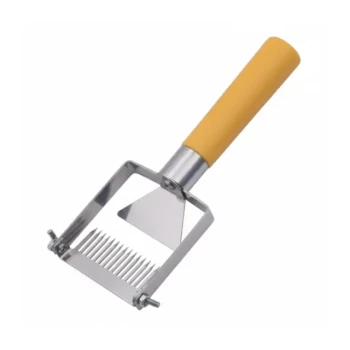
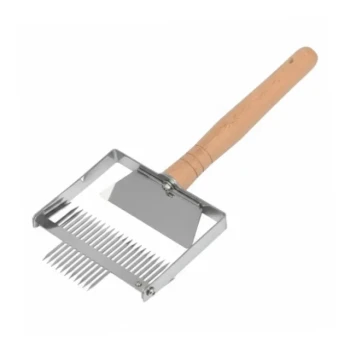
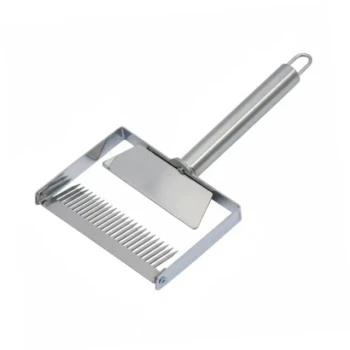
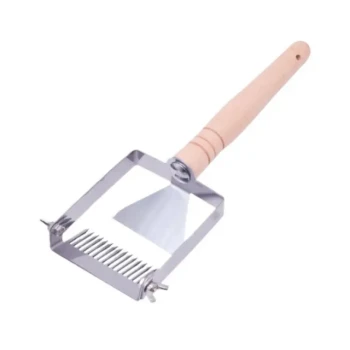
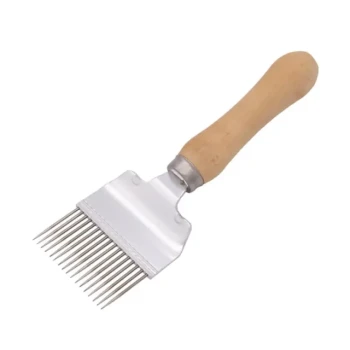
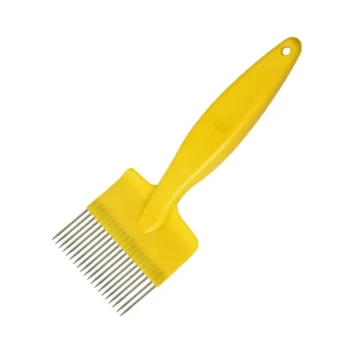
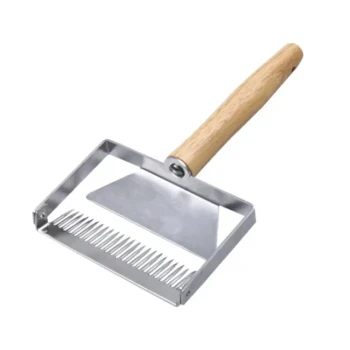
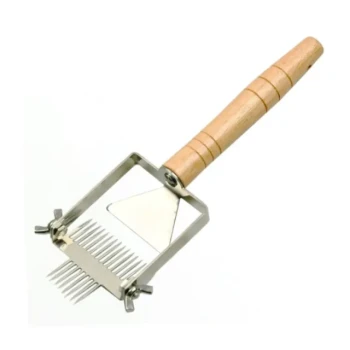
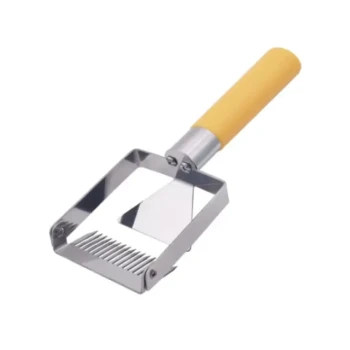
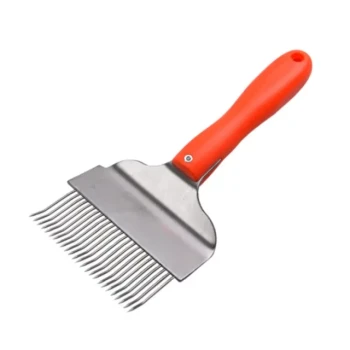
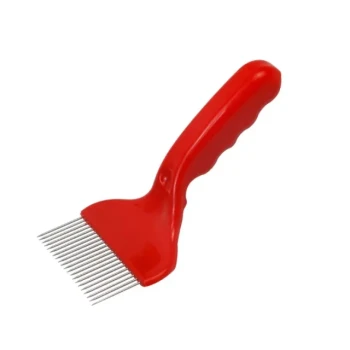
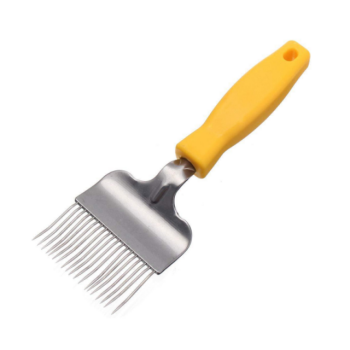
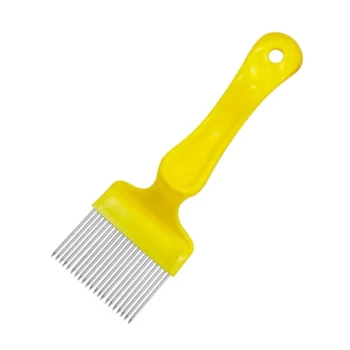
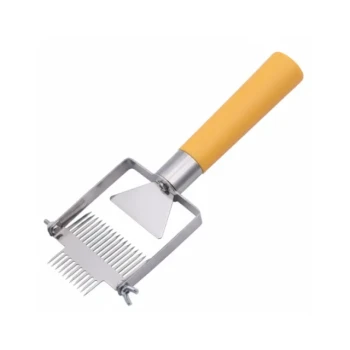
The primary disadvantages of using an uncapping fork are the significant time investment required and the repetitive nature of the work. Because the tool relies on manual manipulation to lift cappings off the honeycomb, the process is inherently slow and can become physically monotonous, particularly when a beekeeper needs to process a large volume of frames.
The uncapping fork is a precision instrument that sacrifices speed for control; while it is effective for detailed work, its inefficiency makes it a major bottleneck for operations with a high frame count.
The Efficiency Challenge
The Time Factor
The most immediate drawback of the uncapping fork is speed. Unlike heated knives or planes that can clear a side of a frame in a single pass, a fork requires a scratching or lifting motion across small sections of the comb.
This manual process significantly extends the time required to prepare frames for extraction.
Scalability Issues
Due to the slow pace, the uncapping fork is often impractical for large-scale operations.
The monotony of uncapping dozens or hundreds of frames by hand can lead to operator fatigue. As the number of frames increases, the inefficiency of the fork becomes a compounding problem, turning a standard harvest into an exhausting ordeal.
Understanding the Trade-offs
Precision vs. Volume
While the slowness is a distinct disadvantage, it is the cost of the tool's primary strength: precision.
Heated knives are fast but often miss low spots or uneven areas of the comb. The fork allows you to access these odd-shaped areas and corners that bulk tools cannot reach, though it takes longer to do so.
Wax Preservation vs. Speed
The uncapping fork is less intrusive than other methods, removing less wax and leaving more comb intact for the bees to reuse.
However, this conservation comes at the price of time. You are effectively trading rapid processing speed for a higher quality of preserved comb structure.
Simplicity vs. Automation
The tool is budget-friendly, non-electric, and mechanically simple.
The downside of this simplicity is the lack of mechanical advantage. Without heat or electricity to aid the cut, all the energy for uncapping comes directly from the beekeeper's wrist and arm.
Making the Right Choice for Your Goal
Ideally, the uncapping fork should be matched to the scale of your operation and the specific needs of your comb.
- If your primary focus is high-volume efficiency: The uncapping fork should only be used as a secondary "scratching" tool to hit low spots missed by a heated knife.
- If your primary focus is budget or small-scale hobbyist beekeeping: The fork is an acceptable primary tool, provided you accept the slower pace as part of the process.
- If your primary focus is maximum comb preservation: The fork is superior for minimizing wax loss, despite the extra time required to use it.
Select the tool that respects both your time constraints and the health of your honeycomb.
Summary Table:
| Disadvantage Category | Key Impact | Recommended Solution |
|---|---|---|
| Processing Speed | Extremely slow; processes small sections at a time | Upgrade to heated knives or automatic machines |
| Scalability | Creates a bottleneck for large honey volumes | Reserve forks for secondary touch-ups only |
| Physical Strain | High manual effort leads to wrist/arm fatigue | Use ergonomic tools or automated equipment |
| Efficiency | Lacks mechanical or thermal assistance | Integrate electric uncapping tools for speed |
Boost Your Apiary's Productivity with HONESTBEE
Don't let manual processing bottlenecks limit your honey harvest. HONESTBEE provides professional-grade solutions tailored for commercial apiaries and distributors. From high-efficiency honey-filling machines and hive-making equipment to a full spectrum of specialized beekeeping tools, we empower your business to scale effortlessly.
Whether you are looking to source wholesale beekeeping supplies or invest in advanced machinery to replace labor-intensive manual methods, our team is here to help you optimize your operations.
Ready to upgrade your equipment and maximize your yields?
Related Products
- Professional Stainless Steel Uncapping Fork with Wooden Handle
- All Stainless Steel Double Sided Pivoting Honey Uncapping Fork
- Professional Multi-Function Uncapping Fork with Ergonomic Rubber Grip
- Professional Multi-Function Uncapping Fork with Integrated Blade for Beekeeping
- Adjustable Stainless Steel Honey Uncapping Fork with Plastic Handle for Beekeeping
People Also Ask
- What is the original purpose of an uncapping fork? Mastering Precision Honey Extraction and Comb Preservation
- How is an uncapping fork used to uncap honey frames? Precision Techniques for Perfect Honey Extraction
- What is an uncapping fork? A Precision Tool for Efficient Honey Harvesting
- What is the primary use of an uncapping fork in beekeeping? A Guide to Precision Honey Harvesting
- What is the use of an uncapping fork? A Precision Tool for Hive Management and Honey Harvesting