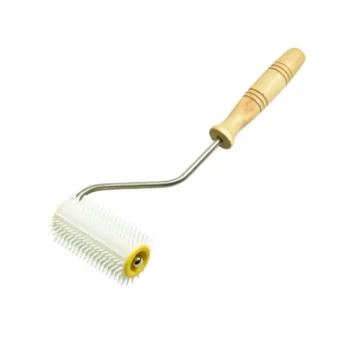
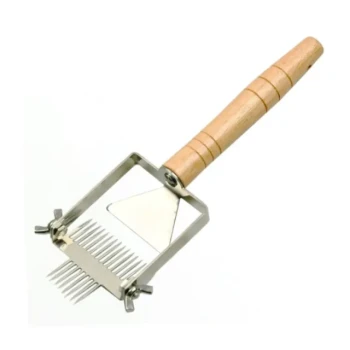
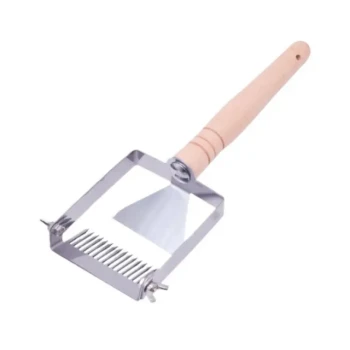
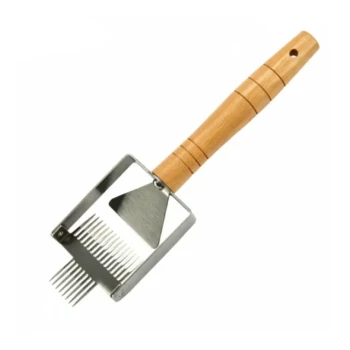
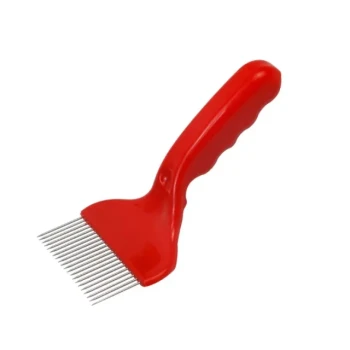
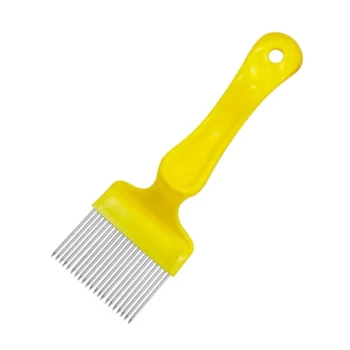
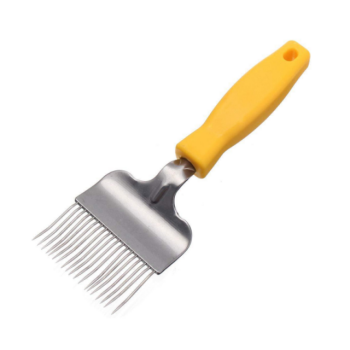
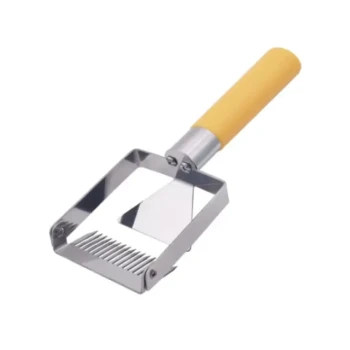
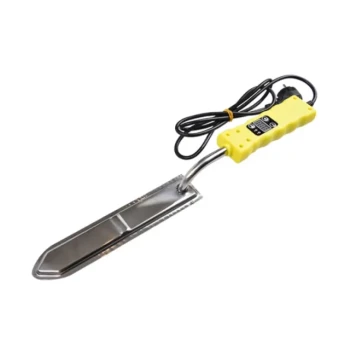
The primary drawbacks of using an uncapping roller center on its inefficiency regarding time and coverage. Because the tool relies on piercing rather than slicing, it must be rolled over the honeycomb multiple times in different directions to be effective. Additionally, even with diligent use, the roller frequently fails to pierce every capping, resulting in missed cells that can trap honey during extraction.
While the uncapping roller is gentle on the comb and inexpensive, the trade-off is a significantly slower workflow. It requires repetitive manual action and careful inspection, making it a potential bottleneck for larger harvests.
The Mechanics of Inefficiency
To understand why the roller is considered a slower method, it is necessary to look at the physical requirements of the tool. Unlike a heated knife that slices in a single pass, the roller operates on friction and pressure.
The Requirement for Repetition
An uncapping roller cannot clear a frame in a single sweep. To successfully pierce the wax cappings, you are required to roll the tool back and forth multiple times.
Multi-Directional Application
Simply rolling up and down is rarely sufficient. To ensure the plastic or metal tines penetrate the wax effectively, you must often roll the tool in all directions—vertically, horizontally, and diagonally. This triples or quadruples the time spent on a single frame compared to slicing methods.
The Issue of Inconsistency
Despite the repetitive motion, the roller is prone to leaving cells intact.
If the comb surface is uneven or if the cappings are slightly depressed, the roller's tines may bridge over the area without piercing the wax. These missed cells prevent honey from spinning out during extraction, requiring you to stop and manually pierce them with a secondary tool.
Weighing the Operational Trade-offs
While the drawbacks are significant regarding speed, they exist because of the tool's specific design philosophy. It is important to understand what you gain in exchange for the time lost.
Speed vs. Wax Preservation
The roller is non-invasive. It creates perforations rather than removing sheets of wax.
While this makes the extraction process slower for the beekeeper, it allows the bees to recover and repair the frame much faster once it is returned to the hive. They do not have to expend energy rebuilding deep cells, as very little wax is actually removed.
Labor vs. Equipment Cost
The roller is an inexpensive, non-electric solution. It avoids the complexity and cost of heated knives or uncapping planes.
However, the "cost" is paid in physical labor. For a hobbyist with two hives, this is negligible. For an operation with dozens of frames, the monotony and physical effort of rolling every frame multiple times become a major liability.
Making the Right Choice for Your Goal
Deciding whether the drawbacks of the roller outweigh its benefits depends entirely on the scale of your operation and your priorities regarding wax management.
- If your primary focus is efficiency and speed: Avoid the roller; the time required for multi-directional passes will slow down your extraction line significantly.
- If your primary focus is wax conservation: The roller is an excellent choice, as it preserves the comb structure and allows bees to refill frames with minimal rebuilding effort.
- If your primary focus is budget: The roller provides a functional, low-cost entry point that eliminates the need for electricity or heating equipment.
Select the tool that respects both your time and the volume of your harvest.
Summary Table:
| Feature | Impact on Extraction | Why it Matters |
|---|---|---|
| Efficiency | Low / Inefficient | Requires multiple passes in vertical, horizontal, and diagonal directions. |
| Coverage | Inconsistent | Tines often miss depressed or uneven cells, trapping honey during spinning. |
| Labor Intensity | High | Manual, repetitive action becomes a physical bottleneck for large harvests. |
| Wax Preservation | High | Minimally invasive; allows bees to repair and refill frames faster than slicing. |
| Equipment Cost | Low | Affordable, non-electric alternative to heated knives or machinery. |
Streamline Your Honey Production with HONESTBEE
Are manual uncapping rollers slowing down your commercial operation? At HONESTBEE, we specialize in empowering commercial apiaries and distributors with high-efficiency solutions. From professional-grade uncapping tools and honey-filling machines to full-scale hive-making equipment, we provide the industrial strength you need to scale your business.
Unlock your apiary's potential—contact us today to explore our wholesale machinery and premium beekeeping consumables!
Related Products
- Lightweight Plastic Uncapping Roller with Tines
- Professional Honey Uncapping Roller for Efficient Harvesting
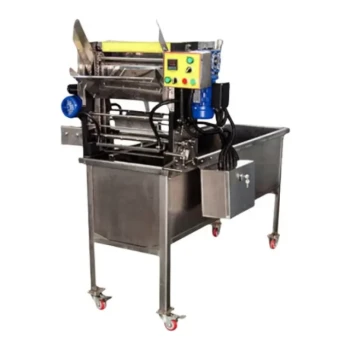
- Automatic Honey Frame Uncapper Machine for Beekeeping
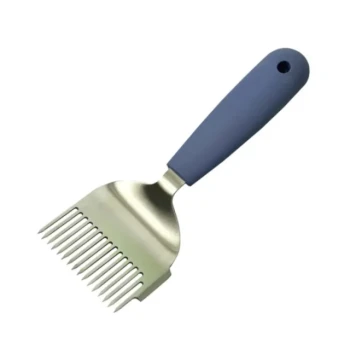
- Professional Multi-Function Uncapping Fork with Ergonomic Rubber Grip
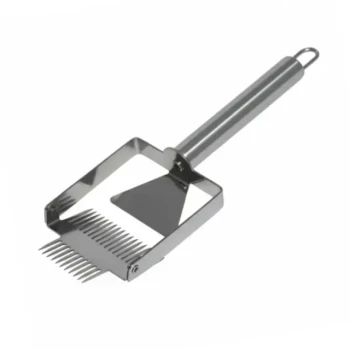
- Professional Multi-Function Uncapping Fork with Integrated Blade for Beekeeping
People Also Ask
- How does an uncapping roller work for uncapping honey frames? A Guide to Wax Preservation Beekeeping
- What is the role of an uncapping roller in Varroa mite assessment? Boost Colony Health with Efficient Mite Control
- What are the benefits of using an uncapping roller? Save Bee Energy and Boost Hive Productivity
- How does an uncapping roller work on honey frames? Efficient Wax Preservation for Better Beekeeping
- What is an uncapping roller? The Essential Tool for Bee-Centric Beekeepers