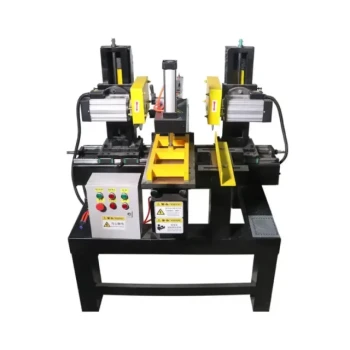
The technical advantage of precision cutting lies in standardization. Specifically, using equipment like radial arm saws allows you to bisect mite-infested combs with high geometric accuracy, creating two virtually identical halves. This mechanical precision ensures that both your experimental and control groups start with highly consistent mite loads, brood cell counts, and larval development stages.
Core Insight: Eliminating the Physical Variable In comparative biological experiments, variations in the physical sample can be mistaken for behavioral differences. Precision cutting neutralizes this risk by ensuring the substrate—the comb itself—is a constant, not a variable. This significantly reduces physical sample bias, guaranteeing that the data you collect reflects actual honey bee cleaning behavior rather than inconsistencies in the test materials.
The Science of Experimental Standardization
To isolate the genetic trait of Varroa Sensitive Hygiene (VSH), you must control the environment in which the bees operate. Precision cutting provides the baseline for this control.
Achieving Geometric Symmetry
A radial arm saw creates a clean, straight division that manual cutting cannot replicate. This ensures the physical surface area available to the bees is identical in both the control and experimental groups.
Equalizing Biological Load
By splitting a single infested comb accurately, you effectively distribute the "infection" evenly. This ensures that the initial mite load is consistent across both halves of the experiment.
Synchronizing Development Stages
Biological timing is critical in VSH studies. Precision splitting of a single comb guarantees that the larvae in both groups are at the exact same developmental stage. This removes age or maturity as a confounding variable in your data.
Enhancing Data Integrity
The quality of your behavioral data is directly dependent on the quality of your physical preparation.
Reducing Physical Sample Bias
Manual preparation introduces human error and irregularity. Precision equipment mechanizes the process, removing subjective variability and significantly lowering physical sample bias.
Improving Observation Accuracy
When the starting conditions are identical, any divergence in the results can be confidently attributed to the bees' behavior. This improves the overall accuracy of data regarding the honey bee's cleaning instincts and hygiene performance.
Operational Considerations
While precision cutting offers superior data quality, it is important to recognize the operational requirements compared to manual methods.
Infrastructure Dependency
Unlike field-expedient manual cutting, using a radial arm saw requires a dedicated workshop environment. You must have access to stable power and a controlled workspace to utilize this method effectively.
Setup and Calibration
The accuracy of the data is only as good as the calibration of the saw. The equipment requires initial setup time to ensure the blade is perfectly perpendicular and centered to achieve true "equal halves."
Making the Right Choice for Your Goal
The decision to use precision equipment should be driven by your need for statistical rigor.
- If your primary focus is reducing experimental error: Use precision cutting to ensure that physical sample bias does not skew your behavioral data.
- If your primary focus is comparing specific genetic traits: Use this method to guarantee that differences in cleaning behavior are not caused by uneven initial mite loads or brood counts.
By mechanizing the preparation of your samples, you transform the comb from a variable into a constant, clearing the way for accurate behavioral insight.
Summary Table:
| Feature | Manual Cutting | Precision Cutting (Radial Arm Saw) |
|---|---|---|
| Geometric Symmetry | Low (irregular edges) | High (perfectly bisected) |
| Biological Variable Control | Variable mite loads | Uniform distribution of mites/larvae |
| Data Integrity | High risk of sample bias | Minimal bias; high statistical rigor |
| Developmental Sync | Potential age variance | Identical larval development stages |
| Resource Needs | Basic field tools | Workshop environment & power source |
Elevate Your Beekeeping Research with HONESTBEE
Precision is the backbone of successful commercial apiaries and research. At HONESTBEE, we specialize in empowering commercial beekeepers and distributors with high-performance tools and machinery designed for industrial-scale success.
Whether you need specialized hive-making machinery to produce standardized experimental components, honey-filling machines for efficient production, or a comprehensive supply of wholesale beekeeping tools and consumables, we deliver the quality you need to eliminate variables and maximize yield.
Ready to scale your operation or upgrade your equipment?
Contact HONESTBEE today to discover how our professional-grade hardware and honey-themed cultural merchandise can drive your business forward.
References
- Jeffrey W. Harris. Effect of Brood Type on Varroa-Sensitive Hygiene by Worker Honey Bees (Hymenoptera: Apidae). DOI: 10.1603/0013-8746-101.6.1137
This article is also based on technical information from HonestBee Knowledge Base .
Related Products
People Also Ask
- Why is precision woodworking machinery critical for the standardization of beehive components? Ensure Hive Compatibility
- How does beehive manufacturing machinery benefit large-scale commercial beekeeping? Scale Your Apiary Efficiency
- Why is professional beehive manufacturing machinery essential for raw honey quality? Precision for Commercial Success.
- What are the operational advantages of specialized beehive manufacturing machinery for expanding commercial apiaries?
- What is the significance of specialized beehive manufacturing machinery? Drive Scalability for Commercial Apiaries