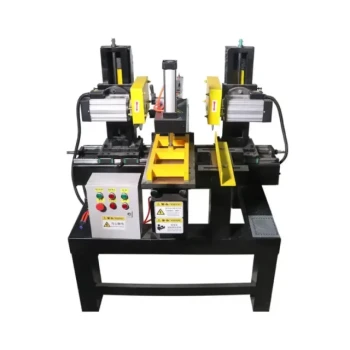
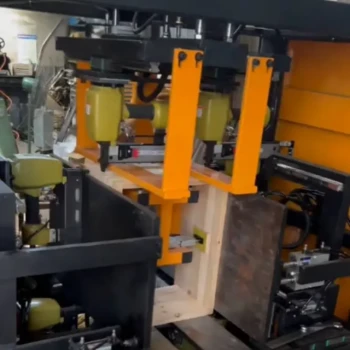
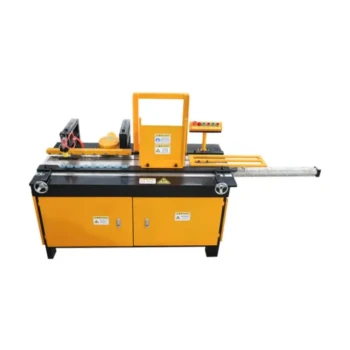
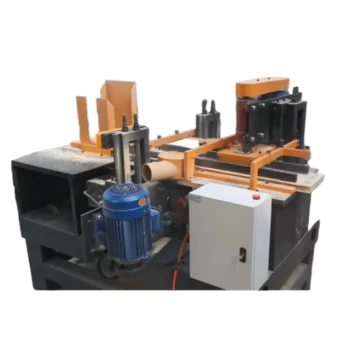
Specialized beehive manufacturing machinery acts as the operational backbone for commercial apiaries aiming to scale efficiently. It enables the standardized, high-volume production of hive components, ensuring that apiaries can rapidly increase hive capacity to meet harvest peaks. This industrial approach guarantees that hive structures are biologically optimized for bee health while establishing the physical foundation required for modern, automated management.
The transition from traditional to industrial beekeeping requires more than just more hives; it requires absolute consistency. Specialized machinery creates a standardized infrastructure that reduces long-term maintenance costs, integrates seamlessly with automated extraction systems, and ensures the precise internal conditions necessary for colony survival.
Standardization as the Foundation of Scale
Achieving Component Interchangeability
For large-scale operations, the ability to swap parts between hives without modification is essential. Specialized machinery ensures dimensional standardization, meaning every frame, box, and cover is identical.
This interchangeable nature eliminates the need for custom fitting or manual adjustments during hive maintenance. It significantly reduces unit maintenance costs by streamlining the replacement of damaged parts across thousands of colonies.
Integration with Automated Systems
Standardized equipment dimensions are the prerequisite for advanced processing. Uniform hives facilitate the integration of automated honey extraction machinery.
When hive dimensions vary, automation fails or damages frames. Precise manufacturing reduces operational friction, allowing commercial enterprises to process yields faster and with lower labor costs.
Facilitating Modular Management
Industrial production transforms the hive from a handcrafted object into a modular unit. This consistency supports remote migration and logistical transport of colonies.
By utilizing standardized stackable components, apiaries can maximize space on transport vehicles and simplify the logistics of moving bees to different regional resources.
Enhancing Biological Efficiency
Optimizing the "Bee Space"
The most critical biological requirement in a hive is the "bee space"—the precise gap bees need to move freely without building excess wax (burr comb) or sealing gaps with propolis.
High-precision manufacturing guarantees accurate bee spaces that manual production often misses. This precision is vital for natural colony thermoregulation and proper ventilation, directly impacting colony health.
Stabilizing Internal Microclimates
Machinery ensures structural tightness that is difficult to achieve consistently by hand. A well-sealed, precise hive maintains a stable internal microclimate.
This stability improves bee survival rates by protecting the colony from external weather fluctuations. It ensures the hive structure itself meets the biological needs of the colony, rather than forcing the bees to expend energy fixing structural flaws.
Speed and Economic Competitiveness
Meeting Harvest Peaks
Commercial apiaries must react quickly to improved honey plant yields. Specialized machinery allows for the rapid increase of hive capacity.
When a nectar flow begins, the ability to deploy new, quality-assured hives immediately is the difference between capturing a harvest or missing it. This speed maximizes the potential of regional resources.
Cost Control and Competitiveness
High-performance machinery determines the level of cost control at the primary production stage. By producing components in-house or sourcing from industrial manufacturers, apiaries reduce initial construction costs.
This creates greater price competitiveness and supply stability. It shifts the business model from labor-intensive construction to capital-efficient, industrialized management.
Understanding the Trade-offs
The Cost of Entry
While operational costs decrease over time, the initial capital investment for specialized machinery is significant. Apiaries must have a clear scaling strategy to amortize these costs effectively.
Rigidity of Standards
Once an apiary commits to a specific machined standard, switching designs becomes difficult. You are effectively locking your operation into a specific ecosystem of dimensions. It is critical to select a widely accepted standard to ensure future compatibility with third-party equipment.
Making the Right Choice for Your Goal
To apply this to your expansion strategy, consider your immediate operational bottlenecks:
- If your primary focus is Rapid Expansion: Prioritize high-throughput machinery that can meet the demand of harvest peaks without sacrificing structural integrity.
- If your primary focus is Operational Efficiency: Focus on machinery that guarantees tight dimensional tolerances to ensure compatibility with automated honey extraction lines.
True scalability in apiculture is not achieved by working harder, but by establishing a standardized, mechanized foundation that allows biology and industry to thrive together.
Summary Table:
| Operational Advantage | Key Benefit to Apiary | Impact on Scaling |
|---|---|---|
| Dimensional Standardization | Full component interchangeability | Reduces maintenance costs and manual labor |
| Automation Integration | Seamless honey extraction processing | Increases yield processing speed & efficiency |
| Precision 'Bee Space' | Optimized ventilation & thermoregulation | Improves colony health and survival rates |
| High-Volume Throughput | Rapid deployment during harvest peaks | Maximizes seasonal resource capture |
| Modular Design | Simplified logistics and transport | Enhances mobility for migratory beekeeping |
Scale Your Apiary with Industrial Precision
At HONESTBEE, we empower commercial apiaries and distributors with the robust infrastructure needed for large-scale success. From high-precision beehive manufacturing machinery to automated honey-filling systems and specialized beekeeping tools, our wholesale solutions are designed to standardize your operation and maximize efficiency. Whether you are expanding your colony count or optimizing your production line, our team provides the equipment and industry expertise to help you lead the market.
Ready to industrialize your honey production? Contact our experts today to discuss how our comprehensive hardware and consumables can fuel your growth.
References
- A. M. Afanas’ev, Р.А. Мамонов. RESEARCH OF STRENGTH OF CELLS AT BENDING OF BEE CELL. DOI: 10.36508/rsatu.2020.45.1.012
This article is also based on technical information from HonestBee Knowledge Base .
Related Products
- High-Efficiency Pneumatic Bee Hive Making Machine for Rapid Box Assembly
- Mini Desktop Bee Hive Frame Forming Making Machine
- Beehive Machine Double End Saw for Precision Hive Component Manufacturing
- Automatic High-Speed Bee Hive Box Stapling Machine
- Beehive Handle and Frame Rest Cutting Machine: Your Specialized Hive Machine
People Also Ask
- How does the introduction of professional beehive-making machinery benefit sustainable beekeeping? Scale Your Apiary
- Why is specialized beehive-making machinery critical for low-defense breeding? Enhance Selection with Precision Tools
- How does the introduction of specialized beehive making machinery contribute to increasing the scale of regional beekeeping industries?
- What is the importance of specialized beehive making machinery in a circular bio-economy? Build Local Sustainability
- Why is specialized beehive-making machinery essential? Scale Your Apiary with Precision Industrial Standards