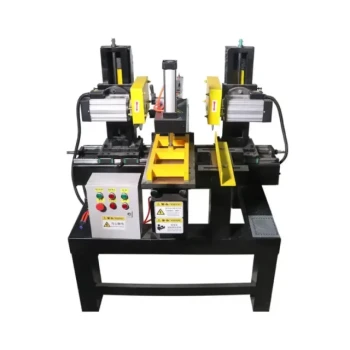
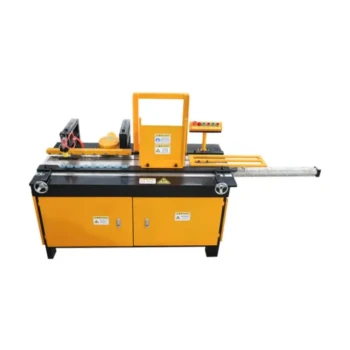
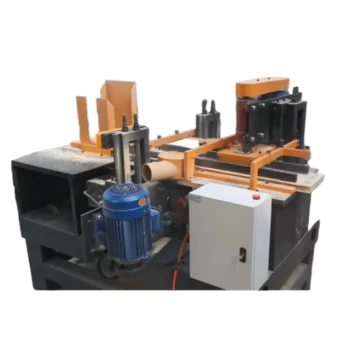
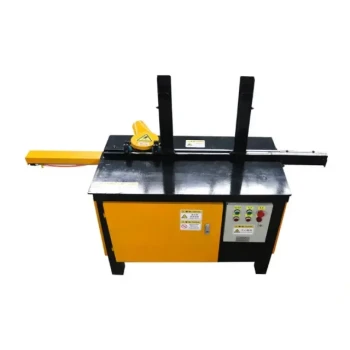
Beehive manufacturing machinery fundamentally transforms commercial apiaries by utilizing standardized CNC cutting and automated assembly to create uniform, precision-engineered hive components. This industrial production method significantly lowers unit costs while delivering the structural durability and dimensional accuracy required to manage large bee populations efficiently.
The Core Insight Large-scale beekeeping is a logistical challenge that relies on hardware consistency. Manufacturing machinery is not just about making boxes faster; it creates a standardized physical ecosystem that enables automated honey extraction, seamless component interchangeability, and the economic viability of managing thousands of colonies.
The Foundation of Scalability
Achieving Absolute Standardization
For commercial operations, the ability to exchange components between hives without friction is critical. Manufacturing machinery produces parts with high-precision tolerances, ensuring that frames, supers, and hive bodies are completely interchangeable across different colonies and operation sites.
This uniformity enables beekeepers to split, merge, and inspect colonies rapidly. Without this mechanical precision, minor variations from manual construction would slow down field operations and complicate the management of large apiaries.
Enabling Rapid Expansion and Replenishment
Machinery capable of processing wood or composite materials in large batches allows operations to scale quickly. This is essential for achieving increasing returns to scale, where the cost per unit drops as the operation grows.
Furthermore, commercial apiaries often face high annual colony loss rates. The ability to automatedly produce large volumes of hive components provides the necessary infrastructure to rapidly replenish colonies, ensuring the operation remains productive and economically stable.
Enhancing Operational Efficiency
Streamlining Migratory Logistics
Commercial beekeeping often involves transporting thousands of hives over long distances for pollination services. Mechanically produced hives feature superior structural stability and durability compared to manually built alternatives.
This structural integrity is vital for surviving the rigors of transport. Additionally, the uniform dimensions allow for efficient stacking and packing on trucks, optimizing logistics and reducing the labor required for loading and unloading.
Facilitating Automated Processes
The precision offered by manufacturing machinery is a prerequisite for downstream automation. Modern automated honey extraction lines require hives and frames with exact dimensions to function correctly.
Standardized hives also offer better sealing and thermal insulation properties. This protects the colony from climatic variations and reduces the biological stress on the bees, directly supporting consistent honey output and biosecurity.
Understanding the Trade-offs
The Cost of Inconsistency
A common pitfall in growing operations is the mixing of "craft" or manually built equipment with machined components. The primary trade-off of adopting industrial manufacturing standards is that it demands total commitment to specific dimensions.
Legacy equipment that deviates even slightly from the machine-produced standard can cause "burr comb" (unwanted wax structures) or equipment jams in automated extractors. Once an operation scales beyond 150 hives, the flexibility of manual construction becomes a liability, and strict adherence to the manufactured standard becomes mandatory to maintain efficiency.
Making the Right Choice for Your Goal
To leverage beehive manufacturing machinery effectively, align your equipment strategy with your specific operational focus:
- If your primary focus is Rapid Expansion: Prioritize machinery that utilizes wood or composite materials to lower unit costs, creating the immediate infrastructure needed to increase colony capacity.
- If your primary focus is Operational Efficiency: Focus on the precision and interchangeability of the components to ensure compatibility with automated extraction lines and to streamline migratory logistics.
By treating the beehive as a precision-engineered tool rather than a handcrafted shelter, commercial beekeepers secure the stability and speed necessary for long-term profitability.
Summary Table:
| Benefit | Impact on Commercial Operations | Key Feature |
|---|---|---|
| Standardization | Ensures seamless component interchangeability across thousands of colonies. | High-precision CNC cutting |
| Scalability | Lowers unit costs and enables rapid replenishment of colony hardware. | Large-batch automated production |
| Logistics | Optimizes truck stacking and durability during migratory transport. | Structural integrity & uniform dimensions |
| Automation | Prerequisite for automated honey extraction and processing lines. | Exact dimensional tolerances |
Maximize Your Apiary’s Potential with HONESTBEE
Transitioning to industrial-scale beekeeping requires more than just bees—it requires a standardized, high-performance ecosystem. At HONESTBEE, we specialize in empowering commercial apiaries and distributors with the precision-engineered tools needed for global success.
From advanced hive-making and honey-filling machinery to a full spectrum of durable hardware and essential consumables, we provide the wholesale infrastructure that drives profitability and operational speed. Whether you are scaling your colony count or optimizing your honey processing line, our team is ready to deliver the specialized equipment your business demands.
Ready to elevate your operation? Contact us today to discuss your wholesale equipment needs!
References
- Sandra Notaro, Gianluca Grilli. Citizens’ perceptions and willingness to pay for urban beekeeping: a case study in northern Italy. DOI: 10.1007/s11252-025-01681-y
This article is also based on technical information from HonestBee Knowledge Base .
Related Products
- High-Efficiency Pneumatic Bee Hive Making Machine for Rapid Box Assembly
- Mini Desktop Bee Hive Frame Forming Making Machine
- Beehive Machine Double End Saw for Precision Hive Component Manufacturing
- Automatic High-Speed Bee Hive Box Stapling Machine
- Beehive Handle and Frame Rest Cutting Machine: Your Specialized Hive Machine
People Also Ask
- How does the introduction of professional beehive-making machinery benefit sustainable beekeeping? Scale Your Apiary
- Why is specialized beehive-making machinery critical for low-defense breeding? Enhance Selection with Precision Tools
- How does the introduction of specialized beehive making machinery contribute to increasing the scale of regional beekeeping industries?
- What is the importance of specialized beehive making machinery in a circular bio-economy? Build Local Sustainability
- Why is specialized beehive-making machinery essential? Scale Your Apiary with Precision Industrial Standards