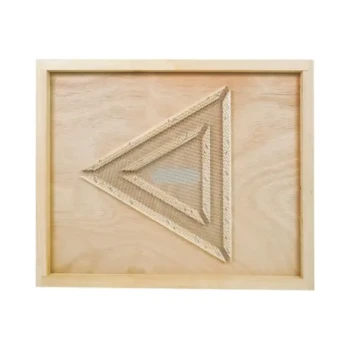
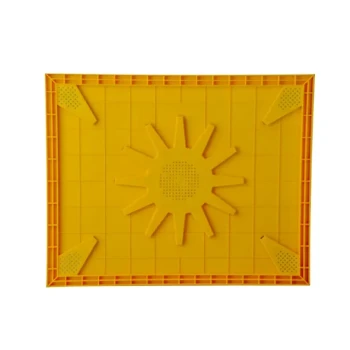
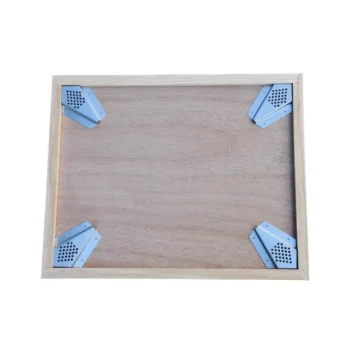
A screened beehive bottom board is primarily constructed using a wooden perimeter frame that holds a floor made of metal mesh wire instead of solid wood. These boards are typically sold fully assembled in standard dimensions, such as 8-frame or 10-frame sizes, to support the weight of the hive stack while serving as the primary entrance. Most distinctively, they often include a removable insert, known as a stick board or sticky board, which allows the beekeeper to toggle between an open mesh floor and a closed solid bottom.
The screened bottom board utilizes a specific metal mesh to provide essential ventilation and pest exclusion while maintaining the structural integrity of a standard base. Its modular design, featuring a removable insert, offers the versatility to manage airflow and monitor mite levels without disturbing the colony.
The Core Structural Elements
The Metal Mesh Floor
The defining feature of this component is the replacement of the solid floor with metal mesh wire.
This is typically a #8 size wire mesh, which is critical for two reasons: it allows debris and Varroa mites to fall through, but the gaps are too small for bees, wasps, or hornets to pass through.
The Wooden Perimeter
Despite the mesh floor, the outer construction retains the robust wooden frame, sides, and entrance of a traditional solid board.
This frame is structural, designed to bear the entire weight of the hive bodies, supers, and honey stored above it.
Dimensional Compatibility
Construction is standardized to match specific hive configurations.
You will typically find these boards manufactured specifically for 8-frame or 10-frame hives, ensuring the footprint aligns perfectly with the boxes stacked on top.
Functional Components and Features
The Removable Insert (Stick Board)
Most screened bottom boards are constructed with a slot or rail system to hold a wooden or plastic insert.
Often called a "sticky board" or "stick board," this component allows you to convert the screened bottom into a solid bottom.
This feature is essential for conducting mite counts (when sticky) or for closing off the ventilation during colder months.
Entrance versatility
Many commercially available bottom boards are constructed to be reversible.
Depending on how the board is flipped, it offers different entrance heights—typically a 7/8-inch opening for heavy traffic seasons or a 3/8-inch opening to restrict entry and deter robbers.
Critical Installation Requirements
Rainwater Management
Unlike a solid bottom which might have a sloped floor, the screened bottom board is generally flat and open at the front.
To prevent rainwater from entering and pooling (if the insert is in), the construction requires the entire hive stack to be tilted slightly forward.
Understanding the Trade-offs
Thermal Regulation
While the mesh construction provides excellent ventilation during the summer, it can lead to excessive drafts in the winter.
You must rely on the removable insert to regulate temperature; without it, the open mesh may expose the colony to chilling winds in cold climates.
Structural Durability
The wooden frame is strong, but the mesh screen itself is more vulnerable to damage than a solid wood plank.
Care must be taken during transport or cleaning to avoid tearing the wire, which would compromise the pest barrier.
Making the Right Choice for Your Goal
When selecting or installing a screened bottom board, consider your primary management objectives:
- If your primary focus is Pest Management: Ensure the board includes a "sticky board" insert, as this is required to capture and count fallen Varroa mites effectively.
- If your primary focus is Summer Ventilation: Choose a board with #8 mesh to maximize airflow and help the bees cool the hive during peak heat without letting predators in.
The screened bottom board is a modern standard that trades the simplicity of solid wood for the superior biological control of a ventilated, monitoring-ready system.
Summary Table:
| Feature | Specifications | Function |
|---|---|---|
| Floor Material | #8 Size Metal Mesh | Allows mite drop & prevents pest entry |
| Perimeter Frame | Robust Solid Wood | Supports the weight of the entire hive stack |
| Compatibility | 8-frame or 10-frame sizes | Ensures a perfect seal with standard hive bodies |
| Insert Component | Removable Stick Board | Toggles between open ventilation and solid bottom |
| Entrance Heights | Reversible 7/8" or 3/8" | Manages bee traffic and deters robber bees |
Maximize Your Apiary Productivity with HONESTBEE
As a professional beekeeper or distributor, you need equipment that balances durability with biological efficiency. HONESTBEE specializes in supplying commercial apiaries with high-quality beekeeping tools, specialized hive-making machinery, and essential consumables.
Whether you are looking for premium screened bottom boards at wholesale prices or require honey-filling systems for your production line, we offer the full spectrum of industrial solutions. Let us help you scale your operations and improve colony health with our expert-grade hardware.
Contact HONESTBEE Today for Custom Wholesale Quotes
Related Products
- Langstroth Screen Bottom Board for Beekeeping Wholesale
- Australian Pine Wood Langstroth Screen Bottom Board for Wholesale
- Langstroth Solid Bottom Board for Beekeeping
- Solid Bottom Board Australian Pine Wood Langstroth Bottom Board for Wholesale
- HONESTBEE Top Bar & Bottom Bar Forming Machine | Bee Frame Machine
People Also Ask
- What is the primary function of a screen bottom board? Achieve Accurate Varroa Mite Assessment in Your Apiary
- What role do screen bottom boards and monitoring inserts play in assessing Varroa mite mortality and maintaining hive hygiene in Langstroth hives?
- Why is the combination of a screen bottom board and a sticky trap board essential for monitoring Varroa mite? Guide
- What is the primary function of a standard screen bottom board when assessing honeybee grooming behavior? - Key Mite Data
- Why might a screen bottom board be less effective for pest control? Understanding the 'Mixed Sunlight' Complication