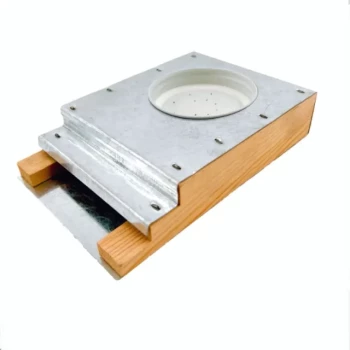
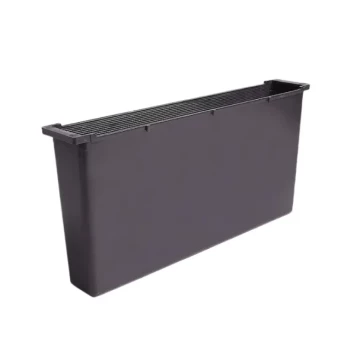
A top feeder is a high-capacity feeding reservoir designed to sit directly on top of the uppermost hive box, positioned underneath the outer cover. Its primary disadvantage is the significant risk of bees drowning in the syrup, a problem that necessitates specific design features to mitigate.
The Core Insight Top feeders are favored for their ability to hold large volumes of feed (up to 3 gallons) without requiring the beekeeper to disturb the colony during refills. While efficient, they require safety mechanisms—such as hardware cloth or steel screens—to prevent the liquid reservoir from becoming a hazard to the bees.
Understanding the Design and Function
Strategic Placement
Unlike frame feeders that replace internal components, a top feeder is an open feeder placed inside the hive infrastructure.
It sits securely between the top box and the inner cover (or sometimes replaces the inner cover), protected by the hive's outer roof.
High Volume Capacity
These feeders are significantly larger than standard frame feeders.
Depending on the hive configuration, an 8-frame model can hold 2 gallons, while a 10-frame model can accommodate up to 3 gallons of syrup.
Disruption-Free Maintenance
A major operational benefit is the ability to refill the feeder without invading the brood nest.
Because the feeder is accessible just by removing the outer cover, you can replenish the food supply without fully opening the hive or disturbing the colony.
Versatility in Feed Type
While primarily used for syrup, the top feeder design is adaptable for different seasons.
It is particularly effective for feeding raw or dry white sugar during early and mid-winter, providing nourishment when liquid syrup might be impractical.
Analyzing the Trade-offs
The Drowning Risk
The most critical disadvantage of a top feeder is the potential for bees to fall into the open liquid and drown.
Because these feeders create a large "lake" of syrup, bees attempting to feed can easily become submerged if proper barriers are not in place.
Mitigation via Design
To address the drowning risk, well-built commercial models incorporate protective measures.
Most designs now include hardware cloth or galvanized steel safety screens. These allow bees to access the syrup to feed while physically preventing them from falling into the deep reservoir.
Making the Right Choice for Your Goal
Selecting a feeder depends largely on how often you can visit the hive and the specific weather conditions.
- If your primary focus is minimizing hive disturbance: Choose a top feeder, as it allows you to refill syrup without exposing the colony or removing frames.
- If your primary focus is maximum capacity: The top feeder is the superior choice, holding up to 3 gallons so you only need to refill it every week or two.
- If your primary focus is winter feeding: Utilize the top feeder for dry white sugar, which remains accessible to the bees even in colder temperatures where liquids might freeze in other feeder types.
The top feeder offers the best balance of high volume and low disturbance, provided you ensure the model includes a safety screen to protect your bees.
Summary Table:
| Feature | Top Feeder Specification | Benefit |
|---|---|---|
| Capacity | 2 to 3 Gallons | Reduces refill frequency; ideal for large apiaries |
| Placement | Above top box, under outer cover | No hive disturbance during maintenance |
| Primary Risk | Bee Drowning | Mitigated by hardware cloth/safety screens |
| Versatility | Syrup & Dry Sugar | Suitable for both spring stimulation and winter feeding |
Scale Your Apiary Operations with HONESTBEE
At HONESTBEE, we understand that commercial success in beekeeping requires durable, high-capacity equipment that protects your colony. As a leading global supplier, we provide commercial apiaries and distributors with a comprehensive range of wholesale beekeeping tools—from safety-engineered top feeders and hive-making machinery to honey-filling systems and cultural merchandise.
Why partner with HONESTBEE?
- Industrial-Grade Quality: Built to withstand heavy use in large-scale operations.
- Complete Solutions: One-stop-shop for hardware, machinery, and essential industry consumables.
- Expert Support: We help you optimize your inventory and equipment for maximum efficiency.
Ready to elevate your beekeeping business? Contact us today to explore our wholesale catalog and see how we can fuel your growth!
Related Products
- HONESTBEE Round Hive Top Bee Feeder for Syrup
- HONESTBEE Professional Hive Top Bee Feeder Feeding Solution
- Professional Hive Top Bee Feeder for Beekeeping
- HONESTBEE Square Top Hive Bee Feeder Top Bee Feeder
- Rapid Bee Feeder White Plastic 2L Round Top Feeder for 8 or 10-Frame Bee Hives
People Also Ask
- What can the round hive top feeder be used for? A Guide to Efficient, Safe Bee Feeding
- What types of hive boxes is the round hive top feeder compatible with? Universal Fit for 8 & 10-Frame Langstroth Hives
- What is the capacity of the round hive top feeder for syrup and pollen? A Guide to Targeted Apiary Support
- What types of feed can be used with the round hive top feeder? Versatile Feeding for Optimal Apiary Health
- What are the different types of top feeders for bees? Choosing the Best Feeder for Your Apiary