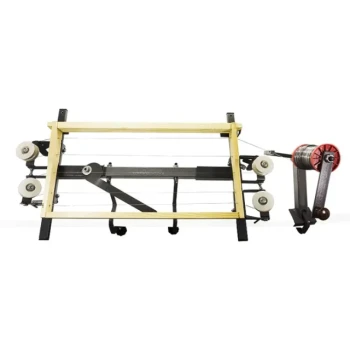
Integrated wholesale systems act as the central logistical engine for commercial beekeeping operations. They function by consolidating the procurement and distribution of diverse resources—ranging from heavy machinery and hardware to essential consumables—into a single, coordinated framework. This centralization ensures that every sector of a large-scale apiary operates with consistent technical standards and reliable supply chains.
While individual tools manage specific tasks, an integrated wholesale system manages the flow of resources itself. It transforms disjointed purchasing into a strategic advantage, ensuring that quality control and standardization are systematically applied across the entire operation to drive large-scale success.
The Mechanics of Resource Coordination
Consolidating Diverse Assets
Commercial beekeeping requires a complex mix of inputs. An integrated system unifies the supply of specialized tools, such as hive-making and honey-filling machines, with daily necessities like industry consumables. This consolidation prevents operational silos where machinery and consumables might otherwise be mismatched or delayed.
Centralized Procurement Channels
Efficiency in large-scale operations relies on a streamlined supply chain. By establishing centralized procurement and distribution channels, these systems eliminate the chaos of managing multiple independent vendors. This centralization acts as the primary mechanism for coordinating the diverse resources required to maintain a healthy apiary.
Standardization as a Success Multiplier
Enforcing Technical Standards
A critical function of these systems is the systematic application of quality control. By sourcing through an integrated wholesale model, operators ensure that technical standards are uniform across all equipment. This consistency is vital for maintaining the structural integrity of the operation.
Optimizing Hardware Utility
The value of this system is best seen in the distribution of standardized beehives. These hives provide a scientifically controlled environment for bee populations, facilitating efficient inspections and disease control. Because the wholesale system enforces this standardization, beekeepers can rely on the structural design for safe loading and transportation during migratory processes.
Understanding the Trade-offs
Dependency on Centralized Supply
While centralization boosts efficiency, it creates a single point of failure. If the integrated wholesale system faces supply chain disruptions, the entire operation—from hive construction to honey filling—can be stalled simultaneously.
Flexibility Limitations
Integrated systems excel at uniformity, but they may lack adaptability for niche requirements. Relying on a standardized procurement channel can make it difficult to quickly integrate experimental tools or non-standard equipment that falls outside the established wholesale ecosystem.
Making the Right Choice for Your Goal
To leverage an integrated wholesale system effectively, you must align its capabilities with your specific operational targets.
- If your primary focus is rapid scaling: Prioritize the system's ability to act as a logistical engine, ensuring that machinery and consumables arrive in sync to support expansion without bottlenecks.
- If your primary focus is operational consistency: Lean on the system’s ability to enforce technical standards, using it to deploy standardized hardware that simplifies pest control and migratory logistics.
Success in commercial beekeeping ultimately depends on treating your supply chain not just as a vendor list, but as the foundational infrastructure of your business.
Summary Table:
| Feature | Function in Integrated Systems | Strategic Benefit |
|---|---|---|
| Resource Coordination | Consolidates machinery (hive-making/honey-filling) and consumables | Eliminates operational silos and procurement delays |
| Supply Chain | Centralized procurement and distribution channels | Simplifies vendor management and streamlines logistics |
| Standardization | Uniform technical standards across all hardware | Enhances structural integrity and migratory efficiency |
| Quality Control | Systematic application of procurement standards | Ensures consistent equipment performance and durability |
Elevate Your Commercial Apiary with HONESTBEE
At HONESTBEE, we specialize in being the logistical engine behind the world's most successful commercial beekeeping operations and distributors. Our comprehensive wholesale offering provides everything from specialized hive-making and honey-filling machinery to essential industry consumables and honey-themed cultural merchandise.
We empower our partners by enforcing high technical standards and providing a reliable, centralized supply chain for all beekeeping tools and hardware. Whether you are scaling a large-scale operation or managing a global distribution network, our expertise ensures your infrastructure is built for success.
Ready to optimize your resource management? Contact HONESTBEE today and let us build your beekeeping future together.
References
- Adel Mohammad Almutlaq, Abdulmalek Naji Alsanhani. Adoption of Sustainable Beekeeping Practices Among Rural Women in Hail Region, Kingdom of Saudi Arabia: Implications for Agricultural Extension. DOI: 10.3390/su17094186
This article is also based on technical information from HonestBee Knowledge Base .
Related Products
People Also Ask
- How to wire a bee frame? A Step-by-Step Guide for Strong, Durable Honeycomb
- What is the final step in wiring a frame? Secure Lasting Tension for a Durable Hive
- What is minimalist bee frame wiring? Learn the Risks and Benefits for Beekeeping
- What tools and materials are required for wiring a beehive frame? Essential Equipment for Stronger Honeycomb
- What is the specified wire gauge for the bee frame wire? Mastering 26-Gauge Wire for Durable Honeycomb Support