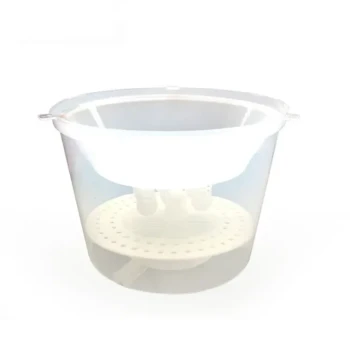
The bottom-board pollen trap is a precision-engineered hardware component designed to automate the collection of bee pollen pellets at the hive entrance. By utilizing a specialized grid to mechanically strip pollen from the hind legs of returning foragers, this device facilitates non-invasive, large-scale sampling. It serves as the critical first step in obtaining clean, raw material for nutritional analysis, pesticide residue testing, and biodiversity monitoring.
Bottom-board pollen traps provide a reliable mechanical solution for high-efficiency, non-destructive pollen collection. For distributors and wholesalers, these tools are the industry standard for securing high-quality biological samples while maintaining colony productivity and ensuring sample integrity for lab analysis.
The Mechanism of Automated Collection
Mechanical Interception at the Entrance
The primary function of the trap is to act as a physical barrier that utilizes a specialized grid or pore size. As foraging bees return to the hive, they must pass through these grids, which gently scrape the pollen pellets from their hind legs.
Integrated Collection and Protection
Once stripped, the pollen falls into a protected collection tray or drawer located beneath the hive entrance. This design ensures that the samples are shielded from external contaminants, sunlight, and rain, preserving the biological components for subsequent laboratory identification.
Maintaining Colony Productivity
Unlike more intrusive methods, bottom-mounted traps are designed for non-destructive acquisition. By intercepting only a portion of the incoming pollen, the device allows the colony to continue its natural growth while providing researchers and commercial collectors with a steady supply of raw material.
Strategic Value in Large-Scale Sampling
High-Volume Biomass Acquisition
For commercial operations and research institutions, the bottom-board trap enables the automated acquisition of large-scale specimens. This efficiency is vital for representing the surrounding plant communities and assessing floral resource abundance across vast landscapes.
Purity and Impurity Control
The hardware is specifically engineered to minimize the introduction of external impurities into the pollen container. This high level of cleanliness is essential when the pollen is destined for physicochemical analysis or pesticide residue testing, where even minor contamination can skew results.
Biomonitoring and Environmental Assessment
These traps serve as core tools in bee-pollen-based biomonitoring, allowing experts to verify if bees have been exposed to treated crops. By collecting fresh pollen carriers, technicians can perform palynological studies to determine the exact extent of environmental exposure.
Understanding the Trade-offs
Flight Frequency and Interference
While bottom-mounted traps generally cause less interference with bee flight frequency compared to top-mounted alternatives, they still represent a physical bottleneck at the hive entrance. Professional-grade traps must balance grid density with the need for efficient bee traffic to avoid stressing the colony.
Maintenance and Emptying Cycles
To ensure the highest quality of "fresh" pollen, collection drawers must be emptied frequently. If samples are left too long in the tray, they may be subject to moisture accumulation or secondary degradation, even with the protective housing provided by the trap.
Optimizing Your Sourcing Strategy
Choosing the right pollen trap depends on the specific goals of the end-user, whether they are focused on commercial yield or scientific precision. As a distributor, providing a full-spectrum product portfolio ensures you can meet these diverse technical requirements with rapid response times.
- If your primary focus is Commercial Raw Material Supply: Prioritize high-capacity bottom-board traps with large collection drawers to maximize volume and reduce the frequency of manual harvests.
- If your primary focus is Scientific Research and Biomonitoring: Select traps with precision-engineered grids and enhanced weather shielding to ensure the highest integrity for pesticide and palynological analysis.
- If your primary focus is Hive Health and Long-Term Use: Offer models that feature "easy-bypass" settings, allowing beekeepers to deactivate the trap without removing the entire unit during periods of low forage.
By integrating these specialized tools into your inventory, you provide the essential hardware required for modern, data-driven apiculture and high-value pollen production.
Summary Table:
| Feature | Function & Mechanism | Commercial Benefit |
|---|---|---|
| Mechanical Grid | Strips pollen from foragers' legs at entrance | High-efficiency, automated biomass acquisition |
| Protected Drawer | Shielded tray collects clean raw material | Ensures purity for lab analysis and residue testing |
| Non-Invasive Build | Intercepts partial pollen without halting growth | Maintains colony productivity and long-term health |
| Bypass Setting | Allows bees to pass freely during low forage | Flexible management for seasonal apiary demands |
Scale Your Beekeeping Supply Business with HONESTBEE
Are you looking to provide your clients with industry-standard hardware for high-precision apiculture? HONESTBEE is your premier partner for one-stop sourcing, offering a comprehensive wholesale portfolio of beekeeping tools, machinery, and essential consumables.
Why B2B Distributors Choose HONESTBEE:
- Comprehensive Portfolio: From specialized bottom-board traps to advanced honey-filling and hive-making machines.
- Professional Expertise: Deep industry knowledge to support your technical sales and OEM/ODM requirements.
- Operational Excellence: Ultra-fast delivery and efficient order fulfillment to maintain your inventory levels.
- Dedicated Support: Exceptional customer service focused on maximizing your profit margins and market reach.
Ready to enhance your product lineup with premium beekeeping equipment? Contact our expert team today for a quote!
References
- Sydney B. Wizenberg, Amro Zayed. Inferring Plant Community Phenology via Bee‐Collected Pollen. DOI: 10.1002/edn3.70149
This article is also based on technical information from HonestBee Knowledge Base .
Related Products
- 30 cm Plastic Entrance Hole Bee Pollen Trap and Collector
- Removable Plastic Pollen Trap With Ventilated Tray for Bees Pollen Collector
- High-Efficiency Diamond Maze Bee Escape for Clearing Supers
- Plastic Bee Pollen Trap Strips Comb Catcher Collector
- Langstroth Screen Bottom Board for Beekeeping Wholesale
People Also Ask
- What are the design principles and advantages of pollen traps in the collection of bee pollen? Boost Your Apiary Yield
- Why is frequent harvesting of bee pollen from traps necessary for quality control? Ensure Freshness and Prevent Mold.
- How often should bee pollen be harvested from a trap and why? Master Freshness and Prevent Spoilage
- What function do pollen traps serve in quantitative collection? Boost Your Apiary's Data & Production Efficiency
- What is the primary function of bee pollen traps? Optimize Your Pollen Harvest with Advanced Extraction Efficiency