The primary function of a bee pollen trap is to mechanically separate pollen clusters from the hind legs of foraging bees as they return to the hive. Installed directly at the entrance, these devices utilize a physical barrier or grid that allows the bee to pass through but is narrow enough to gently strip the pollen "baskets" from their legs. This enables the non-destructive collection of large volumes of clean pollen for commercial use or scientific analysis.
By acting as a mechanical filter at the hive's threshold, pollen traps allow for the efficient harvesting of raw biological material while ensuring the purity of the sample for botanical identification and chemical analysis.
The Mechanics of Extraction
The Physical Barrier Method
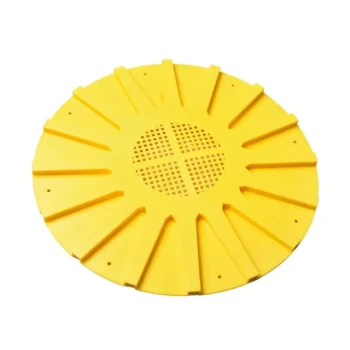
The core mechanism of a pollen trap relies on a grid or sieve plate containing precisely sized apertures.
As worker bees attempt to enter the hive through these specific holes, the physical obstruction gently scrapes the pollen pellets carried on their hind legs.
Gravity then causes these dislodged pellets to fall into a designated collection drawer or box below, separating them immediately from the bees.
Ensuring Sample Purity
A major advantage of using entrance-mounted traps is the ability to collect clean, raw material.
By intercepting the pollen before the bee fully enters the colony, the trap prevents the pollen from mixing with internal hive impurities or debris.
This results in a high-quality sample that is ideal for botanical origin identification and chemical composition analysis, as stated in the primary reference.
Understanding the Trade-offs
Balancing Collection and Colony Health
While the primary reference describes this method as non-destructive, it is vital to use the equipment correctly to maintain colony stability.
High-performance traps are designed to minimize interference with natural foraging and pollination activities, ensuring the colony's population dynamics remain undisturbed.
Operational Timing
To maximize efficiency without stressing the hive, traps are often deployed during peak foraging periods (typically mornings).
This strategic usage allows beekeepers to secure high yields—potentially up to 36kg per colony annually with optimized designs—without depriving the hive of necessary resources for long periods.
Making the Right Choice for Your Goal
Whether you are a researcher or a commercial producer, understanding the intended output of your trap is essential.
- If your primary focus is Scientific Analysis: Prioritize traps that ensure maximum separation of impurities to facilitate accurate botanical origin identification and chemical profiling.
- If your primary focus is Commercial Production: Look for high-performance designs that feature optimized aperture structures to maximize annual yield without harming the insect population.
By utilizing mechanical separation at the point of entry, you ensure a consistent supply of pure raw material while respecting the biological needs of the colony.
Summary Table:
| Feature | Description |
|---|---|
| Primary Mechanism | Mechanical separation via precisely sized aperture grids |
| Extraction Location | Hive entrance (prevents internal hive contamination) |
| Sample Quality | High purity; ideal for botanical and chemical analysis |
| Optimal Usage | Strategic deployment during peak morning foraging hours |
| Production Yield | Up to 36kg per colony annually with high-performance designs |
Elevate Your Commercial Pollen Production with HONESTBEE
Are you a commercial apiary or distributor looking to scale your pollen harvesting operations? HONESTBEE provides the industry's most comprehensive range of wholesale beekeeping tools and machinery. From high-performance pollen traps that ensure maximum sample purity to specialized honey-filling and hive-making machines, we equip you for success.
Why partner with HONESTBEE?
- High-Yield Equipment: Specialized hardware designed for professional beekeepers.
- Full Spectrum Supply: We provide everything from heavy machinery to essential industry consumables.
- Expert Support: Our portfolio is tailored to the rigorous demands of the global honey market.
Contact us today to discover how our wholesale offerings can optimize your colony's output and streamline your production process!
References
- Ajendra Singh Bagri, Eza Gloch. Botanical origin and chemical composition of bee pollens collected from Apis cerana hives domesticated in the Pauri Garhwal, Western Himalaya, India. DOI: 10.12775/eq.2023.020
This article is also based on technical information from HonestBee Knowledge Base .
Related Products
- 30 cm Plastic Entrance Hole Bee Pollen Trap and Collector
- Plastic Bee Pollen Trap Strips Comb Catcher Collector
- Removable Plastic Pollen Trap With Ventilated Tray for Bees Pollen Collector
- High-Efficiency Diamond Maze Bee Escape for Clearing Supers
- HONESTBEE Professional Telescopic Pole Bee Swarm Catcher
People Also Ask
- What are the design principles and advantages of pollen traps in the collection of bee pollen? Boost Your Apiary Yield
- Why is frequent harvesting of bee pollen from traps necessary for quality control? Ensure Freshness and Prevent Mold.
- How often should bee pollen be harvested from a trap and why? Master Freshness and Prevent Spoilage
- What function do pollen traps serve in quantitative collection? Boost Your Apiary's Data & Production Efficiency
- What are the primary functions of a standard pollen trap in research? Maximize Data Accuracy in Bee Nutrition Studies