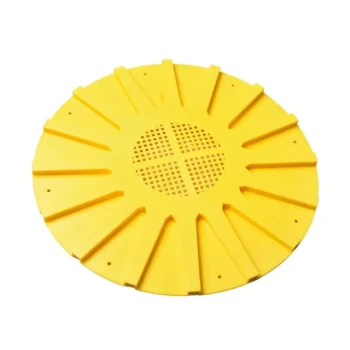
Pollen traps act as mechanical gatekeepers installed at the hive entrance to facilitate the quantitative collection of bee pollen. By directing returning foragers through precise apertures along their flight path, these devices physically scrape pollen pellets from the bees' hind legs, depositing them into a collection tray for analysis or harvest without injuring the insects.
These devices mechanize the harvesting process by using physical barriers to dislodge pollen loads from the corbiculae (pollen baskets) of incoming bees. This enables the high-efficiency gathering of clean samples for nutritional analysis, yield statistics, and commercial production while maintaining colony health.
How the Mechanism Works
The fundamental function of a pollen trap is to filter incoming biomass based on size and physical carriage.
Precision Apertures
The core component of the trap is a grid containing specific small apertures. These grids are installed directly across the flight path of the bees, compelling every returning forager to navigate through them to enter the hive.
Physical Scraping
As the bee squeezes through the aperture, the grid creates a physical obstruction. This action mechanically scrapes the pollen pellets attached to the corbiculae (pollen baskets) on the bee's hind legs.
Separation and Collection
Once dislodged, the pollen pellets fall away from the bee and drop into a specialized collection drawer or tray beneath the flight path. This immediately separates the raw material from the insect, preventing it from being carried into the comb.
The Objectives of Quantitative Collection
Pollen traps are not merely harvesting tools; they are instruments for measurement and quality control.
Yield Statistics and Analysis
For researchers and apiary managers, these traps provide essential data regarding colony productivity. They allow for the calculation of yield statistics over specific timeframes, providing a clear picture of foraging success.
Nutritional Composition Assessment
The samples collected are fresh and physically separated, making them ideal for laboratory analysis. This allows for the precise evaluation of the nutritional composition of the colony's diet.
Floral Resource Identification
By intercepting pollen before it is stored, the traps provide raw material for identifying specific plant species. This helps assess the abundance of floral resources across the surrounding landscape.
Understanding the Trade-offs
While effective, the use of pollen traps requires an understanding of the balance between collection efficiency and biological impact.
Non-Destructive Harvesting
A critical function of a well-designed trap is ensuring bee safety. The apertures are calibrated to dislodge the pollen load without causing injury to the bee itself.
Movement vs. Obstruction
The device must achieve high-efficiency collection without completely halting the colony's traffic. It filters the cargo (pollen) while permitting the continued normal movement of the workers into the hive.
Hygiene and Purity
For commercial applications, the trap serves a sanitary function. By capturing pollen at the entrance, it ensures raw material cleanliness and protects the harvest from environmental contamination inside the hive.
Making the Right Choice for Your Goal
Whether for scientific study or commercial production, the utility of the pollen trap depends on your specific objective.
- If your primary focus is scientific research: Utilize the trap to isolate fresh samples for identifying plant species and analyzing the nutritional intake of the colony.
- If your primary focus is commercial production: Rely on the trap’s physical separation capabilities to automate the large-scale collection of high-purity, clean pollen.
Ultimately, the pollen trap serves as the bridge between raw foraging activity and usable quantitative data, converting biological effort into measurable yield without harming the workforce.
Summary Table:
| Feature | Primary Function | Benefit to Apiary |
|---|---|---|
| Precision Apertures | Mechanically scrape pollen from hind legs | Non-destructive, high-efficiency harvesting |
| Collection Drawer | Immediate separation of pollen from bees | Ensures raw material cleanliness & hygiene |
| Yield Statistics | Tracks colony productivity over time | Data-driven management for apiary managers |
| Nutritional Analysis | Provides fresh samples for lab testing | Accurate assessment of floral resources |
| Size Filtration | Permits bee entry while capturing cargo | Maintains colony traffic and health |
Maximize Your Harvest with HONESTBEE Precision Equipment
At HONESTBEE, we specialize in empowering commercial apiaries and distributors with high-performance beekeeping solutions. Whether you are conducting scientific research or scaling commercial production, our comprehensive range of tools—from high-efficiency pollen traps and hive-making machinery to specialized honey-filling systems—is designed to optimize your yield and ensure product purity.
Why partner with HONESTBEE?
- Wholesale Excellence: Full-spectrum supply of hardware, machinery, and essential consumables.
- Precision Engineering: Equipment designed for bee safety and maximum collection efficiency.
- Industry Expertise: Dedicated support for large-scale operations and global distributors.
Ready to elevate your apiary's productivity and data accuracy? Contact us today to explore our wholesale catalog and see how our hardware can transform your operations.
References
- José Elton de Melo Nascimento, Cláudia Inês da Silva. Temporal variation in production and nutritional value of pollen used in the diet of Apis mellifera L. in a seasonal semideciduous forest. DOI: 10.13102/sociobiology.v66i2.2879
This article is also based on technical information from HonestBee Knowledge Base .
Related Products
- 30 cm Plastic Entrance Hole Bee Pollen Trap and Collector
- Plastic Bee Pollen Trap Strips Comb Catcher Collector
- Removable Plastic Pollen Trap With Ventilated Tray for Bees Pollen Collector
- High-Efficiency Diamond Maze Bee Escape for Clearing Supers
- HONESTBEE Professional Telescopic Pole Bee Swarm Catcher
People Also Ask
- What are the design principles and advantages of pollen traps in the collection of bee pollen? Boost Your Apiary Yield
- Why is frequent harvesting of bee pollen from traps necessary for quality control? Ensure Freshness and Prevent Mold.
- How often should bee pollen be harvested from a trap and why? Master Freshness and Prevent Spoilage
- What is the primary function of bee pollen traps? Optimize Your Pollen Harvest with Advanced Extraction Efficiency
- What are the primary functions of a standard pollen trap in research? Maximize Data Accuracy in Bee Nutrition Studies