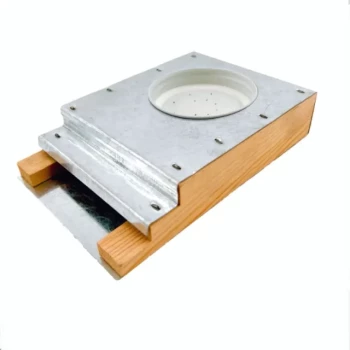
The primary function of a hive feeder in this context is to act as a direct carrier for liquid nutritional supplements, ensuring the colony receives specific syrup solutions mixed with plant extracts. When you administer solutions containing extracts like fennel or coriander, the feeder serves as the interface that allows these stimulative liquids to mimic a natural influx of resources.
The hive feeder provides a controlled environment to simulate natural nectar and pollen flows, effectively tricking the colony into "spring mode" to accelerate foraging and brood rearing even when natural resources are scarce.
The Mechanics of Artificial Stimulation
Acting as a Direct Carrier
The fundamental role of the feeder is to hold the liquid syrup and plant extract mixture. It makes the solution accessible to the bees in a concentrated location within or upon the hive.
By serving as a direct carrier, the feeder ensures that the specific ratio of nutrients and extracts is delivered efficiently without waste.
Simulating Resource Abundance
The feeder does not merely prevent starvation; it acts as a behavioral trigger. By providing a steady supply of liquid, it mimics the influx of natural nectar and pollen.
This simulation convinces the colony that the environment is rich in resources, regardless of the actual external conditions.
Biological Impacts on the Colony
Inducing Brood-Rearing Activity
The presence of the stimulative solution in the feeder signals the queen and the colony that it is safe to expand.
Consequently, this induces brood-rearing activity, causing the population to grow in anticipation of a continued food supply.
Triggering Foraging Instincts
The feeder also affects the worker bees' behavior outside the hive.
Access to these stimulative liquids helps induce foraging instincts, encouraging worker bees to actively search for additional resources to support the growing colony.
Understanding the Context and Trade-offs
The Importance of Ratios
The effectiveness of the feeder relies heavily on the composition of the solution it holds.
The primary reference highlights a 1:1 ratio for these stimulative liquids. Deviating from the correct syrup-to-extract ratio may reduce the effectiveness of the simulation.
Reliance on Artificial Inputs
While the feeder is a powerful tool, it is specifically designed for moments of need.
It is described as crucial for colony restoration during periods of natural resource scarcity. Relying on it when natural flows are abundant may not yield the same restorative return on investment.
Strategic Application for Your Colony
To get the most out of your hive feeder when using plant extracts, consider your immediate objective:
- If your primary focus is Colony Restoration: Deploy the feeder during periods of scarcity to simulate resource influx and prevent population decline.
- If your primary focus is Population Growth: Ensure you maintain a steady supply of the 1:1 solution to consistently trigger the brood-rearing instinct.
By using the feeder as a strategic signaling device rather than just a food source, you gain control over the biological rhythm of the hive.
Summary Table:
| Function | Mechanism | Biological Impact |
|---|---|---|
| Direct Carrier | Holds 1:1 syrup & plant extract mixture | Ensures efficient delivery of nutrients without waste |
| Resource Simulation | Mimics natural nectar and pollen influx | Triggers "spring mode" and behavioral shifts |
| Growth Induction | Signals queen through steady supply | Stimulates brood rearing and population expansion |
| Foraging Trigger | Simulates environmental abundance | Encourages workers to seek external resources |
Maximize Your Apiary's Productivity with HONESTBEE
At HONESTBEE, we specialize in empowering commercial apiaries and distributors with high-performance beekeeping solutions. Whether you are looking to scale your operations with advanced hive-making and honey-filling machinery or need a reliable wholesale partner for premium hive feeders and essential consumables, we have you covered.
Our comprehensive range of beekeeping tools and industry-specific hardware is designed to streamline your workflow and ensure robust colony restoration. Contact us today to discover how our tailored wholesale offerings and honey-themed cultural merchandise can add value to your business and help your colonies thrive.
References
- F. Serag El-Dien, A. Khater. EVALUATION OF THE EFFECT OF STIMULATIVE FEEDING WITH SOME POLLEN SUBSTITUTES ON BROOD REARING ACTIVITY AND ROYAL JELLY PRODUCTION OF HONEYBEE COLONIES. DOI: 10.21608/jppp.2009.119587
This article is also based on technical information from HonestBee Knowledge Base .
Related Products
- Professional Hive Top Bee Feeder for Beekeeping
- HONESTBEE Professional Hive Top Bee Feeder Feeding Solution
- Professional Hive Front Entrance Bee Feeder
- HONESTBEE Professional Entrance Bee Feeder Hive Nutrition Solution
- HONESTBEE Square Top Hive Bee Feeder Top Bee Feeder
People Also Ask
- What is a hive top feeder? A Guide to Efficient, Low-Stress Beekeeping
- Do I need an inner cover with a hive top feeder? Optimize Your Hive Setup for Healthy Bees
- What is a hive top feeder, and how does it work? A Complete Guide to Efficient In-Hive Feeding
- What are the characteristics, advantages, and disadvantages of hive top feeders? Optimize Your High-Volume Feeding
- How does a hive top feeder work? Optimize Your Apiary's Nutrition and Security