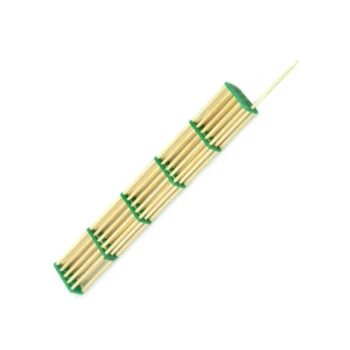
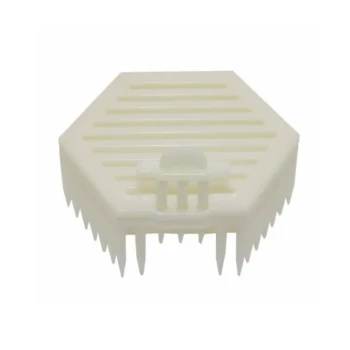
Hemispherical isolation cages function as a critical protective barrier applied to queen cells immediately prior to the bee's emergence. Their primary purpose is to physically separate the developing queen from the rest of the colony, preventing the fatal combat that naturally occurs between rival virgin queens while simultaneously creating a controlled environment for observation and handling.
Core Insight In a natural colony, the first virgin queen to emerge will instinctually locate and destroy all other unhatched queen cells. Isolation cages neutralize this biological imperative, allowing beekeepers to successfully rear multiple queens within a single hive while preserving the ability to collect data and safely handle each individual.
The Mechanics of Protection
Preventing Fatal Combat
The most urgent function of the isolation cage is preventing fratricide.
Without this physical barrier, the first queen to emerge would sting and kill her unhatched sisters.
By isolating each cell, the cage ensures that early-emerging queens cannot access or destroy neighboring cells, guaranteeing a higher survival rate for the batch.
Shielding from Worker Bees
Beyond rival queens, these cages protect the cell from the colony's worker bees.
Workers may occasionally destroy queen cells due to environmental changes or colony stress.
The cage acts as a defense against hive aggression, ensuring the delicate metamorphosis completes without external interference.
Enhancing Management and Data Collection
Accurate Emergence Recording
For breeders, timing is everything.
Isolation cages allow the beekeeper to record the exact emergence rate of each queen.
Because the queen is confined upon hatching, there is no ambiguity regarding which cell she emerged from or when it occurred.
Facilitating Morphometric Analysis
Breeders often select queens based on physical characteristics, known as morphometric parameters.
The cage confines the queen immediately after birth, making it simple to retrieve her for measurement and inspection.
This eliminates the need to hunt for a virgin queen running loose in the colony.
Enabling Specialized Procedures
Advanced management tasks require a controlled environment.
Technicians use the isolation provided by these cages to perform disease prevention vaccinations and marking.
It also facilitates the manual transfer of new queens to mating nucs without the risk of flight or injury during capture.
Scientific and Biological Applications
Controlled Social Isolation
In scientific contexts, these cages are used to study biological variables.
By restricting contact with other bees, researchers can create early social isolation.
This is critical for studies regarding the queen bee's gut microbiota, as it prevents the immediate transfer of bacteria that occurs through social interaction.
Understanding the Trade-offs
The Risk of Prolonged Isolation
While isolation is necessary for survival, it is unnatural for honey bees.
Bees are eusocial creatures; keeping a queen isolated for too long can affect her pheromone levels and social integration later.
Cages should be used only for the necessary duration of emergence and initial processing.
Timing Precision
The application of the cage requires impeccable timing.
If installed too late, a queen may emerge and destroy the others.
If installed carelessly, the physical act of caging can damage the delicate wax cell or the developing pupa inside.
Making the Right Choice for Your Goal
To maximize the utility of hemispherical isolation cages, align their use with your specific objective:
- If your primary focus is Commercial Yield: Use cages to maximize the number of live queens harvested per batch by preventing early emergers from destroying the rest.
- If your primary focus is Breeding and Genetics: Leverage the confinement to record specific emergence times and perform morphometric measurements on specific lineages before they mix with the colony.
- If your primary focus is Scientific Research: Utilize the cages to control environmental variables, such as diet and social contact, to study impacts on queen physiology or microbiota.
Mastering the use of isolation cages turns the chaotic instinct of the hive into a controlled, measurable production process.
Summary Table:
| Function | Key Benefit | Practical Application |
|---|---|---|
| Physical Barrier | Prevents fratricide | Stops the first-emerging queen from killing unhatched rivals. |
| Worker Shielding | Hive defense | Protects queen cells from worker bee aggression or stress-induced destruction. |
| Data Precision | Accurate tracking | Facilitates recording exact emergence rates and individual cell performance. |
| Safe Handling | Easy inspection | Enables morphometric analysis and marking without risking flight or injury. |
| Social Control | Scientific isolation | Allows for controlled studies of gut microbiota and pheromone development. |
Elevate Your Apiary's Productivity with HONESTBEE
Maximize your queen rearing yield and streamline your operations with professional-grade equipment from HONESTBEE. As a premier partner for commercial apiaries and distributors, we provide more than just tools—we deliver comprehensive solutions for the modern beekeeping industry.
From high-precision hemispherical isolation cages and specialized queen rearing hardware to industrial honey-filling machines and hive-making equipment, our wholesale portfolio is designed to scale your business. Whether you are stocking your retail shelves or upgrading your commercial production line, our team is ready to support your growth with reliable logistics and expert insights.
Ready to scale your operation? Contact HONESTBEE Today to explore our wholesale catalog and discover how we can help your apiary thrive.
References
- Rasha Sakla, Samah El-shafeiy. Evaluation of royal jelly quality and queens production by using natural food supplements in honeybee colonies. DOI: 10.21608/ejar.2022.141398.1237
This article is also based on technical information from HonestBee Knowledge Base .
Related Products
People Also Ask
- Why are specialized queen bee cages used for the banking of mated queen bees? Maximize Commercial Apiary Storage Efficiency
- What is the mechanism of action for using temporary queen bee cages? Master Successful Queen Introduction
- How does the side ventilation design of a queen bee cage impact the safety of the queen during long-distance transport?
- What should you do if the queen is still in the cage and the worker bees have not accepted her? Protect Your Colony from Queen Rejection
- What technical precaution must be taken regarding the mesh or grill side of a queen bee cage? Ensure Queen Survival