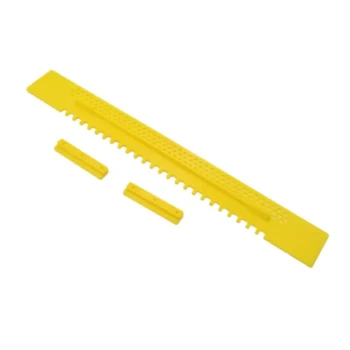
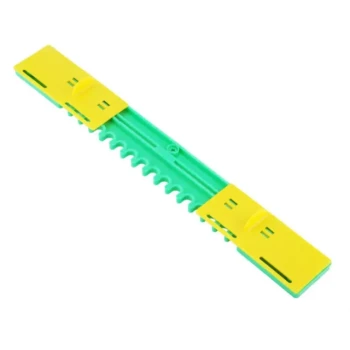
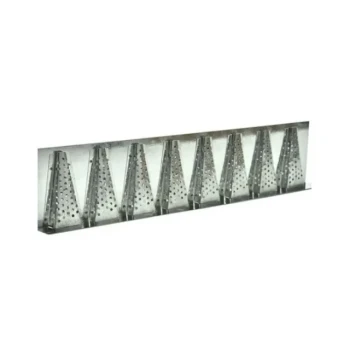
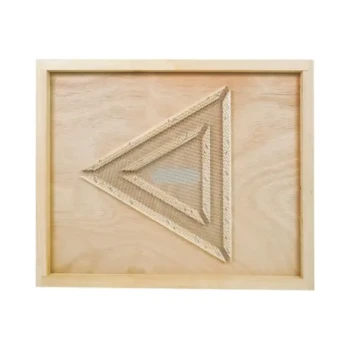
Wood blocks function as essential sealing components that integrate protective hardware into the hive structure. When installing a device such as a cuboid queen excluder, wood blocks are used to physically close any open gaps remaining in the original entrance. This ensures the protection device is securely fastened and that the entrance is fully enclosed around the hardware.
The primary function of wood blocks is to eliminate physical vulnerabilities. By sealing the hive entrance around the protection device, they force all biological traffic through the defensive grid, preventing predators from bypassing the interception mechanism.
Maximizing Defensive Efficacy
Closing the Perimeter
When you install a standard protection device, it rarely spans the full width of the original hive entrance.
This discrepancy leaves vulnerable open spaces on either side of the hardware.
Wood blocks are employed to fill these specific voids, creating a solid physical barrier that sits flush against the protective device.
Controlled Access Points
The fundamental goal of entrance modification is traffic control.
If gaps remain around the device, the protective grid becomes optional; predators can simply enter through the open space alongside it.
By installing wood blocks, you ensure that the only access point to the hive is the controlled protective grid.
Forcing Interception
Effective defense requires that predators face the specific mechanism designed to stop them.
Wood blocks channel all incoming activity directly toward the interception mechanism of the hardware.
This maximizes the defensive utility of the modification, as predators cannot skirt the defense.
Common Pitfalls to Avoid
Incomplete Sealing
The most critical error is using blocks that do not fit precisely.
If the wood block is too loose or too short, it leaves a bypass route that negates the purpose of the protection device.
Even a small gap can be exploited by determined predators or pests.
Structural Shifting
Wood blocks also serve a fastening role, holding the device in place.
If the blocks are not secured properly, the protection device may shift during hive activity or external weather events.
This movement can create new gaps or destabilize the hardware, reducing its effectiveness over time.
Ensuring Secure Installation
To effectively protect your colony, the fit of the blocking material is just as important as the quality of the protection device itself.
- If your primary focus is Predator Exclusion: Ensure wood blocks are cut to precise dimensions to completely seal the entrance and force all traffic through the grid.
- If your primary focus is Hardware Stability: Use the blocks to tightly wedge the protection device in the center of the entrance to prevent movement.
A protection device is only as effective as the seal surrounding it.
Summary Table:
| Component | Primary Function | Defensive Benefit |
|---|---|---|
| Wood Blocks | Gap Sealing | Eliminates bypass routes for predators and pests |
| Protective Grid | Controlled Access | Filters biological traffic and stops large intruders |
| Tight Fitment | Hardware Stability | Prevents device shifting from weather or hive activity |
| Flush Installation | Perimeter Defense | Ensures the only way in is through the defensive mechanism |
Maximize Your Colony Protection with HONESTBEE
As a professional commercial apiary or distributor, you know that the effectiveness of your equipment depends on the quality of its installation. HONESTBEE provides a comprehensive wholesale range of beekeeping tools, specialized hardware, and essential consumables designed for peak performance. From hive-making machinery to precision honey-filling systems, we deliver the industrial-grade solutions your operation demands.
Ensure your hives are fortified against every threat. Contact us today to source high-quality beekeeping equipment and learn how our expert solutions can streamline your commercial production and protect your investment.
References
- M. A. Abd Al-Fattah, Wael Mahmoud Marzouk. New applications for protecting honeybee, Apis mellifera L., colonies from attacking the oriental hornet (Vespa orientalis Fab.). DOI: 10.21608/eajbsa.2014.13201
This article is also based on technical information from HonestBee Knowledge Base .
Related Products
- Beehive Entrance Reducer Guardian Metal Hive Entrance for Bees
- Steel Round Disc Entrance Reducer for Flexzion Bee Hive Nuc Box Gate
- Professional Reversible Beehive Hive Entrance
- Multi-Functional Sliding Hive Entrance for Beekeeping
- 8-Cone Galvanized Steel Bee Robber Guard
People Also Ask
- Why are entrance reducers used to counter hornet infestations? Protect Your Hive with Strategic Choke Points
- What is the purpose of an entrance reducer for a beehive? Strengthen Colony Defense and Prevent Robbery
- What are the proper guidelines for using hive entrance reducers? Master Temperature Control & Colony Defense
- Why is it critical to maintain a smaller entrance for a newly established bee hive? Boost Colony Growth and Security
- What is the physical mechanism behind the use of hive entrance reducers? Protect Your Bees from Vespa velutina