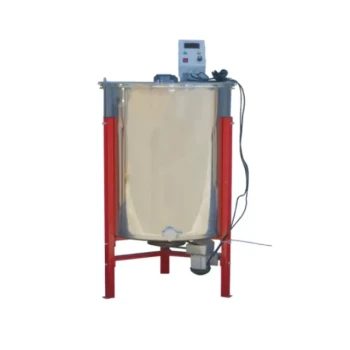
The primary function of a benchtop centrifuge is to separate and concentrate Nosema spores from a filtered suspension using density-based sedimentation. By spinning the liquid sample at high speeds, the device generates centrifugal force that drives the heavier spores to the bottom of the tube. This isolation is the critical first step in converting a raw suspension into a standardized sample suitable for analysis.
The centrifuge transforms a dilute suspension into a measurable specimen. By utilizing the density difference between the pathogen and the liquid, it compacts the spores into a pellet, enabling the precise volume standardization required for accurate results.
The Mechanics of Separation
Generating Centrifugal Force
The core mechanism of the benchtop centrifuge is high-speed rotation. This rotation generates significant centrifugal force, which acts physically on every particle within the suspension.
Density-Driven Sedimentation
Separation is only possible because Nosema spores are denser than the surrounding liquid. The centrifugal force pushes these heavier spores through the fluid, causing them to migrate to the bottom of the tube.
Formation of the Pellet
As the spores accumulate at the bottom, they form a distinct, solid mass known as a pellet. This effectively locks the pathogen in a specific location, separate from the rest of the solution.
Achieving Sample Standardization
Removing the Supernatant
Once the spores are pelleted, the remaining liquid—called the supernatant—sits on top. Because the spores are compressed at the bottom, technicians can carefully remove this excess fluid without losing the pathogen.
Increasing Pathogen Concentration
The removal of the supernatant results in a significant concentration of the pathogen. What was once a dilute suspension becomes a dense collection of spores ready for examination.
Precise Volume Control
This process allows for the precise standardization of sample volume. By controlling how much liquid remains or is added back to the pellet, technicians ensure consistent and comparable testing conditions.
Understanding the Trade-offs
The Fragility of the Pellet
While the centrifuge separates the materials, the resulting pellet is held together only by gravity and compression. Careless handling after centrifugation can accidentally disrupt the pellet.
Criticality of Supernatant Removal
The accuracy of the final concentration relies entirely on the careful removal of the supernatant. If this step is performed aggressively, spores may be drawn off with the liquid, invalidating the standardization.
Making the Right Choice for Your Goal
To maximize the effectiveness of the concentration process, focus on the specific needs of your analysis:
- If your primary focus is High Recovery: Ensure the centrifugation speed and time are sufficient to form a tight, stable pellet that resists disturbance.
- If your primary focus is Standardization: Prioritize the slow, steady removal of the supernatant to reach an exact final volume without agitating the spores.
The benchtop centrifuge is the tool that turns a variable liquid suspension into a quantifiable data point.
Summary Table:
| Process Step | Mechanism | Objective |
|---|---|---|
| High-Speed Rotation | Centrifugal Force | Drives particles outward based on density |
| Sedimentation | Density Differential | Separates heavier Nosema spores from liquid |
| Pellet Formation | Compaction | Collects spores into a solid mass at the bottom |
| Supernatant Removal | Decanting | Eliminates excess fluid to increase concentration |
| Volume Control | Resuspension | Standardizes samples for accurate analysis |
Scale Your Apiary Analysis with HONESTBEE
Precision in disease management starts with the right equipment. HONESTBEE provides commercial apiaries and distributors with the high-performance tools needed for professional-grade results. From specialized benchtop centrifuges and laboratory gear to large-scale honey-filling machines and hive-making hardware, we supply everything your business needs to thrive.
Why partner with HONESTBEE?
- Wholesale Expertise: Comprehensive equipment solutions tailored for large-scale operations.
- Industry Consumables: A one-stop shop for all essential beekeeping and processing supplies.
- Global Reach: Serving distributors with reliable machinery and honey-themed cultural merchandise.
Ready to enhance your efficiency? Contact us today to explore our wholesale catalog!
References
- Cristina Gabriela MATHE, Daniel Severus Dezmirean. Effects of Increasing Levels of Anthropization and Land Use on Nosema spp. Spore Loads. DOI: 10.15835/buasvmcn-asb:2024.0026
This article is also based on technical information from HonestBee Knowledge Base .
Related Products
- electric honey extractor honey centrifuge 3 frame honey extractor stainless steel honey frame extractor
- Manual Hand Crank 4 Frame Honey Extractor Centrifuge for Beekeeping
- Professional 4 Frame Self Reversing Electric Honey Extractor for Beekeeping
People Also Ask
- What are the characteristics of electric honey extractors? Boost Your Apiary Efficiency with Automated Technology
- What are the disadvantages of using an electric honey extractor? Weighing Cost, Power, and Comb Safety
- What are the advantages of an electric honey extractor? Boost Efficiency and Scale Your Honey Production
- What are the technical advantages of electric honey extractors? Maximize Yield and Protect Your Bee Colony
- How does an electric honey extractor affect the quality of honey? Preserve Flavor & Purity with Precision Extraction