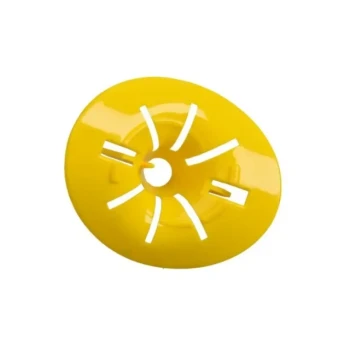
Propolis traps function as standardized assessment tools designed to exploit the natural instinct of honeybees to seal hive gaps. By installing these devices at the top of the hive, researchers can induce bees to deposit propolis in a specific area, effectively separating it from beeswax and extraneous debris. This allows for an accurate, comparative evaluation of the annual propolis yield across different honeybee varieties while maintaining identical environmental conditions.
The core value of a propolis trap lies in its ability to convert a chaotic natural behavior into a measurable metric. By standardizing how propolis is collected, these traps eliminate the variability found in traditional scraping methods, providing high-purity samples essential for reliable yield comparison and chemical analysis.
The Mechanics of Induced Collection
Simulating Structural Vulnerabilities
Propolis traps are typically constructed as plastic boards featuring narrow gaps or slits. To the colony, these gaps represent cracks in the hive walls that compromise the enclosure.
Triggering the Sealing Instinct
Honeybees have an innate drive to maintain internal temperature and hygiene. When they encounter the artificial gaps presented by the trap, they are instinctively triggered to fill them with propolis to seal the hive.
Strategic Placement
Unlike pollen traps which function at the entrance, propolis traps are generally installed at the top of the beehive. This placement leverages the bees' tendency to seal upper ventilation gaps to prevent heat loss.
Achieving Accurate Assessment Data
Isolating Biological Variables
The primary utility of these traps in research is to evaluate the specific collection capacity of different honeybee varieties. By using identical traps across multiple hives, researchers ensure that the only variable changing is the bee variety itself, not the environment.
Measuring Annual Yield
Because the collection method is uniform, the resulting mass of propolis provides a definitive metric for annual yield. This data is critical for breeding programs aiming to select lines with superior propolis production capabilities.
Ensuring Sample Integrity
Removing Contaminants
Traditional harvesting often involves scraping frames, which introduces significant impurities like beeswax, wood chips, and bee remains. Propolis traps significantly reduce the presence of these materials.
Facilitating Chemical Analysis
The high purity of the raw material collected via traps makes it ideal for laboratory analysis. Clean samples are required for accurate mineral and heavy metal element analysis, which are often used to determine the geographical origin of the propolis.
Understanding the Trade-offs
Processing Requirements
While the collection is passive, extracting the material from the trap requires specific handling. Beekeepers often must apply low-temperature treatments to make the propolis brittle enough to remove from the narrow gaps.
Distinction from Pollen Traps
It is vital not to confuse propolis traps with pollen traps. Pollen traps rely on physical grids at the hive entrance to strip pellets from foragers' legs, whereas propolis traps rely on the internal construction behavior of the colony.
Making the Right Choice for Your Goal
To maximize the utility of propolis traps in your project, consider your specific analytical needs:
- If your primary focus is breeding and selection: Use these traps to establish a baseline annual yield for different bee varieties under controlled conditions.
- If your primary focus is chemical composition: Rely on these traps to generate high-purity samples free from wood and wax for geographical or medicinal certification.
By standardizing the collection interface, you transform propolis from a hive byproduct into a quantifiable, scientific data point.
Summary Table:
| Feature | Propolis Trap Utility | Benefit for Assessment |
|---|---|---|
| Mechanism | Simulates structural hive gaps | Triggers consistent, measurable sealing behavior |
| Placement | Top of the hive | Standardizes collection environment across colonies |
| Sample Quality | Minimal wax and debris | Provides high-purity material for chemical analysis |
| Data Accuracy | Uniform collection interface | Enables precise annual yield comparison by variety |
| Efficiency | Passive, non-invasive collection | Reduces labor compared to traditional scraping |
Scale Your Propolis Production with HONESTBEE
Are you looking to enhance your apiary's efficiency or expand your wholesale catalog? HONESTBEE provides professional-grade beekeeping solutions tailored for commercial apiaries and global distributors.
From high-efficiency propolis traps to advanced honey-filling machinery and specialized hive-making equipment, we supply the full spectrum of tools and consumables needed to thrive in the modern beekeeping industry. Our expertise helps you transform raw hive behavior into a profitable, high-purity output.
Ready to elevate your beekeeping business? Contact HONESTBEE today for wholesale pricing and expert equipment guidance!
References
- Meral Kekeçoğlu, Münir Uçak. The Relationships Between Propolis Collecting Capability and Morphometric Features of Some Honey Bee Races and Ecotypes in Anatolia. DOI: 10.15832/ankutbd.447319
This article is also based on technical information from HonestBee Knowledge Base .
Related Products
- 8 Frame and 10 Frame Propolis Trap Collector Screen for Propolis Collection
- Removable Plastic Pollen Trap With Ventilated Tray for Bees Pollen Collector
- Professional Bucket Style Wasp and Moth Pheromone Trap
- Plastic Bee Pollen Trap Strips Comb Catcher Collector
- Plastic Beetle Blaster Trap Beekeeping Tools and Supplies
People Also Ask
- Why is a specific wooden frame required when installing a propolis screen? Optimize Your Propolis Harvest Efficiency
- What are the advantages of using propolis collector screens? Elevate Your Harvest to Pharmaceutical Purity
- How do propolis collection screens work? Discover material specs for commercial harvesting equipment
- How does the mesh size of a propolis collection screen influence the efficiency of propolis harvesting? Optimize Yields!
- How do commercial-grade plastic screens compare to custom fine-mesh screens? Maximize Your Propolis Yield & ROI