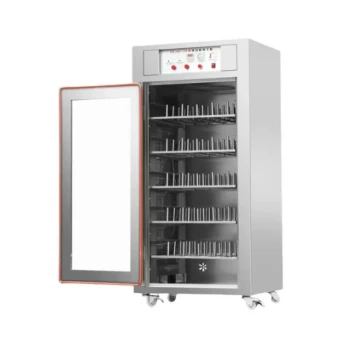
High-precision constant temperature and humidity chambers are essential for mimicking the specific internal microclimate of a living beehive. Without these strictly controlled conditions—specifically maintaining 34 °C, roughly 75% relative humidity, and total darkness—honey bees experience environmental stress that drastically skews survival rates and invalidates experimental data.
Core Insight: The primary function of these chambers is variable isolation. By guaranteeing a stable environment, researchers ensure that any observed health effects or mortality are the direct result of the specific factors being tested (such as diet or parasites) rather than fluctuations in temperature or moisture.
The Critical Role of Microclimate Simulation
Replicating Hive Conditions
Honey bees have evolved to survive within a highly specific environmental range inside the colony.
To replicate this in a laboratory setting, chambers must maintain a constant temperature of 34 °C (often with a tight tolerance of ±1°C).
Simultaneously, the relative humidity is typically held at 75% (or within a range of 60±10%), alongside total darkness, to perfectly simulate the hive interior.
Protecting Vulnerable Life Stages
The necessity of these chambers extends beyond adult worker bees.
Precise stability in temperature and humidity is critical for the survival of larvae and pupae, which are far more sensitive to environmental shifts than adults.
Furthermore, these conditions are often required to maintain the viability of parasitic mites, allowing researchers to study the interaction between parasites and hosts under realistic conditions.
Ensuring Data Integrity and Hygiene
Eliminating Environmental Stress
If a laboratory environment fluctuates, it introduces "environmental stress" as a confounding variable.
When bees die or weaken in an uncontrolled environment, it is impossible to determine if the cause was the experimental treatment (e.g., a specific pesticide or diet) or simply thermal stress.
High-precision chambers remove this ambiguity, ensuring that health outcomes are attributable solely to the experimental factors being studied.
Preventing Experimental Cross-Contamination
These chambers also facilitate rigorous physical experimental design.
By utilizing the controlled space to layer infected and uninfected frames, researchers can maintain distinct groups within the same environmental conditions.
This arrangement prevents cross-contamination between groups, ensuring that control groups remain healthy while sharing the exact same microclimate as the test groups.
Understanding the Trade-offs
The Requirement for Stability vs. Complexity
While high-precision chambers provide the necessary control, they introduce operational complexity.
maintaining high humidity (75%) at warm temperatures (34 °C) creates an environment prone to fungal growth or equipment condensation if not managed precisely.
Therefore, the "high precision" aspect is not a luxury but a requirement; low-quality equipment that allows temperature to drift even by a few degrees can induce stress that mimics the effects of disease, rendering the study useless.
Making the Right Choice for Your Research
To ensure your experimental data is valid, align your equipment capabilities with your biological targets:
- If your primary focus is nutritional or toxicological effects: You must use a high-precision chamber to guarantee that mortality is not an artifact of temperature stress.
- If your primary focus is parasitic interaction (e.g., mites): You must maintain specific humidity levels (60-75%) to ensure the parasites remain viable long enough to affect the host.
- If your primary focus is brood development: You must prioritize temperature stability (34±1°C), as larvae are highly susceptible to developmental failure outside this window.
Ultimately, the precision of your climate control dictates the credibility of your biological conclusions.
Summary Table:
| Feature | Ideal Hive Simulation Setting | Importance for Research |
|---|---|---|
| Temperature | 34 °C (±1°C) | Prevents thermal stress and ensures brood survival. |
| Relative Humidity | 60% - 75% | Maintains parasite viability and prevents larvae dehydration. |
| Light Control | Total Darkness | Mimics internal hive conditions to stabilize bee behavior. |
| Variable Isolation | High Precision Stability | Ensures mortality is linked to test factors, not environment. |
| Hygiene | Controlled Airflow/Containment | Prevents cross-contamination between experimental groups. |
Elevate Your Apiary Research with HONESTBEE
Precision is the backbone of credible beekeeping science. At HONESTBEE, we specialize in supporting commercial apiaries, research laboratories, and global distributors with high-performance equipment designed for the industry's rigorous demands.
Whether you need advanced hive-making machinery, honey-filling solutions, or professional-grade beekeeping tools and consumables, we provide the comprehensive wholesale support you need to scale your operations.
Ready to upgrade your laboratory or commercial setup? Contact us today to explore our full spectrum of beekeeping hardware and machinery and see how our expertise can drive your success.
References
- Desiderato Annoscia, Francesco Nazzi. Elucidating the mechanisms underlying the beneficial health effects of dietary pollen on honey bees (Apis mellifera) infested by Varroa mite ectoparasites. DOI: 10.1038/s41598-017-06488-2
This article is also based on technical information from HonestBee Knowledge Base .
Related Products
- Portable Queen Bee Incubator with 12V Car Adapter for Safe Transport
- HONESTBEE AC Powered Wire Embedder with Alligator Clips
- Solar Beeswax Melter Easy Solar Wax Melter for Beeswax
- Precision Honey Refractometer Instrument for Quality Assessment
- Wholesales Dadant Size Wooden Bee Hives for Beekeeping
People Also Ask
- What happens if a colony loses its queen during the nectar flow? A Guide to Salvaging Your Honey Harvest
- How can you tell if the worker bees have accepted the queen? Decode Bee Behavior for a Thriving Hive
- How can the queenless state of a newly created nuc be resolved? Expert Solutions for Colony Growth
- What are the primary reasons for replacing a queen bee? Boost Your Commercial Honeybee Colony's Success
- What queen bee behaviors should be observed after introduction? Ensure Hive Success with Our Expert Monitoring Guide